Learning to code and building a $28k/mo portfolio of SaaS
products
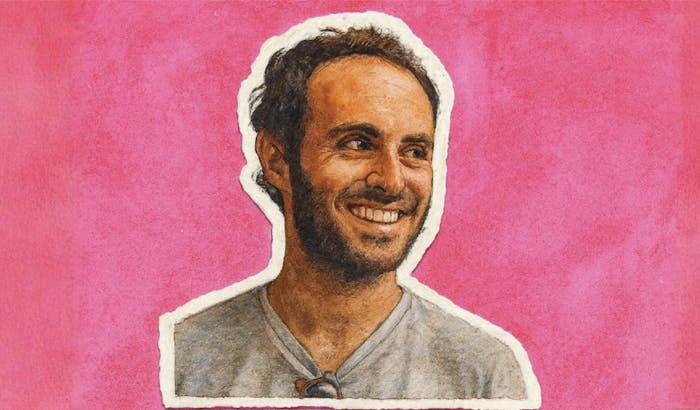
Samuel Rondot quit his job, learned to code, and built several profitable businesses. His current portfolio — which includes StoryShort.ai and Capacity.so — is at $28k/mo.
Here's Samuel on how he did it. 👇
From optician to indie hacker
I've been building websites since college, long before I knew I could make a living from it. In high school, I even created a small streaming website for fun. But eventually, I chose a career path outside of tech — I became an optician.
I worked as an optician for about three years. I loved the job, but I couldn’t deal with being physically stuck in one place. I lived in France, right next to the Swiss border, and from my apartment, I could see the airport. Nothing on earth physically prevented me from taking the next plane — except my job.
So, every morning before work and every evening when I came home, I built side projects. And in 2017, I launched my first “business” — an Instagram automation service. It wasn't even coded. Actual humans in India and Bangladesh performed the automation tasks behind a WordPress landing page.
It was called MathPlanner, and despite its simplicity, it grew to about $30,000/month.
At that point, I quit my job and finally took that plane I’d been staring at for years.
StoryShort.ai → around $20,000/month
UseArtemis.co → around $5,000/month (down from before due to LinkedIn tightening automation limits)
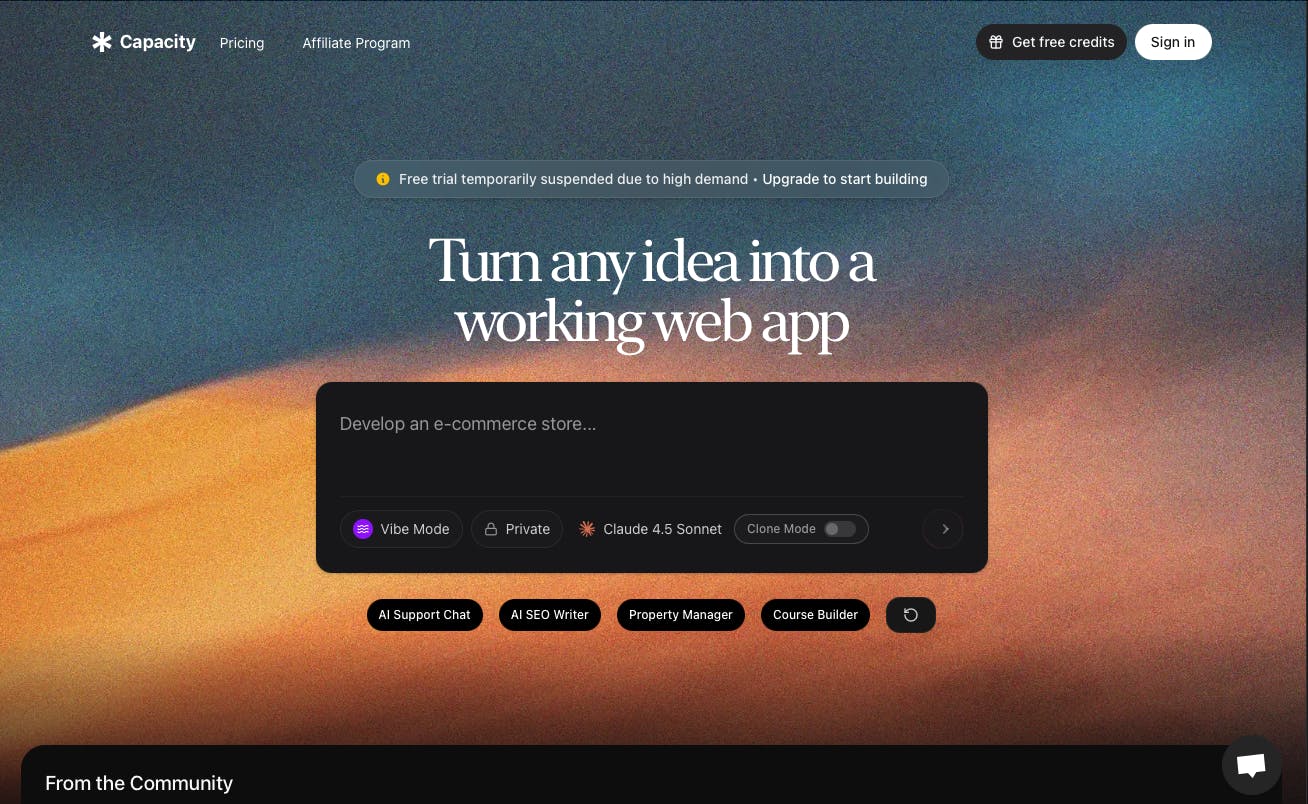
Capacity.so → new product, already at $3,000/month and growing steadily
Capacity is my most ambitious project so far. It's an AI website builder I’m building with a high-school friend.
The love of building things
Like I said, my main motivation was always freedom. But I also genuinely love building things: beautiful interfaces, apps that people use, and products that grow. Watching revenue graphs go up is incredibly motivating. I love the energy when something starts taking off.
StoryShort started a year ago when I discovered a tool that automatically generated short faceless videos. At the time, it felt magical: type text, get a video.
Capacity started because before learning to code, I was exactly the target user. My first Instagram tool was “no-code” only because I couldn’t code. WordPress was extremely limiting, and I always wished for a tool that could build real custom software without hiring developers. That’s exactly what we built with Capacity.
A simple tech stack
The early versions of my products were always extremely simple. For each project, I try to validate demand as fast as possible, build the minimum viable version, get users, and then iterate.
Capacity was an exception because the underlying tech required more time and R&D, but even then, we quickly launched an early prototype to test the core idea.
My tech stack is super simple and always the same:
Next.js for the frontend
Node.js for the backend
MongoDB for the database
Frontend hosted on Vercel
Backend hosted on AWS
Leveraging AI tools to build
My biggest challenge early on was simple: I didn’t know how to code.
I fought with messy WordPress plugins to hack together something that barely worked. Customizing anything was painful.
Learning to code changed everything. It gave me the freedom to build whatever I wanted.
If I had to start again today, I would still learn to code — even with AI coding tools. Understanding code is crucial. But I would use AI tools heavily to build the first version faster. It would have saved me months.
Two-pronged growth
For almost every project, I follow the same two channels:
SEO is the best long-term driver of business growth. It takes time, but it compounds and becomes the strongest growth channel — six months later, you’re always glad you invested in it.
Paid ads bring predictable SaaS traffic. I mostly use Meta and Google. I haven’t experimented much with all platforms, but these two have always been enough to validate and grow.They bring predictable, scalable traffic.
Choose your battles
We only fight wars we can win.
Since most competitors have raised funds, we need to be more creative. We post videos on YouTube, do SEO, and optimize for AI engines. Those techniques get us around 400 clicks per day, allowing us to get some steady growth
We had to pivot our ads too. We initially started with ads on Meta, but we discovered quickly that our competitors do not mind spending $200 to get a $30 sale.
Recurring revenue
All my apps use the SaaS subscription model. Revenue grows by:
Acquiring new customers
Reducing churn
Improving the product to increase retention
Some niches, like StoryShort, have naturally lower lifetime values, so churn is always a challenge. But overall, recurring revenue is extremely powerful.
Verify intuition with data
I have two main pieces of advice:
First, Use AI coding tools to build your MVP fast.
Even if you plan to code everything yourself later, tools like Capacity or others help you get the first version out much quicker. Speed matters.
Second, don’t build anything before validating demand.
I'm surprised that so many indie hackers — even very smart ones — don't know how to validate if an idea can make money. They just build random tools.
Then, they quit because they spent weeks building something that never earned a single dollar. And without money, they lose motivation.
So, don't start a project without checking:
Search volume
SEO metrics
Competitor strength
How competitors get customers
Whether there is demand
Then, prove that people will pay. If you can’t clearly see the path to money, don’t build it.
I trust intuition, but I also verify it with data. This avoids months of wasted work.
What's next?
My main focus is growing Capacity.so to $100K/month. I believe the market is huge — many people want to build tools but don’t want to write code. Other tools exist, but we’ve built something different, especially with how we handle context. Capacity's apps are much more consistent.
For StoryShort, there’s still room to grow beyond $20K MRR, especially through SEO. Getting to $20K MRR is “easy” — going beyond is where the real work begins.
You can follow along on X and on YouTube. And check out Capacity and StoryShort!

Leave a Comment
The "don't build before validating demand" point is the one I keep relearning. I spent years in product roles watching teams build things nobody asked for -- and then did the same thing myself with side projects.
What finally broke the pattern for me was forcing a two-week constraint. Ship something ugly, charge for it, see if anyone cares. The constraint made me skip the parts I usually hide in (perfecting the UI, adding features nobody asked for) and go straight to "will a stranger pay."
Curious about your validation process -- you mention checking search volume, SEO metrics, competitor strength. Do you have a rough time box for that research phase, or does it vary a lot by project?
"Choose your battles" really resonates, especially the part about competitors dumping $200 to get a $30 sale. That’s exactly why I stay away from paid ads fights.
Your SEO + AI engines + YouTube combo is smart and sustainable. It's like playing chess while others are stuck in checkers. Love the pivot mindset. What's been your biggest "battle you chose not to fight" so far?
Really interesting seeing how AI is treated here as a speed multiplier, not a replacement for actually understanding code.
The "don't build before validating demand" advice saved me weeks of wasted work. Before building my AI security testing platform, I spent time in security communities asking about LLM testing pain points. Prompt injection and jailbreak detection kept coming up - that shaped the entire product.
Your point about SEO being the long game really resonates. Paid ads feel like renting traffic, SEO feels like owning it. Already seeing early results from targeting "OWASP LLM Top 10" and "prompt injection testing" keywords.
The "Choose your battles" section is gold. Competing against funded companies on their terms is suicide. Finding the angles they ignore (niche SEO, community building, solving specific problems deeply) is where solo founders win.
Curious about your validation process - do you set a specific timeline (like 2 weeks max) before deciding to build or kill an idea?
This is inspiring. How long did it take you from learning to code to launching your first paid product?
What resources helped you most when learning to market? Always looking for recommendations to share with others starting out, even though I already have experience in coding, haha.
This is impressive, and what stood out to me is how different the challenge feels today.
Learning to build is still hard, but compared to a few years ago, building is no longer the main bottleneck. Shipping something decent is more accessible than ever. Getting people to notice and care is where most of the real work seems to be now.
What I am currently learning is that promotion is not a phase after building — it is a parallel skill that compounds just as much as coding does. Distribution, writing, and showing up consistently feel like products of their own.
Curious how your thinking about promotion evolved as your portfolio grew. Was it something you leaned into early, or did it only become a focus once the products were already working?
Great write-up. One thing that stood out to me reading this is how much of the success comes down to making the right decisions at the right moment, not just building fast.
Even with validation and data, I’ve seen teams stall once options multiply because everything stays abstract again. What often helps is making rough prototypes early. Not to ship, but to force clarity. Especially now that AI makes that kind of concreteness cheap.
I’m currently following a similar 'learning-by-doing' path with a tech stack focused on. I’m building a web-based ecosystem to solve the chaos of moving house (moving box management via QR mapping).
Like your products, I’m prioritizing speed and a 'no-app' experience to reduce friction for the user. Seeing your $28k/mo milestone proves that solving niche, everyday problems with a clean UI is still one of the best ways to grow. Thanks for the motivation
Great story. Inspirational. Do you have a process for coming up with ideas, and then validating them. Anyone?
Very informative
I’m offering AdaptSaas dot com, a brandable domain perfect for adaptive AI SaaS products. Open to offers.
Thanks for sharing your insights. I loved the idea of capacity.
Nice milestone. I’ve found that the real learning curve when building your own SaaS isn’t just learning code, it’s learning how to choose what to build next based on user behavior. Did you find that certain product ideas changed after real feedback?
🤖 An automation tool to build apps / tools / websites like Google’s AI Studio — but lighter, faster, and more cost-efficient.
⚡ Runs on Cursor and leverages AI to generate code, build logic, optimize workflows, and dramatically shorten development time.
🧩 Supports the whole journey: idea → MVP → production-ready product. Easy to customize and scale as your needs grow.
💰 Operating cost is only ~500,000 VND/month (≈ $20), ideal for individuals, indie hackers, small startups, or teams that need to experiment fast.
—
(Available on GitHub for download, testing, and demo.)
🤖 An automation tool to build apps / tools / websites like Google’s AI Studio — but lighter, faster, and more cost-efficient.
⚡ Runs on Cursor and leverages AI to generate code, build logic, optimize workflows, and dramatically shorten development time.
🧩 Supports the whole journey: idea → MVP → production-ready product. Easy to customize and scale as your needs grow.
💰 Operating cost is only ~500,000 VND/month (≈ $20), ideal for individuals, indie hackers, small startups, or teams that need to experiment fast.
—
(Available on GitHub for download, testing, and demo.)
github. /onmou/runner
How to get idea to build a product?
An inspiring, actionable story for aspiring indie hackers! Samuel’s journey from optician to building a $28k/mo SaaS portfolio—via side projects, leveraging AI, and validating ideas—proves grit + smart tools beat prior tech experience. Love the focus on recurring revenue and data-driven decisions—total motivation for anyone looking to turn passion into profit.
Really solid perspective. Hitting real revenue with actual users always feels different than just launching something and hoping it sticks.
I’ve seen a similar pattern where building things that actually solve a problem for someone makes the whole growth side more natural. It often comes down to understanding the person you’re building for first, then letting the product prove itself.
I’m curious what helped you decide which ideas to keep iterating on and which ones to let go of along the way.
I must say that your story has inspired me. I taught myself how to code back in 2016 but never actually tried to build something myself let alone a full-blown business. Now that I am a little older, the idea of quitting my job and going 100% full-time on my business is much more appealing.
Great interview, James. Sam's journey from non-technical to $28K MRR across multiple products is incredibly inspiring, especially the validation-before-building approach.
What stood out to me is the portfolio strategy vs. doubling down on one winner. I'm a solo founder who just launched my first SaaS (ClearNoteLab) and I'm already wondering: if this one shows traction, do I go deeper or start building the next one?
One thing I noticed in the interview - Sam mentioned solving his own problems, but didn't go deep on how he got those first users without an existing audience. As someone who can build but struggles with distribution, that's the piece I'm trying to crack.
Do you have other interviews where founders talk specifically about early distribution tactics for their first product? The build-in-public / portfolio approach makes sense, but I'm curious how people get that initial momentum on product #1.
Thanks for the detailed case study - these are always the most valuable posts on IH.
If you've fallen victim to financial fraud and are struggling to come to terms with the loss of your hard-earned money, don't lose hope. TECHY FORCE CYBER RETRIEVAL is here to help. With a team of experienced professionals specializing in cyber security and financial fraud investigations, they have a proven track record of successfully reclaiming lost funds for numerous clients. Their expertise and dedication make them the ideal partners in your pursuit of justice. Contact TECHY FORCE CYBER RETRIEVAL today to take the first step towards reclaiming what's rightfully yours and securing your financial future.
WhatsApp them or call them with (+ 1 5 6 1 7 2 6 3 6 9 7)
Visit w.w.w. techy forcec yberretrieval .com
Telegram (@)Techcyberforc
This resonates a lot.
When you’re building without resources, clarity becomes more valuable than speed.
I’ve noticed early traction improves once the problem statement becomes emotionally clear, not just technically correct.
Curious — what was the first signal that told you “this is worth continuing”?
Love this story — especially the part about validating demand before building.
I’ve seen the same pattern over the years answering hardware and tech questions on forums: most people don’t fail because of tech, but because of wrong assumptions and lack of validation.
I recently put together a simple, practical checklist based on real troubleshooting and validation experience (not theory). Might be useful for other indie hackers who are in the early stage:
https://pixelcheckup.com
Thanks for sharing such a grounded breakdown — very motivating read.
this was motivating, esp the part about learning to code = real freedom
quick q: when you validate w seo + competitors, how long do you usually spend before you start building, and what’s the one “green light” signal you trust most?
Learning to code enabled the creation of scalable SaaS products by turning ideas into real solutions without relying heavily on others. By solving niche problems, iterating quickly, and automating operations, multiple SaaS tools were built and refined over time. Consistent learning, customer feedback, and smart marketing helped grow recurring revenue. This approach transformed coding skills into a sustainable $28k per month SaaS portfolio.
What's your moat of Capacity app to compete with Lovable, Bolt new? Are you still building by coding by yourself or vibe coding now?
If you've fallen victim to financial fraud and are struggling to come to terms with the loss of your hard-earned money, don't lose hope. TECHY FORCE CYBER RETRIEVAL is here to help. With a team of experienced professionals specializing in cyber security and financial fraud investigations, they have a proven track record of successfully reclaiming lost funds for numerous clients. Their expertise and dedication make them the ideal partners in your pursuit of justice. Contact TECHY FORCE CYBER RETRIEVAL today to take the first step towards reclaiming what's rightfully yours and securing your financial future.
WhatsApp them or call them with (+ 1 5 6 1 7 2 6 3 6 9 7)
Telegram (@)Techcyberforc
Learning to code is the first step toward building a profitable SaaS portfolio. Start by mastering web development and frameworks, identify niche problems, and create MVPs quickly. Focus on subscription-based products, validate ideas, and scale through marketing and automation. Consistent iteration and customer feedback can grow revenue toward $28k/month.
Learning to code and building a $28k/month SaaS portfolio requires dedication, practice, and smart product ideas. Building real-world projects, understanding user needs, and scaling effectively are key aspects of James Fleischmann's work.
Solid reminder that speed + validation beats perfection the “verify intuition with data” part is gold what’s one validation signal you trust the most before committing?
The 'staring at the airport' part hits home—freedom is the ultimate feature.
Samuel, I love your data-first approach to validation (SEO metrics, search volume). It's a masterclass in discipline. However, I’m taking a slightly different path with VigilBill.
Instead of starting with search volume, I started with a $20,160/year hole in my own pocket. I realized that as a freelancer, I was 'donating' that much to clients just by forgetting to hit a manual timer.
I'm currently building a 100% local-first, silent agent to solve this. My question for you: When you validate via SEO, do you find it harder to differentiate from 'funded giants' compared to building a niche solution for a very specific, painful problem you experienced yourself?
Really strong journey going from a non-tech background to building a diversified SaaS portfolio is no small feat. I especially liked the emphasis on validating demand before building and using simple stacks to ship fast. Given this, I’m curious when you balanced SEO (long game) vs paid ads (short game), did you ever shift more budget/time toward one because of seasonality or audience behavior? That kind of allocation insight could help many founders planning their first growth sprint
cool, I learned a lot.
Nice, would also be interesting to hear about ideas you passed on and why ?
Samuel Rondot’s journey from optician to indie hacker is impressive! By learning to code and building side projects, he created a portfolio of profitable SaaS products earning $28k/month, showing how smart strategies and persistence pay off.
HIRE A FASTEST CYBER RECOVERY EXPERT TO RECOVER YOUR LOST OR STOLEN BITCOIN/ETH/USDT/ THE HACKANGELS
I simply want to share my story about THE HACKANGELS RECOVERY EXPERT. To all of you out there. One has to be careful. A lot of scammers are out there taking money from innocent traders. I was a victim of these crypto scammers. They made me lose my hard earned funds. The best thing that happened to me this year was seeing an article about THE HACKANGELS RECOVERY EXPERT. A professional hacker and private investigator. I invested $954,300 in a cryptocurrency platform and it turned out to be a scam and I had no idea how to get my money back until I reached out to a recovery company called THE HACKANGELS RECOVERY EXPERT. I explained my situation to them. I was shocked to hear that they had recovered all of my stolen cryptocurrency in just 48 hours. I said that I will not hold this to myself but share it to the public so that all scammed victims can get their funds back. To anyone who may find themselves in a similar unfortunate situation. I highly recommend THE HACKANGELS RECOVERY EXPERT. Quickly reach out to them on their hotline:
WhatsApp: (+1(520)200-2320
If you're in London, you can even visit them in person at their office located at 45-46 Red Lion Street, London WC1R 4PF, UK. They’re super helpful and really know their stuff! Don’t hesitate to reach out if you need help.
Learning to code and building a $28k/month SaaS portfolio is about consistency, smart execution, and solving real problems. Start with one programming language, build small MVPs, and launch quickly. Focus on niche pain points, recurring subscriptions, and user feedback. Improve, automate, and scale what works. Over time, multiple small SaaS products compound into a strong, predictable monthly income stream.
Wow... what a read. your journey from optician to actually making it big... Your insights on the importance of validating demand before building resonate deeply with me. It's inspiring to see how you've leveraged your passion for building to create successful projects like Capacity and StoryShort. I also have many projects i have hope for but dont want to leave beta until the fundamentals are solid.
your take on using AI tools for rapid prototyping while still encouraging the fundamental understanding of coding. It’s a great reminder that combining intuition with data can significantly reduce the risk of wasted time and effort.
Looking forward to seeing how Capacity evolves; it sounds like an exciting project with a lot of potential! Keep up the fantastic work you help people like me keep going.
This resonates hard, especially the "staring at the airport" part. I'm in that exact phase now - working full-time but spending every morning/evening building. Launching my first product this week and already feeling the tension between "perfect" and "shipped." Your validation checklist (search volume, SEO metrics, competitor strength) is basically what I've been doing for the past 2 weeks. One thing I'm struggling with though: how do you balance "validate fast" with "don't waste time on saturated markets"? Feels like every niche has 10+ competitors. At what point do you say "too crowded" vs "proof of demand"? Also curious - when you transitioned from $30k/mo with the Instagram tool to building the current portfolio, was there a financial buffer or did you just jump and figure it out?
The reusing-the-same-stack strategy is exactly right. Each new product should feel like a remix, not a greenfield build. How do you handle marketing across multiple products -- do you share audiences or keep them separate?
Don't build anything before validating demand' — I'm reading this after building an entire SaaS with auth, payments, PDF reports, and AI features before getting a single paying customer. Lesson learned the hard way is better than not learning at all lmao. The SEO point is the one I keep hearing everywhere and it compounds but you need to start early. Right now I have zero content and zero inbound while competitors rank on thousands of keywords. Did you write the SEO content yourself at the start or use AI from day one? And how did you decide which keywords were worth going after when you were competing against funded players?
I created a SAAS in two days of work thanks to the help of Claude AI. It's amazing how well this worked since I'm totally not a coder. Just prompted Claude the business idea, let him build a concept and then a first draft, made some adjustments and additions that he forgot and off we go, it was done. Amazing, truly amazing.....
Im building a saas portfolio now. Im at 48 companies. Kind of streamlined the varieties into a templated cli launch process then I customize to an mvp stage. Will circle back and iterate on those with the best market feedback. Im stuck in search engine obscurity for the moment, just becoming visible. This is kind of hard honestly
The "don't build before validating demand" point is the one I keep relearning. Spent years in CX at companies like Disney and FanDuel watching teams build things nobody asked for. The pattern that finally broke it for me was forcing a constraint: ship something functional, put it in front of strangers, see if anyone cares. The urge to perfect the UI or add one more feature before showing it to anyone is the real killer. Samuel's portfolio approach is smart too. Multiple small bets with recurring revenue compounds in a way that one big moonshot rarely does.
The MathPlanner origin story is great. Running a "SaaS" that was actually humans doing the work manually is a legitimate way to validate demand before writing code. He collected revenue, learned what customers actually needed, and then automated it. I wish more people talked about this approach openly because it works and it's way less risky than building for six months before talking to a customer.
The portfolio approach showed its value when LinkedIn squeezed Artemis. With three products, a hit to one revenue stream is a bad quarter instead of an existential crisis. The trade-off is that none of the three get full attention. Do you think any of them would be significantly bigger with 100% focus, or does the diversification itself create more stability than concentration would?
The "if you can't clearly see the path to money, don't build it" filter is something I've started applying to my own projects. It's a hard discipline when an idea is exciting, but it saves a lot of time.
The learning to code AND building profitable products simultaneously is underrated as a strategy. Most people do one or the other. You essentially compressed years of theory into real world practice. The $28K/mo is impressive but what stands out more is the portfolio approach - multiple smaller bets vs one big swing.
Question for you: How do you handle the operations burden as the portfolio grows? At some point customer support and maintenance must get heavy.
Also curious - at what monthly revenue per product do you consider it worth continuing to maintain vs sell?
MathPlanner is the part of this story that most people will gloss over but shouldn't. A WordPress landing page for "Instagram automation" backed by real humans in India and Bangladesh — that's not a product, it's a Mechanical Turk disguised as SaaS. And it grew to $30K/mo. The lesson isn't about automation; it's about validating demand before building. Samuel found customers willing to pay for a workflow, figured out what the experience needed to feel like, and made money while learning. That's a legitimate founder move.
The UseArtemis decline is the platform risk lesson in concrete form: LinkedIn tightening automation limits cut revenue significantly, which is the exact downside of building on someone else's API constraints. The portfolio structure absorbed this — $5K/mo down from higher is a setback, not an existential event. If Artemis had been the only product, that policy change could have ended the business.
StoryShort.ai anchoring at $20K/mo is strong. AI video and social content creation has durable demand because the content treadmill never stops — brands and creators always need more, and the time cost of production is always the bottleneck.
Capacity.so as the "most ambitious project" with a high-school friend co-founder is the wild card. AI website builders are a genuinely competitive space (Framer AI, Wix ADI, Webflow AI), but the indie advantage is speed and pricing: a lean team building on the latest foundation models can iterate faster than any VC-backed team protecting an existing product line.
The "staring at the airport" image is one of the best physical metaphors for entrepreneurial restlessness I've read.
Quick question for founders here:
How do you currently detect when a customer might churn?
Is there a tool you rely on or mostly intuition?
This is so inspiring and I am 17 years old from Kerala India still in school and trying to build my first sass without knowing how to go the fact that you build a portfolio of products while learning shows that waiting until you are fully ready is the wrong approach quick question when you were building your first sas how did you figure out who your competitors were and how to position against them that is the part I'm struggling with most right now
This is incredibly inspiring! 28K/mo from self-taught coding is proof that you don't need a CS degree. The "build multiple small products" approach is interesting - do you find it easier to manage a portfolio vs going all-in on one product?
I'm currently building my first comparison site (static HTML/CSS to keep it simple) and posts like this show what's possible with consistency. What was the biggest mindset shift from learning to code to actually shipping products?
"keep a distribution channel alive the whole time" — someone needed to tell me this 6 months ago. i went full heads-down building mode, zero audience building. now i have a product that works but nobody knows it exists. classic developer mistake i guess. learning the hard way
The project name is Ziraxo.
I'm building a small AI tool called Ziraxo that converts images into 3D models.
Still improving it and would love to hear feedback from people working with 3D.
Man, this really resonates with me. I love how you went from doing something completely unrelated to tech, to not just learning to code, but actually building multiple products that make real money. It’s inspiring to see someone balance the patience of validating demand with the speed of shipping MVPs using AI tools—you’re showing that it’s not about avoiding the hard work, it’s about being smart about it.
What really stood out to me is how you think about distribution and choosing your battles. So many indie founders get stuck trying to fight the funded giants head-on, but your approach of focusing on niches, content, and SEO feels like playing chess while everyone else is playing checkers. That part alone makes me rethink how I approach marketing my own projects.
Also, the point about recurring revenue and retention hit hard. It’s one thing to build something people like, but keeping them around consistently—that’s where real product skill shows. Reading your journey makes me want to take my own SaaS templates more seriously, not just as side projects, but as things that can actually scale if I focus and execute properly.
The transition from 'messy WordPress plugins' to a custom Next.js/Node stack is a rite of passage for so many of us. Learning to code is the ultimate force multiplier, but Samuel’s point about using AI to speed up the MVP phase is spot on for 2026. It’s not about avoiding the code—it’s about reducing the 'time to value.
It's truly inspiring, I am deeply moved, and as a developer myself, I need to learn from you
Really inspiring journey! Going from learning to code to building a $28k/mo SaaS portfolio is huge — your consistency and focus on execution really stand out.
Thank for the post .What was the biggest thing that actually moved usage early on?
learning to code late is underrated. the combo that seems to work is: ship tiny products, reuse the same boring stack, and keep a distribution channel alive the whole time.
also portfolios beat one big bet imo. you get more shots and you learn faster.
Super inspiring. Building a portfolio is hard because context switching kills momentum.
How did you decide when a product was “good enough” to maintain vs. worth pushing to the next level?
And did you reuse the same distribution channels across products or build separate funnels for each?
Drop your AI project link + 1 sentence. I'll create your FREE VibiDivy showcase page in the next 24 hours (only doing 50 this week). Full editing access included.
"Can build but struggles with distribution" — that's exactly the gap I keep hearing about from solo devs.
The portfolio approach is interesting because it diversifies risk, but doesn't it multiply the distribution problem? Now you need users for 5 products instead of 1.
For anyone here who's shipped multiple products: does distribution get easier with each one (you learn the playbook) or harder (more plates to spin)?
The "validate before building" discipline is even more critical when you're operating cross-border, because the cost of a failed product isn't just lost dev time — it's the entity setup, payment rail configuration, and tax registration you did in multiple jurisdictions for a product nobody wanted. I've adopted a strict rule: validate demand with a landing page and waitlist before I even register the Stripe account or set up the business bank account. The overhead of international ops means you have to be ruthless about what earns the right to become a real product.
Yep, I know the pain. Been there. Mine is .html frontend. All coding in js and python, written by Claude and supervised by Claude. Painful.
From optician to $28k/mo portfolio is such a wild transition. That “freedom first” motivation really comes through.
I like how he breaks down the whole journey into simple, repeatable steps. The focus on fast validation and keeping the stack lightweight is a good reminder for anyone building small SaaS projects. I’m working on a couple myself, and the way he balances intuition with real demand signals is something I’m trying to get better at. Curious to see where he takes this next.
This was a really motivating story to read. I liked how honest and practical your journey feels, especially starting out with simple ideas and learning as you went instead of waiting for the “perfect” setup.
What stood out to me most was your focus on freedom and building things step by step. The part about working mornings and evenings before quitting your job is very relatable, and it shows how consistency over time really pays off. I also appreciated your point about validating ideas before building. It’s such a common mistake to spend weeks creating something without knowing if anyone will pay for it.
Your advice about using AI tools to move faster, while still understanding the basics of coding, feels very grounded and realistic. And the way you balance intuition with data is a great reminder that creativity and numbers should work together.
Overall, this was a clear and inspiring example of how small projects, tested early, can grow into real businesses. Thanks for sharing such a transparent look into your process.
Thank you for your amazing story, i'm also building my one. soon i'll share here.
Thank you for your amazing story, i'm also building my one. soon i'll share here.
Really solid breakdown, Samuel. The "staring at the airport" metaphor resonates—freedom as the core driver changes everything about how you build.
What stands out most is your validation-first approach. Too many founders (myself included) get seduced by the building phase and skip the boring but critical work: checking search volume, analyzing competitors, understanding distribution channels. Your checklist is gold.
Learning to code wasn’t the unlock—the unlock was reducing idea → product friction and validating demand before building.The portfolio approach + SEO compounding is a great reminder that indie success is usually systematic, not viral.
Love the "simple tech stack, validate fast" approach. I use almost the same stack (Next.js, Vercel, Postgres). The part about learning to code giving you freedom to build whatever you want hits hard. AI tools like Claude have made that even more accessible now.
The 'don't build before validating demand' point is the one I keep relearning. I spent 8 years as a PM - always the guy with ideas, never the guy who could build them. When I finally tried Claude Code, I spent weeks building something nobody wanted before realizing I'd skipped validation entirely. The gap between 'I can build' and 'I know what to build' is humbling. How long do you typically spend on validation before writing the first line of code?"
Great story. The emphasis on validating demand early and keeping the tech stack simple really resonates.
I also like the point about choosing battles you can actually win, creativity and focus matter more than matching funded competitors dollar for dollar.
How much faster do you think you could have reached $28k/mo if you'd had today's AI coding tools from the very beginning?
James, this is incredibly inspiring
and using AI tools to build faster.
Question on your tech stack choice: You mentioned using AI tools heavily to build v1 faster.
For someone at the "0 users, validating idea" stage (me), would you recommend:
Option A: Spend 3 months building a perfect MVP with all features
Option B: Ship a minimal version in 2 weeks, validate with 10 users, iterate
I just finished building an AI billing platform (multi-tenant usage tracking, smart LLM api routing, etc.), and I'm at the "deploy to cloud or add more features?" crossroads.
Specific context:
- Built in Docker Compose (works locally)
- 0 users, no validation yet
- Debating: launch what I have OR add 2-3 more differentiators first
Features Like:
- Smart model routing (save 30-40% by auto-switching to cheaper models)
- Agent efficiency analytics (which model is actually worth the cost?) - Predictive alerts (customer will hit limit in 3 days)
- LiteLLM integration (auto-track all calls)
From your portfolio of 6 products, did you validate BEFORE building full features, or build
first then find users?
Also, you mentioned SEO is your best long-term driver. For a B2B SaaS targeting AI companies,
Would you focus on:
1. Content marketing (guides, comparisons)
2. Community engagement (Reddit, Indie Hacker, HackerNews)
3. Direct outreach (Twitter DMs, cold email)
Appreciate the transparency in your post!
This is a crazy story and I like that you didn’t romanticize it. You basically said “I wanted freedom, so I built stuff before and after work until it paid me enough to leave.” That’s the part people skip when they tell these stories.
Also respect for admitting MathPlanner was basically a wrapper with humans behind it. That’s honestly the most “real business” thing in the entire post. People get obsessed with building the perfect tech and forget the point is solving the job.
And the “optimize for AI engines” part is already where things are going. You can see it in every industry now, from SaaS to healthcare. Even stuff like AI home health software is growing because people want automation and better workflows, but only if it’s actually useful and not just buzzwords.
thanks for the insights, I can surely use some of them in my own journey 👍
The portfolio approach is interesting - spreading risk across multiple products vs. going deep on one.
I went the opposite direction: one product, but structured the codebase to ship new features absurdly fast. Recently added a full AWS S3 integration in under 2 hours. The idea being that speed lets you validate faster without spreading thin.
Curious how you balance maintenance across the portfolio. At what point does context-switching between products start eating into your velocity?
Ah, so many things to learn when thinking about launching something. Thanks for the insights.
That's great! I've also been learning SEO and working on product-related tasks recently. I hope I can reach the stage of earning a thousand dollars a month soon.
It's so interesting how it seems to stay the same but change at the same time
i'm a professional 3d animation, i can create a 3d storytelling animation video for you
That was very insightful. I am a working professional, and I want to build something to solve a real problem people are facing. But I’m stuck—I don’t know what to build, and I don’t get ideas about actual problems people are facing or how to find them.
The storyshort website looks sleek, curious what the biggest viral video has been so far.
This hit close to home. We’re testing something similar and noticed users care way more about instant results than features. Curious if you saw the same?
This is inspiring. How long did it take you from learning to code to launching your first paid product?
It was very insightful, thank you for sharing it.
what resources helped you most ? im also new in starting a micro saas startup will love a feedback from you
This echo. To me, learning to code was less about “becoming a developer” and more about removing friction. Fewer transfers. Speedy trials. ~
A way to think about it roughly.
Velocity of a software code.
Distribution measures how quickly we learn.
Having a good overlap of the two will be enough for rapid testing of ideas.
One of the things that helped me very early on was building ugly little versions and shipping. Not minimum viable products More like “Does this even click?“Evaluates”
When you were learning the code, what first moment did code pay for itself, I wonder? Were there things you purposely chose not to learn because they weren’t impactful?
What stands out most here isn’t the tech or the revenue, it’s how much clarity shows up in every decision. Simple stacks, fast validation, and channels that compound instead of distract. A lot of founders fail not because they can’t build, but because everything is fragmented too early. This is a great example of focus beating force.
This reinforces the idea that learning just enough code to automate real pain points can outperform “big startup ideas”.
Especially when the goal is systems and leverage, not perfection.
Really solid breakdown, thanks for sharing this.
Curious — when you were learning to code, what helped you most to avoid getting stuck in tutorial loops and actually ship real products?
Inspiring journey, Samuel—love how you went from scrappy human-powered tools to a full AI SaaS portfolio while keeping the stack dead simple
Curious: at the $20k+ stage, what's been the biggest lever for pushing MRR higher—deeper niche focus (like more India-specific questions for us), retention tweaks, or new channels beyond SEO/ads?
Keep crushing it with Capacity—excited to follow!
Great insights!
Really inspiring to see how consistent effort in learning and building projects can turn into a sustainable income. It’s motivating for anyone trying to start their own SaaS journey!
Great story
When you were in between the jump from full time and "figuring it out", what was the most useful ways/ tools you used to learn coding. In addition, now that all of these apps and vibe coders exist what you you reccomend a newbie to study to get a grip on coding.
Impressive journey building a SaaS portfolio at that scale. one thing many founders overlook as they grow is keeping their legal and compliance documents aligned across products, and I’m always happy to help with that if needed.
This is a fun arc, especially the "human powered automation" phase. One thing I would push back on: telling people "validate with SEO metrics first" can bias you toward crowded, ad driven markets where funded competitors will happily burn money. For Capacity, what is the wedge that gets you distribution without needing to outspend them, like a specific template, niche, or workflow integration? Also curious how you think about the ethics line on automation now that LinkedIn tightened limits.
Nice one!
What an exceptional journey, thanks for sharing this, it's a true motivation for me starting to build my SAAS.
बहुत ही जानकारीपूर्ण और अच्छा लिखा गया आर्टिकल है 👍 ऐसे ही लेटेस्ट और भरोसेमंद अपडेट्स पढ़ने के लिए मैं अक्सर DNP India Hindi विज़िट करता हूँ, जहाँ ऑटोमोबाइल से लेकर ट्रेंडिंग न्यूज़ तक बढ़िया कवरेज मिलती है। कंटेंट क्वालिटी वाकई सराहनीय है, शेयर करते रहें।
What I like here is that the story doesn’t jump straight to tools or tactics.
It shows how consistency and learning over time compound, which is what most people underestimate.
https://www.youtube.com/watch?v=8BtHk-oNlN0 I saw his interview on starter stories a few months back.
It inspired me a lot. Maybe starting naturally is more important than preparing a plan.
This really resonates.
What stood out to me most is how much of this success came from staying disciplined early — validating demand, keeping the stack simple, and delaying irreversible decisions.
It’s a good reminder that shipping something small and real beats overbuilding almost every time.
Very well broken down.
One question I would be interested in:
How do you determine when intuition is “good enough” to get started, and when you need hard data?
Thank you for posting! How do answer these metrics/questions?
“
So, don't start a project without checking:
Search volume
SEO metrics
Competitor strength
How competitors get customers
Whether there is demand
“
This resonates a lot.
What stands out to me is how often your success came from making reversible decisions early and delaying irreversible ones. Simple stack, fast validation, real demand first.
Many indie projects fail not because people can't build, but because they commit too early to decisions they can't undo. Your story is a good counterexample to that.
As i've read a couple of posts on Indiehackers site, the common advice or insight is just simple: Do research first whehter your idea is validate or not, after that, build your product.
I totally agree with your opinion since most Korean developers wasted their precious time and resources due to useless Hackathon to add up one's portpolio career, College students' improvising building project.
I'll stay tuned to your post, so please share your invaluable insights to ours. Thx!
'If you can't clearly see the path to money, don't build it.'
This line hits hard.
Too many founders skip the boring validation phase (SEO metrics, search volume) and jump straight to the exciting building phase.
Samuel's approach proves that intuition is great, but data is better.
Validating demand before writing a single line of code is the ultimate cheat code for avoiding burnout. Great interview!
Man, this hit home.
I didn’t come from the “startup pipeline” either — I came from the “I want freedom so I kept building after hours” pipeline. Early on I was duct-taping stuff together the same way (no-code, scrappy landing pages, whatever got the job done), and the real unlock was the same thing you said: once you can code, you’re not negotiating with tools anymore… you’re just shipping.
A couple things in your story are basically the whole playbook:
You validated fast and didn’t romanticize the first version.
You picked channels that compound (SEO) + channels that validate (ads).
You treated it like a portfolio, not one “make-or-break” product.
If I’m trying to replicate this and push my own stack to that consistent ~$30k/mo level, the levers I’m watching are boring but undefeated:
One flagship product gets the majority of focus (everything else supports it).
Retention > acquisition once you’re past the first traction phase (onboarding + time-to-value is the whole game).
Distribution baked into product (templates, integrations, share loops, affiliate/partner lanes) so growth isn’t “post more.”
Curious: what’s been the biggest needle-mover for you at the “$20k → $30k+” stretch — pricing/packaging, retention work, or finding a better ICP angle?
I have 6 production-ready SaaS Tools, but just use them in-house for my own agency, but I'm thinking about putting them out to the world, I already have a substantial amount of business owners wanting my SaaS Tools. I also consult & teach people how to code and sell courses for code dev and business education. But I'm stuck at $15k MRR. Any advice?
@James Fleischmann
This is a great example of smart execution ,validating demand fast, leveraging AI, and choosing growth channels that compound. One channel that fits your portfolio perfectly (especially StoryShort and Capacity) is Reddit. Indie builders, no-code users, and AI founders actively discuss the exact problems you’re solving , and when positioned as value-first posts, Reddit consistently outperforms ads for early traction and qualified users. I help founders turn Reddit into a predictable acquisition channel without spam or moderation issues. If you want, I can map the exact subreddits and post angles that would drive real signups for your products. Let’s get started.
This really resonates.
The point about not building before validating demand is something I learned the hard way too.
It’s tempting to start coding immediately, but without a clear path to distribution or revenue,
motivation fades quickly.
Also interesting to see how simple the early stacks were.
It’s a good reminder that speed and clarity matter far more than technical perfection early on.
You mention Capacity was an exception to your 'validate fast, build minimum' rule because the tech required more time. Looking back at both launches: has your tolerance for that kind of upfront investment changed? Or do you still see the scrappy WordPress-era approach as the better default?
Such an inspiring journey — love how you went from hacking together WordPress tools to running a full SaaS portfolio. The way you validated fast, kept your stack simple, and leaned on SEO + ads is a masterclass in discipline. And the freedom-first mindset really shows in everything you’ve built. Super motivating to see what’s possible when you combine curiosity, consistency, and data-driven decisions. Keep going — Capacity feels like it’s headed for something big. 🚀
This is a great example of disciplined execution, Samuel. Validating demand early, keeping the stack simple, and letting SEO compound while ads validate is exactly how lean portfolios scale sustainably. The way you pair intuition with data is especially on point.
One channel that fits extremely well with your approach is Reddit. Many of the audiences using tools like StoryShort and Capacity already discuss their exact problems in niche subreddits , and when founders engage with value-driven, problem-first posts (not ads), Reddit quietly becomes a strong validation and acquisition engine alongside SEO. I help SaaS founders turn those conversations into consistent, high-intent traffic without triggering moderation issues. Happy to share how this plugs into a portfolio strategy like yours.
Living the dream! What are the things that work the most for you to get the ball rolling for a new project? Going from 0 visitors to a 100 feels impossible sometimes.
Thank you for sharing. I'm currently struggling to promote a marketing-focused smart software called Amplift.ai, and your article has been very helpful!
Do you have any advice on how you validate demand for your projects? what steps you follow and how you do it?
Mastering a good skill can greatly benefit your life. If you are interested in marketing, I recommend using this intelligent marketing tool called Amplift.ai. It will be a great help on your path to growth.
"Don't build anything before validating demand" this is the part most people skip. Easy to fall in love with building and forget to check if anyone actually wants it. Curious how long you typically spend on validation before writing the first line of code?
Crazy inspiring story, especially how simple validation + fast execution got you to $28K/mo. What you said about “verify with data before building” is exactly why Reddit works so well for founders like you.
A lot of SaaS builders I work with use Reddit to validate ideas, test messaging, and get early users long before SEO kicks in. If you ever want to experiment with targeted subreddit traction for Capacity or StoryShort, happy to share what’s been working lately for AI/SaaS launches.
Either way, big respect for the journey. 🔥
The part about Capacity really resonated, building it because you were once the exact person who needed it. I came at this from a different angle. 10 years as a UX design lead, front end work alongside design, always technical but on a spectrum. I used AI to push further up that spectrum than I'd gone before and just shipped my first product. What I didn't expect was how different the other side of launch feels. Building had a complete feedback loop: developers, PM, client, all visible. Now I'm figuring out distribution with almost none of that. Curious how the first few months of SEO felt before it started compounding, did it feel like it was working at all, or was it pure faith?
This comment was deleted 4 months ago