SaaS founders: Get more Google traffic with "Powered by" SEO
An analyst breaks down four methods for rising in the Google search rankings, including a novel approach called powered-by SEO.

I've been reading through the Stories database and noticed one acquisition channel that founders keep praising:
SEO has been the most successful marketing tool for me. —Erwin from Tailscan, $4k/mo
Another big acquisition channel is SEO. —Tibo, doing $28k/mo with 3 products
SEO brings in at least 40% of StageTimer’s volume. —Lukas from StageTimer, $15k/mo
SEO (search engine optimization) is a set of skills that you learn with one goal: increasing traffic from Google Search.
Here's how successful SaaS founders increase their Google traffic
I've discovered there are 3 main approaches that SaaS founders take to increase their traffic from Google:
Rank directly for your product keywords
This works well if you're in a small niche. StageTimer used this approach successfully:
“SEO is kind of a superpower when you have a niche solution. You target these very specific low-volume keywords and you have very high conversion because there's nothing else there.”
Create free tools and rank them
Some people call this approach side-project marketing.
With side-project marketing, you create and rank free tools in your niche. You then redirect this search traffic to your main product.
Tibo has used this approach successfully for his own products:
“I create free tools that aim at ranking and redirecting traffic to my main software. I try to build at least one every two weeks, and that adds up. I don't do super-deep keyword analysis or anything, but about 20% of them get solid traffic and that's enough to compound in a big way.”
Use content marketing
Here, you create informational content related to your niche. Parquet ($108k/mo) is a financial portfolio tracker focused on the DACH (Germany, Austria, and Switzerland) countries. They found success with using content marketing to get search traffic:
“We also started serious programmatic SEO with pages for stocks, ETFs, dividends, etc. It's a great channel for guest traffic, some of which converts to users.”
There are different flavours of content marketing. One of them is programmatic SEO. Another is creating conventional, long-form articles (here's an example).
You could also write shorter articles, depending on the niche. Erwin from Tailscan, for example, wrote technical help articles about Tailwind:
“But SEO has been the most successful marketing tool for me. I was surprised at how long it took to take off, but now it’s responsible for 70 to 80 percent of my traffic.
“Part of this comes from having lots of pages on the site with technical help like info about Tailwind classes. Individually, these pages don’t bring in that many visitors, but together, they result in decent traffic.”
A new mental model: "Powered by" marketing
Before we talk about "powered by" SEO, let's talk about "powered by" marketing.
A few years ago, I wrote a post about a relatively unknown marketing channel. It's called "powered by" marketing.
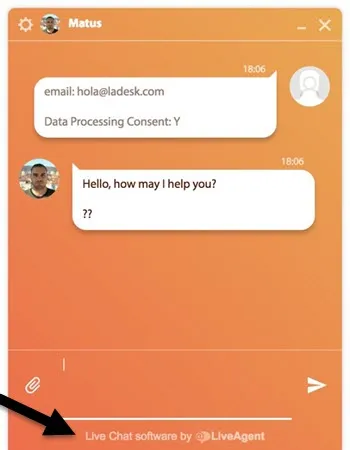
"Powered by" marketing is when your customers indirectly endorse your product while using it. The way they do that is by displaying a "powered by" link when using your software. Here's an example:
Now, "powered by" marketing comes in many forms. Take EndCrawl ($40k/mo), A SaaS tool for generating end credits for movies:
“Worked: Native Ads
“We place our name and logo in all new Endcrawl projects. Customers can remove them if they like, of course, but the power of default is strong. As a result, our name and logo are sprinkled across hundreds of films and will be seen for many years to come.”
EndCrawl used "powered by" marketing by displaying a simple mention in all new projects that people create with their software.
Powered-by SEO: A new approach to future-proof your SEO
A few days ago, Elena Verna, a software SEO consultant, wrote an article on how software companies can use user-generated content to rank for thousands of search terms. Here are some examples:
Notion
Notion has Notion Templates, an URL with thousands of user-generated templates for various niches.
If someone writes "startup funding template" onto Google, for example, they could stumble upon this Notion template.
Miro
Miro has the Miroverse, which is a set of whiteboards that people have created on all sorts of topics;
If someone types "journey map SaaS' onto Google, for example, they could potentially see this whiteboard.
Figma
Figma has a bunch of design resources created by its community, ranging from templates, wireframes, plugins, and so on.
If someone types "donut chart" onto Google, they might stumble upon this Figma design.
Here's the "catch" with all of these examples:
To use this "user-generated" content, you need to sign up for the software (Notion, Figma, or Miro). The content is very closely linked to the software. You could say that the content is "powered by" the software.
This is why I think a more appropriate name for this technique is "powered by" SEO.
How can you use "powered by" SEO as an indie hacker?
How to use this principle as an indie hacker
To give you an idea on how you can use "powered by" SEO as an indie hacker, I've chosen a few products from our Products Database. Here are some ideas:
A cold email SaaS: Share personalized templates you could edit/bulk send to people.
Project management SaaS: Share templates you can start with. For example, a team-to-do template; quarterly KPIs template, etc.
Accountability tool: Share goals/goals categories that people might add to your tool.
The pattern here is to:
Extract what people are already doing with your software
Connect that output to a JTBD people are searching for on Google (a todo template, for example).
Create useful pages with that content.
Have a pitch: To start using this template right away, sign up for Y, where Y is your SaaS.
Here's a useful AI prompt to get started
Here's a useful prompt you can enter into a tool such as ChatGPT and get "powered by" SEO ideas for your niche:
One good way to rank for a lot of keywords is to connect your software to what people are searching for:
Notion has notion templates which rank for keywords such as "startup funding template."
Miro has a directory which ranks for keywords such as "journey map SaaS"
Figma has design resources and they rank for keywords such as "donut chart."
This is content that users have created with the software, and the software provider is just sharing that content.
Give me ideas on how I can use this principle for this product: [describe your product here]
Let's try "email deliverability software" and see what ideas ChatGPT came up with:

This approach is more effective in some niches than others, but it can be used to generate valuable ideas in almost any software industry.

Integrate Attribution: Ensure your product includes a "Powered by" link that directs users back to your site. This can create valuable backlinks.
Leverage Brand Visibility: Use the "Powered by" label in prominent places, like dashboards or emails, to increase brand recognition.
Encourage Referrals: Provide incentives for users to share your product, amplifying reach through word-of-mouth and social sharing.
Monitor Analytics: Track the traffic from these links to understand their impact and refine your strategies.
Thanks for the helpful insights!
The small tool Alt Text Generator that I have been using recently can optimize SEO from the details. Sometimes details can determine success or failure.
I think this is a great approach. Got a lot of ideas for my next project. Will implement this strategy
We also implemented the "Powered by" SEO strategy on our website, LiveChatAI, and saw great results. It significantly boosted our organic traffic and increased our brand visibility. Highly recommend giving it a try!
https://growthmarketing.ai/the-journey-of-popupsmart-helpful-content-update/
No matter what, organic rankings that result in actual revenue for a company take time to achieve. If you just started a business go join the chamber and connect with people, always carry a business card, and always give stellar service.
I would like to get more on such kind of topics....
Great article that gives cool concrete examples. But please stop calling it the "new approach" - this is one of the oldest tricks in the SaaS SEO book :D
It can be a little harder to pull off for some though. Especially if yous SaaS does not get implemented on the customers website. Which most don't.
Still pondering how we can implement it for our SEO tool (Morningscore). Simplest idea so far was to offer discounts to customers who would link to us in their footers or content, but this does make this all very manual.
This is actually pretty smart.
SEO has been the driving factor for Tolt, and it works great because we offer affiliate portals, each with a 'Powered by' link. :)
Thank you for this knowledge! I'm just starting to create my SaaS side project and I need help with the organic positioning. I'll use this techniques ;)
Embed in Your SaaS Product: Ensure your badge is automatically added to websites or apps built with your platform, especially for free or lower-tier plans.
Offer Value in Exchange: Some users may hesitate to add your badge unless there’s a clear benefit. Offer features, discounts, or enhanced functionality in exchange for keeping the "Powered by" link visible.
Optimize Anchor Text: The link text should be relevant to your product, such as "CRM software by [Your SaaS]" or "[Your SaaS] payment gateway."
Track Performance: Use analytics tools to monitor how many clicks and conversions you get from "Powered by" badges to refine the strategy.
Can confirm elaborate SEO or search marketing strategies that involve a decent build out of TOFU, MOFU, BOFU content tailored to their target audience works.
The key is supportive, good, detailed KW research to kick-start the process, establish foundations.
Then use said foundations to steer the strategy and establish topical authority in the industry.
Also if your SaaS tool can deliver unique stats and usage data, it can be used for stat pieces, linkable assets and magnets for media. There's lots of examples out there.
Great Post.
Great insights, Darko! Your "Powered by" SEO strategy is a smart and practical approach for SaaS founders to boost Google traffic. Thanks for sharing this valuable tip!
Thanks for the insights!
m not bad
We've had quite a bit of success at HowdyGo with Powered By getting up backlinks as well as a few clicks through to our landing page, although the clicks are quite few in general
Great insight. Definitly going to use Notion template.
Well compiled and insightful article about SEO tactics currently used in the market. Thanks for sharing!
helpful..