Less dashboard. More answers.
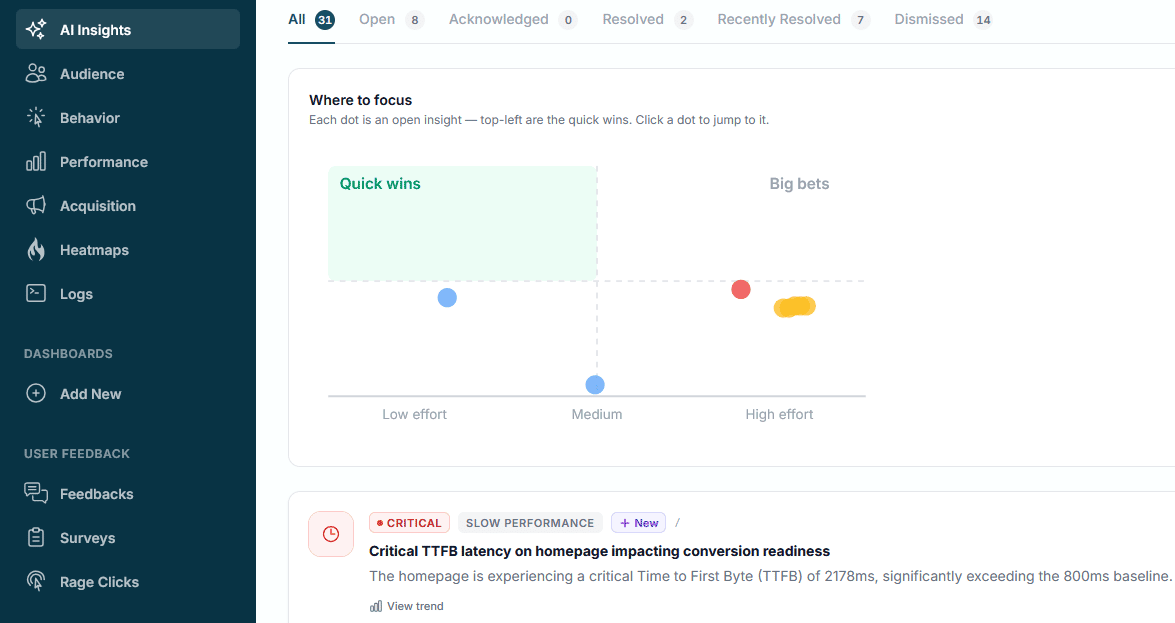
Just shipped one of the biggest updates to Spectry so far.
One thing we've learned while building product analytics: most tools are great at telling you what happened.
The harder question is why it happened.
So instead of cramming in more dashboards, we've been focused on shortening the path from finding a problem → understanding it → fixing it → verifying the result.
Some of the biggest improvements:
🔥 Heatmaps
Much more accurate for SPAs
True scroll-depth visualization
Side-by-side comparisons
Click any hot element and jump straight into the sessions behind it
🤖 AI Insights
Ask questions conversationally instead of reading static reports
Jump directly into affected session replays
Verify whether fixes actually improved the experience
Weekly AI summaries delivered automatically
📊 Audience Analytics
Better period comparisons
New vs returning visitors
Engagement metrics
Improved attribution
CSV exports
Faster drill-downs into sessions
Under the hood, we also spent a lot of time on things users rarely notice—but definitely feel:
Faster queries
Lower AI costs (80–90% reduction for steady-state insight generation)
More reliable tracking
Better scalability
Higher data quality
The goal isn't to build another analytics dashboard.
It's to help product teams spend less time hunting for answers and more time making better product decisions.
Still a lot to build, but this feels like a big step in the right direction.
Would love to hear what features you think are still missing from modern product analytics.


I like the shift from reporting metrics to helping teams make decisions.
The interesting challenge isn't finding more insights—it's helping teams distinguish between issues that deserve action and those that are just statistically interesting. Reducing decision fatigue may end up being a bigger competitive advantage than adding another analytics feature.