Lessons from JCSFY, a Successful 3D Print Seller on Etsy
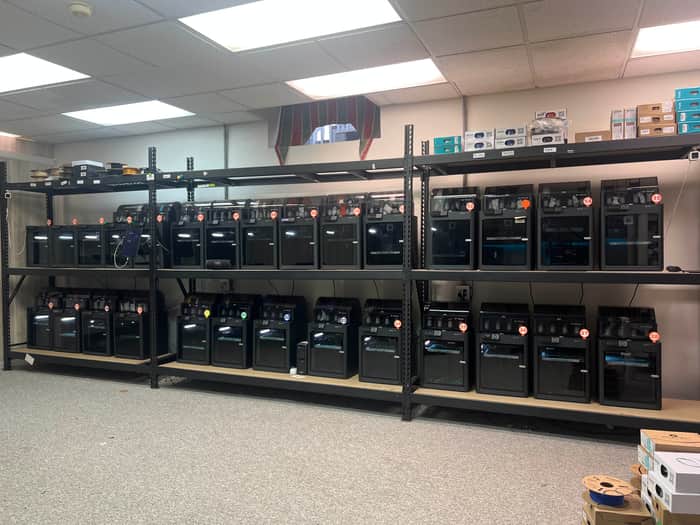
If you’re a 3D printing nerd like me who also gets a thrill from bootstrapping and solving real-world problems with digital tools, then you're going to love this story. JCSFY is a brand started by JT McCord and his partner Cameron that went from "just trying to sell one thing to one person" to running a full-on 35+ printer farm with a cult following on Etsy.
This post breaks down what worked for them, straight from my hour-long interview with JT, which you can check out here: YouTube - 3DP Stories: JCSFY.
The First Sale: From Basement to Business
"Our original goal? Sell one thing to one person. That was it."
JT and Cameron started with a bunch of random prints. Pen holders, trash cans, you name it. But it wasn’t until they made a grip for a retro handheld console that the magic happened. That grip was their first sale, and it felt huge. JT still remembers the phone call with Cameron: "We're doing it. We've done it."
From there, they followed the data. One product sold? Cool. Make another 15 and see what sticks. That mindset has pretty much defined their entire journey.
1. Niche Hard, Scale Smart
They didn’t try to do everything, but once the first sale was made, went all in on those retro handheld grips. That deep focus helped them build products no one else was making quite as well.
"There's free versions of what we make online, but they don't have felt, reversible grips, or quality fit like ours."
Their win wasn’t due to volume, but due to the attention to details.
2. Brand Before Social
They didn’t blow up on TikTok. Heck, they don’t even have one yet. They didn’t go viral on Instagram either. But at some point they got noticed by Russ from Retro Gamecore, a big Youtube name in the retro gaming scene.
"People started searching 'JCSFY' on Etsy. Not just 'handheld grip'. Our name. That blew my mind."
One video from Russ changed everything. His genuine enthusiasm and feedback passed through to the audience. Sales spiked. Recognition exploded.
3. Automate Ruthlessly
JT's a former software engineer, so naturally, he built tools, slowly automating everything that could be automated.
"We get an order, it auto-slices, assigns a printer, and we just pull the part off at the end of the day."
No dragging files to slicers one by one. No manual scheduling. This is what lets them scale without turning into a sweatshop. He’s also one of the very first clients of Printago, a software for print farm management on Bambu printer farms.
4. Innovate Beyond Printing
3D printing was never the product, but simply a tool, and must be treated as such.
"Anybody can download a 3D file. But not everybody can make a felt-lined, reversible grip that fits perfectly and arrives looking like a product, not a print."
At the start, they were hand-cutting felt with exacto knives. At some point, they upgraded to felt cutters from Cameo, and started adding more fancy designs on the felt. Now, that extra material and attention to finish is what sets them apart.
5. Bootstrap with Intention
"We've strapped this with zero debt. Every printer we bought was with profit from the last one."
No loans. No VC. Just smart, steady reinvestment. They’re buying filament by the pallet now, scaling studio space, and still keeping everything self-funded.
They’ve managed to not borrow any money. Started everything as a side-gig, and only invested what was made from this business directly.
6. Know When to Pivot
There was a point when 90% of their revenue came from one product. That product now makes up less than 3%. So there is something to be said about not keeping all your eggs in one basket.
"If we hadn’t pivoted, we wouldn’t exist anymore. You have to diversify before you feel the pain."
They’ve got 150+ active listings now, all their own IP, all tested and iterated in-house. In terms of revenue, it’s a classic 80-20 split, with 20% of their offerings making up 80% of orders.
7. Focus on Product, People, and Process
"There’s a saying: you need People, Product, and Process. We’re focusing a ton on process right now. It’s what lets you grow without breaking."
They didn’t just scale machines. They hired help. Built custom tools and software. Split roles (JT focuses on automation and ops, Cameron on design). They’re not winging it—they’re building infrastructure alongside the business, either to solve the most common pain points they have, or to prevent near-future pain points.
Final Thought: Just Start
"Don't try to reinvent the wheel. Just sell one thing to one person. That’s how we started."
For me, this was such a refreshing story. No hype. No clickbait. Just great execution, a solid partnership, and a relentless focus on doing better work. None of that “sell dragons that everyone already sells”, but a personal one. It’s been my pleasure to work with them so far.
Start small. Care deeply. Automate early. And yeah—just sell one thing to one person.
🎧 Watch the full interview with JT here
Got thoughts, questions, or your own story? I’d love to hear it below.
