Meet Philipp Piekos: The 16-Year-Old Who Has Been Building Since He Was Nine
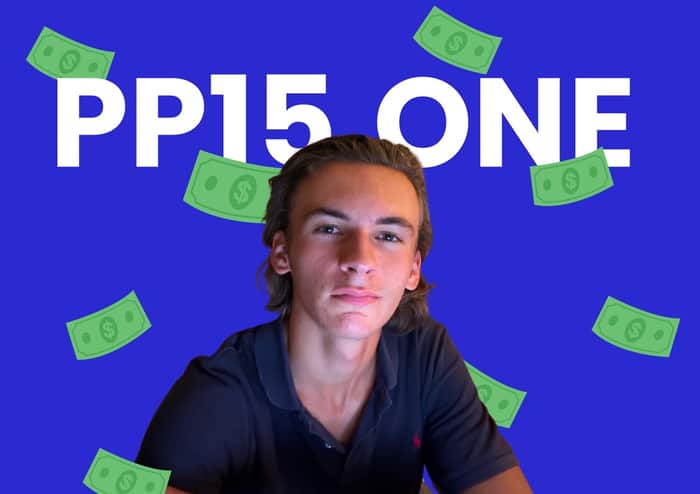
Most sixteen-year-olds are still figuring out what they might want to do one day. Philipp Piekos already has seven years behind him.
Long before most of his peers had thought about a career, Piekos was building. He started at nine — not with lemonade stands, but by creating his own projects, teaching himself how to turn an idea into something that actually existed. That instinct, the need to make rather than merely consume, has defined every year since.
An early move into artificial intelligence
In early 2024, while still a teenager, Piekos moved into one of the most competitive spaces in technology: he started his own AI company. The mission was practical — helping businesses build their own AI, giving companies the tools to bring the technology in-house rather than depend entirely on outside providers. It was an ambitious arena for anyone to enter, let alone someone his age. But for Piekos, difficulty has never been a reason to wait.
The company taught him something that would shape everything after it: how to take a genuinely complex idea and turn it into a working product that solves a real problem for real people.
From AI to digital art
Piekos didn't stand still. After his work in AI, he moved into digital art — creating and selling his own work in digital form. It was a different world on the surface, but the same instinct underneath: make something, put it out, and see what people value.
Selling his art digitally sharpened an interest that would soon become central to his biggest project — the question of ownership in the digital world. What does it mean to own something online? Who gets to decide what it's worth? Each step wasn't a detour. It was preparation.
PP15.ONE: the breakthrough
Everything he had learned — the AI company, the digital art, years of building since childhood — flowed into the project that became his breakthrough: PP15.ONE.
PP15.ONE is built on three simple actions: buy, sell, and create.
You can buy digital land, sell it on, and — the part that makes it different — create your own. On PP15.ONE you can turn almost anything into digital land: your dog, your car, a sports event, a meme, your favourite team, an idea. If you can imagine it, you can digitalize it and make it your own. Creators even set the price of the land they make. Instead of one map built by one company, PP15.ONE becomes endless marketplaces built by the people using it.
What makes the achievement remarkable is how it was built. Piekos built PP15.ONE alone — the frontend, the backend, the database, and all the logic that ties them together. It has taken a year now of teaching himself each layer as he went — and he did it while completing a demanding commercial apprenticeship in banking and finance in Zurich.
The through-line: relentless building
Ask what connects a nine-year-old's first projects, an AI company, a run selling digital art, and a live digital marketplace, and the answer is simple: the builder himself. Piekos learns by doing, ships by doing, and improves by doing. Where others wait to feel ready, he starts — and figures out the rest on the way.
He sees the company in the next five years as one of the most active and largest digital marketplaces for digital land on Earth. And this is what keeps him going every day — he barely sleeps, working on the app around the clock, every single day.
What comes next
Piekos is still building, still learning, still shipping. If his track record so far is any indication, PP15.ONE won't be the last ambitious thing he creates — just the current one.
For a generation constantly told to wait their turn, Philipp Piekos is a reminder of what happens when someone simply refuses to. He started at nine. He hasn't stopped since.
You can explore what he's building at pp15.one.

What stands out isn’t the age or the number of projects—it’s the repetition of the same loop: build → ship → learn → rebuild in a different domain. PP15.ONE feels less like a sudden breakthrough and more like the accumulation of those loops finally converging into a coherent system. That’s usually how durable products actually emerge, even when the story looks sudden from the outside.
You nailed it — same loop in different domains until it finally
clicked. Thanks for reading it properly, means a lot.
Glad it resonated.
Your reply made me think there's one strategic decision sitting underneath those loops that becomes much more important once they finally converge into a system, but I don't think I can explain the reasoning properly in a thread.
If you're interested, what's the best email to reach you on?