Mobile-First Design Strategies: Why It Matters for Modern Web Development
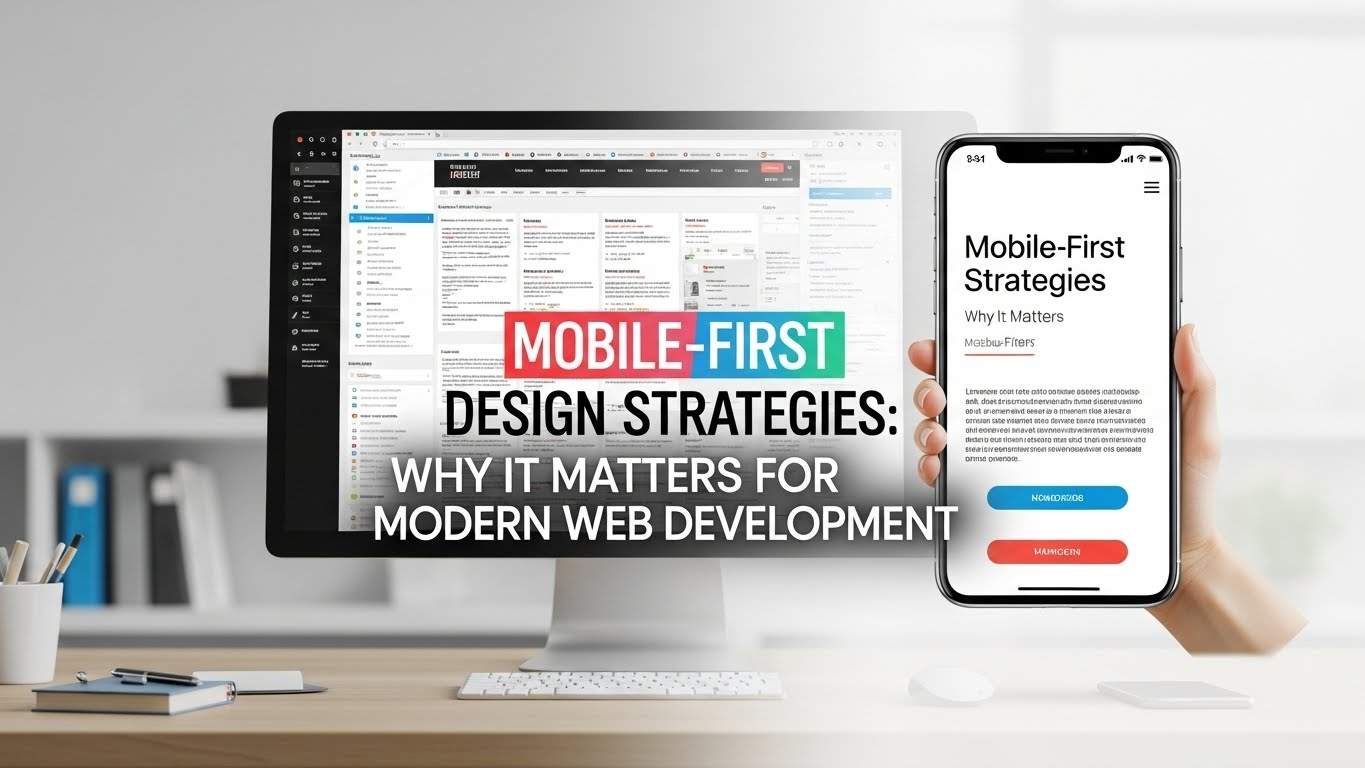
In 2024, if your website doesn't work brilliantly on a smartphone, you've already lost half your audience. It's that simple. Over 60% of global internet traffic flows through mobile devices, and that number keeps climbing. Yet despite these staggering statistics, too many websites still feel like desktop experiences awkwardly crammed onto a tiny screen—a problem that mobile-first design solves from the ground up. Leading the shift toward truly mobile-first experiences is Neon Team — a leading web development company Calgary delivering award-winning digital experiences, where mobile responsiveness isn’t an afterthought — it’s the foundation of every project, ensuring each site feels effortless on any screen.
The Shift That Changed Everything
Here's the thing about the internet: it used to belong to desktops. Websites were built with sprawling monitors in mind, and when mobile browsers finally became capable enough to view them, designers begrudgingly squeezed their creations down. It looked terrible, felt clunky, and frustrated anyone trying to accomplish something simple on their phone. The approach was backward, and everyone knew it.
That's where mobile-first design comes in. Instead of starting with a desktop layout and scaling it down, this methodology flips the process entirely. You design for the smallest screen first—a smartphone—and then progressively add features and refinements as the screen grows larger. It's elegant in its logic: if it works beautifully on the hardest platform (tiny screens), it'll work fantastically everywhere else.
Why Mobile-First Isn't Just About Phones Anymore
Google's shift to mobile-first indexing changed the game for everyone. The search giant now primarily looks at your mobile site when deciding how to rank you. Skip mobile optimization, and you're essentially telling Google—and millions of searchers—that your site doesn't matter. Your visibility plummets. Your traffic dries up.
But here's what makes mobile-first compelling beyond SEO: it fundamentally forces better decision-making. When you're designing for a three-inch screen, every pixel counts. That hamburger menu isn't a cute design flourish—it's a necessity. That massive hero image? It has to earn its place or go. The clutter gets stripped away, leaving only what users actually need.
The result? Faster load times, cleaner code, and simpler navigation—benefits that ripple across all devices. Mobile users on slower connections experience snappier performance. Desktop users appreciate the cleaner interface. Everyone wins.
The Four Pillars of Smart Mobile Design
Creating a genuinely mobile-first experience requires more than just shrinking elements and calling it responsive. Four core principles separate good mobile design from great mobile design:
· Content Prioritization remains the cornerstone. On a mobile screen, you can't throw everything at the user and hope something sticks. You have to identify the primary action—whether that's searching for a product, reading an article, or booking a service—and make that the focal point. Secondary information gets organized intelligently below the fold or hidden behind expandable sections.
· Touch-Friendly Design acknowledges that users are poking at a screen with their thumbs, not precisely clicking with a mouse. This means buttons need to be at least 44×44 pixels and spaced generously apart. The worst mobile experiences force users into repetitive accidental clicks because buttons are too small or too close togethe
· Performance Optimization can't be an afterthought. Mobile users often operate on cellular connections—not everyone has blazing-fast 5G. Images need compression. Code needs pruning. Third-party scripts that gobble up performance? Gone. A 3-second delay in page load time can slash conversions by 7%, which is the kind of tangible business impact that gets executive attention.
· Progressive Enhancement is the philosophy that ties it all together. Build a rock-solid foundation for basic phones with essential functionality. Then layer in advanced features—animations, rich interactions, complex layouts—as screen size increases. Nothing breaks, nothing feels incomplete on any device.
Tackling Real-World Implementation
Let's ground this in reality. A restaurant wants to redesign their website. Using mobile-first thinking, they'd start by asking: what does someone on their phone need to know? Location. Hours. A phone number to call. Maybe photos of food.
That's the mobile version. Clean, focused, fast.
Then the designers expand to tablet size. Now there's room for the full menu, maybe some reviews or chef biography. Still organized, still usable.
Finally, the desktop. The full showcase. Blog posts about their sourcing, event photos, reservation forms, ambient images of the dining room. All the richness, but it doesn't clutter the mobile experience where most of their visitors start.
This isn't hypothetical. Brands like Airbnb, Slack, and Dropbox built their mobile experiences this way, and it shows. Their sites are snappy, intuitive, and don't make you want to throw your phone across the room.
The Performance Payoff
Speed improvement through mobile-first design isn't marginal—it's measurable. Companies implementing mobile-first strategies typically see 30–50% faster load times compared to desktop-first redesigns. Why? Because when you start lean and focused, you're not fighting against bloat.
But performance goes beyond load times. Mobile-first sites tend to have fewer bugs because the codebase is simpler and more maintainable. When you're not trying to do everything at once on every screen size, the architecture stays cleaner.
SEO Isn't a Side Effect—It's Central
Google's mobile-first indexing is the elephant in the room that nobody can ignore. Your site is ranked primarily based on your mobile version now. But here's the thing: mobile-first design naturally produces better SEO outcomes. Faster pages score higher on Core Web Vitals—Google's key metrics for ranking. Streamlined layouts reduce bounce rates. Better user experience signals send positive messages to search algorithms.
It's not that mobile-first design "helps with SEO"—it's that mobile-first design is SEO in 2025.
Where Most People Get It Wrong
Mobile-first sounds simple until you're actually doing it, and then the complications emerge. The biggest mistake? Underestimating the desktop experience. Start too minimal on mobile, and the desktop version can feel incomplete. The solution isn't to abandon the principle—it's to scale thoughtfully, adding features strategically rather than haphazardly piling them on.
Another common pitfall is ignoring real device testing. Emulators are helpful, but they don't capture the messiness of actual mobile networks, varied hardware, or how different browsers interpret code. Testing on real devices—especially older phones—reveals issues that simulators miss.
Then there's the navigation trap. A hamburger menu saves space, but hidden navigation also hides your options. If people can't intuitively find what they're looking for, they leave. Thumb zones matter too. Most people hold their phones in one hand, so critical actions should live in the bottom half of the screen where thumbs naturally reach.
The Emerging Landscape
Mobile-first design is evolving. Voice interfaces are becoming more significant as virtual assistants grow. Foldable phones introduce new screen dynamics that responsive layouts now need to accommodate. Progressive Web Apps (PWAs) blur the line between websites and apps, offering offline functionality and app-like performance while maintaining web accessibility.
AI is starting to personalize mobile experiences based on user behavior, delivering context-aware content and recommendations. Augmented reality experiences are becoming feasible on mobile devices, opening entirely new interaction possibilities for e-commerce, real estate, and entertainment.
The Business Case
This isn't just design philosophy—it's business strategy. Mobile-friendly sites see 40% higher conversion rates compared to poorly optimized mobile experiences. Visitor retention improves dramatically when the mobile experience is seamless. And because mobile-first design forces efficiency, maintenance costs drop when you're managing a single, elegant codebase rather than juggling separate mobile and desktop versions.
The competitive advantage is real. Brands perceived as modern and user-centric—the ones that clearly designed with mobile first—build stronger customer loyalty. In markets where your competitors' websites still feel like 2015 holdovers, that difference becomes palpable.
Getting Started
Here's how to actually do this without burning everything down if you've got an existing site:
1. Start with analytics. Understand your mobile audience first. How do they navigate? Where do they drop off? What devices are they using? This data guides everything that follows.
2. Audit ruthlessly. Strip your homepage and key pages down to essentials. What's the core action? Bury the rest or eliminate it entirely.
3. Design mobile mockups first. Sketch for small screens before you think about tablets or desktops. Force yourself to prioritize.
4. Test continuously. Heatmaps, session recordings, and A/B testing reveal how real users interact with your design. Use that feedback to iterate quickly.
5. Embrace responsive frameworks. Bootstrap, Foundation, and modern CSS grid systems make building truly responsive layouts manageable.
The Bottom Line
Mobile-first design isn't trendy anymore—it's foundational. The internet has shifted irrevocably toward mobile, and websites built without that reality in mind are fighting an uphill battle. Sites designed with mobile users as the priority end up better, faster, more usable, and more profitable.
The constraint of a small screen isn't a limitation; it's clarifying. It forces clarity of purpose, ruthless prioritization, and obsessive attention to performance. Start there, and everything else gets better. That's not design philosophy—that's just good sense.

