Moving faster by cutting your safety net
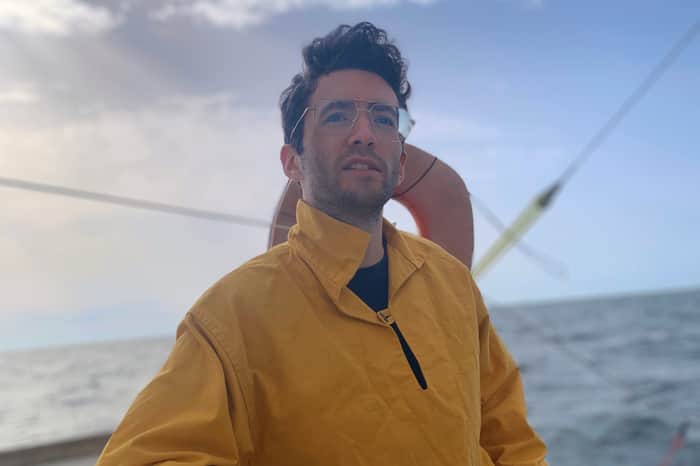
Louis Lafont bought QuickAPI a year ago for $5k, then worked on it full-time until he decided to speed things up by leveraging Parkinson's Law. He cut his safety net, started freelancing to pay the bills, and now he's working faster than ever.
Let's take a peek at how it's going for him financially. 👇
Cut your safety net
Louis was a developer at a food-tech company for 4 years before he decided to give digital nomading a shot.
He moved to Thailand, COVID hit, and he moved back to France six months later.
While abroad, he built a website builder, but failed to market it. He says it ended poorly. Fortunately, France offers automatic unemployment insurance and it paid him €2k/mo.
But that came with a price.
💰 "I felt comfortable with the insurance and didn't feel pressed enough to move the needle. I fell back into my comfort zone: Coding, adding features, and tweaking the product." —Louis
So after four months of working on it full-time and, he admits, burying his head in the code, he did something that changed his trajectory: He cut off his unemployment insurance and started freelancing.
The idea was that, while he'd spend less time on the product in absolute terms, he'd be much more selective about the time that he did spend. And it worked out. He got his next eight customers in less time than it took him to get the first three.
💰 "A time budget is a critical factor in my productivity, much more than any tool or "hack." Look up Parkinson's Law on the internet. It's so real, it's ridiculous." —Louis
The result of cutting off his lifeline was that he made decisions much faster and focused only on what was essential.
And since making these shifts, his annual spending has gone from €20k to €40k, thanks to higher earnings and a higher standard of living. It was a shift in mindset.
💰 "I'm not adjusting my living expenses according to my earnings. I'm adjusting my earnings according to my expenses and what I'd like to achieve. I'm not going to lie, it's not easy. But it works, and it feels good." —Louis
The numbers
Here's what Louis is bringing in:
- Revenue: $194/mo
- ReTool agency revenue: ~$6k/mo
- Founder pay (from freelancing): €2,500/mo
- Personal account: €3,000
- Business account: €3,000
- Taxes currently set aside: €2,000
He only works a few days a week with his agency, and it's enough to pay the bills while he focuses on his side hustle.

💰 "It's hard to share these stats when you see people online making $10k in a weekend. But I want other entrepreneurs to know that not everyone is successful overnight. If you stay in the game long enough, you'll slowly build up value. And it doesn't need to come at the cost of lifestyle. I don't live in a dorm room. I earn fair money with my other service business." —Louis
Here are his business expenses:
- Total: ~$690/mo
- Email (Resend): $20/mo
- Hosting (Vercel): $30/mo
- Database (EdgeDB): $30/mo
- Identity (Clerk): $30/mo
- Productivity (Notion, Slack): $30/mo
- Accounting (Indy, Digidom): $100/mo
- Workplace and coffee: $100/mo
- Mentoring (sparrowstartup.com): $350/mo
And here are his personal expenses:
- Total: ~€2,240/mo
- Rent: €800/mo
- Restaurants: €300/mo
- Food: €270/mo
- Transportation: €200/mo
- Shopping: €130/mo
- Sport: €100/mo
- Entertainment: €40/mo
- Insurances: €100/mo
- Savings: €200/mo
- Various services: €100/mo
He says "baguette profitability" for him is about $6k MRR. That's when he'll be able to live off of QuickAPI and cover his basic expenses.
Enjoying this format? Subscribe to get future peeks behind the curtain and learn how other indie hackers are thinking about money:
Make a portfolio of small bets
Louis says the way he looks at money and business has been heavily influenced by the "small bet" philosophy popularized by @dvasallo. So he makes small bets with his businesses and finances, starting with low-hanging fruit.
💰 "The idea of small bets stems from business being more random than you think. Thus, you should place more small bets for more chances that one will work out. It's a basic diversification strategy applied to entrepreneurship and it helps guide my choices." —Louis
Invest in your business
💰 "I'm ignoring crypto. I'm not into it. It's a lottery until everyday businesses start using it." —Louis
Louis used Revolut to buy shares in Apple a few years ago and they're up 30%. But, as he puts it, that's not going to change his life. He only started with about €1,000.
He does have a significant amount, which he refers to as his "savings", in a managed French ETF fund called Yomoni. He put €35k there to provide peace of mind. It isn't earning a ton, but at a minimum, the interest compensates for inflation.
Since his investments don't look like they'll change his lifestyle anytime soon, his focus is on his business.
💰 "My savings provide peace of mind but they will not cut it for improving my lifestyle. I think the main driver will be the work I do — as it should be." —Louis
One of the best investments he made in his business was a 3-month sales course for developers, back when he returned to France. He says it was game-changing.
He suddenly spent more time cold-calling and cold-emailing in a week than he had in his entire life.
💰 "Marketing is not random; it is a system: It will work and deliver results if you put enough effort into it." —Louis
Invest in a mentor
Spending $350/mo on a mentor might seem high when a product is making $200/mo, but it's an investment he's happy to make.
The process gives him new ideas, motivates him, and holds him accountable. He also learns from his mentor's hindsight, as he's done all this before. And perhaps most important of all, it allows him to get out of the weeds and take a broader view.
💰 "When you’re heads down for months, it’s hard to take a break and get a broad view. You often miss low-hanging fruit." —Louis
He says 1 hour with a mentor adds more value than the 10 hours he might have spent on the wrong tasks.
Invest in your wellbeing
He also invests in a balanced lifestyle. To him, that means lifting weights, playing the piano, and spending time with friends and family.
💰 "You can quickly get trapped in an unhealthy loop of overwork and solitude as a solo founder. It bit me in the first year of being by myself. Never again. I don't want to sacrifice health (mental or physical) for anything in the world." —Louis
That's part of why he returned to France: Establishing a rooted lifestyle with long-term relationships, which are hard to build when traveling.
And he doesn't mind paying for things that he cares about. Clothes are Louis' biggest splurge.
💰 "I'm not in the minimalist vibe. I can't see myself dressed the same every day. But I'm certainly not a fan of fast fashion, either. I like good quality wear and buy locally-produced products when I can." —Louis
ISO debt
Louis is debt-free. To most of us, that seems like a good thing. But Louis isn'tconvinced.
💰 "Having debt has always frightened me and seemed like a bad thing. But after a few years in entrepreneurship and being confronted with an investing mindset, I'm starting to come around to the idea that all debt is bad. It can be a great lever if appropriately used." —Louis
Part of the reason he doesn't have debt is that he hasn't chosen to purchase a house yet.
💰 "I think it's weird that buying a house is the norm, but people rent their time (being employed) instead of owning a business." —Louis
That said, he isn't against homeownership.
💰 "Owning land is really powerful, and I do see myself buying somewhere in the near future." —Louis
Leverage tax writeoffs
Louis writes off several expenses, saving him roughly €1,000/mo in taxes.
That's nothing to sniff at, but for some reason, he says very few of his founder friends bother doing it.
He's writing off his mentoring, part of his rent, and all IT expenses at home (phone, computer, online services except for entertainment).
Note: Countries vary on what can and can't be written off.
99.99% of founders should bootstrap
When it comes to bootstrapping vs funding, Louis has been on both sides of the fence. He was big into what he calls the "VC-billion-dollar-startup-or-nothing world" until he encountered bootstrappers like @dvassallo, @levelsio, and @GuillaumeMbh.
Now, he says he has a much more nuanced approach. And both models have their place.
💰 "I think the VC-funded model can be a lot more damaging to founders and that 99.99% of internet-based companies should be bootstrapped or have minimal investment. Especially in SaaS, as you can keep costs low." —Louis
He also points out that you have a better chance of succeeding with funding if you've already bootstrapped a product.
The three financial pillars to live by
Let's wrap up with the three financial pillars that Louis lives by:
- Don't bet what you can't afford to lose.
- Diversify your revenue.
- Don't look for "passive income".
💰 "Don't look for 'passive income'; there is no such thing. Nor should there be. But start with low-hanging fruit." —Louis
You can check out Louis' product QuickAPI or his Retool agency MissingPiece. Or find him on X.
Please note that the above are opinions. This is meant for informational purposes only. It is not intended to be financial advice.
And if you'd like to be featured as a guest in a future interview for this series, let me know in the comments!

Great to share this in full transparency!
When you bought QuickAPI for $5K, there was no customer?
Hi Pierre, no customers when I bought it. It has only ~200 free users.
You can check out my post about the acquisition here:
https://www.indiehackers.com/product/quick-api/i-acquired-my-first-company-for-5000--NM-DHRJKbqeOporZDPh
Thanks!
Nice post. This goes to prove that humans do not work best when cornered (no other options left) but only works when corned.
Thanks!
With not enough pressure, you're too comfortable, but too much can also be paralyzing. You have to strike the right balance, which is different for everyone.
Great journey!
Thanks for the detailed piece, really insightful. I hope it will motivate more indie hackers to start a business as a side hustle!
Thanks Elliot 💪
Eyyy, #reunion!!!
// mash
Hey guys, I built the mentoring platform helping Louis! After reading this post, I felt so motivated that I created my own contributing post thanking the community here at IndieHackers.
https://www.indiehackers.com/post/how-indie-hackers-was-the-inception-of-my-founder-coaching-platform-1c7c84bb67
Love you all very much, #just #keep #shipping! :)
Mash is awesome. You should check out his post and what he is building
Nice! Thanks for sharing
Ah, shame I talked to the mentorship service & they said it's actually $500 - $800 / mo. Maybe they raised their prices?
Hey Evan! Great seeing you here ;) and yes I have raised our prices, so our coaches get more time to spend with their founders. Our previous successes with founders (https://sparrowstartup.com/love) have given me the confidence to do this, but it all started honestly with this website.
Your comment alone has motivated me to create an article on this site, so thank you!
Here's the article I wrote for IH right after reading this post btw - https://www.indiehackers.com/post/how-indie-hackers-was-the-inception-of-my-founder-coaching-platform-1c7c84bb67
Love this - I think I'll try the mentorship out.
amazing.
Thanks for sharing all the details. Keep up the good work.
Thanks Walter! I will try to keep posting more often
full respect and more importantly full support keep going Louis.
Thank you !
It is rare to see people accepting to be that vulnerable! - which definitely one of the core components for any entrepreneur.
It is an inspiring journey and a true example of "lead by example" 🚀
100% wasn't very comfortable sharing those stats at the beginning.
But hey... you gotta start somewhere.
Hi everyone; I'm happy to share my experiences with you all!
Feel free to ask questions about QuickAPI, my agency work, or anything else.
I'm not going to pretend to be an influencer... but this way of approaching finance and lifestyle has served me well, so here we are.
Cheers
Thanks, @indiejames, for having me!
Louis, your approach to the "small bet" philosophy is truly inspiring! Making calculated moves in both business and finance is a testament to your wisdom. Your dedication to investing in your business, backed by the sales course experience, is remarkable. It's refreshing to see your focus on what truly matters—improving your lifestyle through hard work.
Investing in a mentor demonstrates your commitment to growth, and the impact of that one hour with a mentor versus 10 hours on less impactful tasks is a valuable lesson for us all. Your emphasis on wellbeing, from a balanced lifestyle to quality clothing, reflects a holistic perspective that many entrepreneurs overlook.
I'm in the same ballpark financially and chugging along with my $2k MRR business. Thanks for posting this and making me feel normal. On a regular basis, I look at my accounts and have to take a breath and remind myself, this is a journey and eventually, I will get to the $10k MRR mark. I just have to survive and continue to experiment.