My distribution fix: an assembly line that turns app concepts into short-form videos while I keep coding
I am a solo developer in Seoul. I build small, honest apps: a save-anything note app, a sleep companion with a pig mascot, a calorie scanner, and a shoe sizing helper. Shipping apps was never my bottleneck. Distribution was. I had zero budget for ads, no face for talking-head content, and no time to learn video editing.
So I built video production the same way I build apps: as a pipeline. Now every app concept becomes a store trailer plus a captioned short, and I never film anything.
The setup: two PCs and a shared Google Drive folder.
PC 1 is planning and editing. Claude runs the loop here. Before any planning it spends at least 10 minutes watching actual YouTube Shorts in the niche and writes a style reference: hooks, fonts, cut rhythm, and what no-name channels with under 300 subscribers did in the videos that still reached six or seven figure views. That last part matters. I only copy structures that worked without an existing audience, because I do not have one. Then it writes a storyboard, a narration script, and a short "work order" markdown for the second machine.
PC 2 is the GPU box. It reads the work order from Drive and generates the raw sources with three open models: Wan 2.2 for b-roll, GPT-SoVITS v2 for narration cloned from one sample of my voice, and Sonic to lipsync my avatar from one photo of me. When it is done it uploads the clips and drops an empty DONE.txt as a signal. That empty file is the entire integration layer between the two machines.
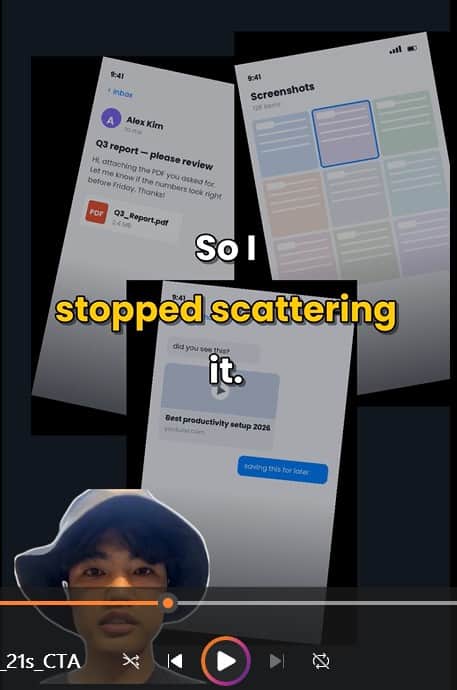
Back on PC 1, Claude pulls the sources and checks them frame by frame. AI video loves to quietly swap your actor between scenes, so zoomed face crops are a mandatory QC step now. Then it assembles everything with ffmpeg and ASS subtitles, mixes the narration over ducked background music, and outputs two files per app: a clean 20 second store trailer and a 24 second short with captions and a store CTA.
The one rule that saved the whole thing: a Fidelity Gate. Extract real frames from the finished render and compare them against the plan, line by line. My first video was planned as a fast relatable skit and came out as a slow ambient poster. Nobody caught it because nobody looked at the frames. Now nothing is marked done until the frames are on screen next to the plan.
Two caveats, because I want this to be useful and not a highlight reel. First, the app UI in every video is a real device recording, never generated. I refuse to show fake UI in ads. Second, I will not claim results: the channel is brand new and views are basically zero right now. What the pipeline changes is cost, not outcomes. The marginal cost of one more finished video is my review time, so I can afford to test formats weekly and let the numbers decide.
Happy to share the work order template or the frame-check QC list if anyone wants it. Which part would be most useful to see in detail?

What stood out to me is that you treated distribution as a production system instead of a marketing task. I'd keep validating whether the real advantage comes from producing more videos or from learning faster which messages actually earn attention. The pipeline is valuable either way, but those are different optimization goals.
Assembly-line short-form is a solid distribution system — the other half is usually finding where people already ask for the kind of app you’re shipping (before you make the video).
Do you also hunt Reddit/forum threads for that demand language, or is video the only channel right now?
I built a scored digest for the hunt part (discovery, not auto-post). If you want, I can map how I’d find threads for your app concepts on a 10-min call.
Automating the production pipeline is the easy 80%, the hard part with a brand-new channel and minimal views is almost never output speed, it's that you're starting from zero distribution and have to earn trust before volume compounds. Have you thought about seeding the first batch through an existing creator or community in the app-dev/AI space, even just cross-posting into relevant subreddits or Discords, rather than relying purely on the channel's own reach to find its first audience? Curious how many concepts you're planning to run through the pipeline before judging whether the format itself is working.