My grandfather got cancer. The pharmacy couldn't tell us what was safe. So we built it.
My grandfather was diagnosed with advanced prostate cancer. The kind of diagnosis that rearranges a family overnight.
A few days later, my brother went to the pharmacy to pick up his new prescriptions. He wanted to grab a multivitamin too -- something small to help while the treatments took their toll.
But standing in that aisle, he froze. He had no idea if a multivitamin was safe alongside the new meds.
So he asked the pharmacist. She pulled out a massive reference book and started flipping through it, cross-referencing every medication one by one. It took a long time. Not because she wasn't good -- but because that's literally how it's done, even for the experts.
My brother stood there thinking: there has to be a faster way to do this.
He searched that night. And the next morning. He looked for an app, a website -- anything that could take a list of medications and say clearly whether they're safe together. Something a regular person could use without a pharmacy degree.
It didn't exist. Not for people like us.
So we built WellbieRx.
It's a web app (PWA, works on any device) that lets you:
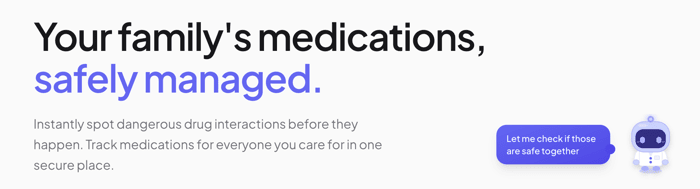
- Check drug interactions instantly -- powered by the same NIH/FDA databases pharmacists use, but translated into plain language
- Track medications for your whole family -- separate profiles for Mom, Dad, the kids, anyone you care for
- Get food and drink warnings -- like "don't eat grapefruit with your statin" or "alcohol + blood thinners = bad idea"
- AI assistant (Wellbie) -- ask medication questions in natural language and get clear, sourced answers
- Reminders, adherence tracking, PDF exports -- the full toolkit for family caregivers
The business model:
- Free tier -- 1 profile, unlimited interaction checks, medication reminders. Free forever.
- Family ($5/mo) -- 4 profiles, AI assistant, adherence tracking, export/share features. 7-day free trial.
- Professional ($9/mo) -- Unlimited profiles, priority AI, advanced analytics.
Tech stack (for the nerds):
- Next.js 16 (App Router)
- Supabase (auth + database)
- Stripe (billing)
- AI SDK + Anthropic (AI chat)
- Upstash Redis (rate limiting)
- Vercel (hosting)
- PWA with offline support + push notifications
What I've learned so far:
- The problem is massive and invisible. 1.3 million Americans are injured by medication errors every year. Most families managing a loved one's meds are doing it blind.
- "Just ask your doctor" isn't realistic. It's 11pm. It's Sunday. The pharmacy is closed. You need an answer now. That's where we live.
- Caregivers are the real users. It's not the patient Googling drug interactions at midnight -- it's their daughter, their spouse, their kid. We built for them.
- Free interaction checks drive signups. We put the checker right on the homepage with no signup required. People try it, see the value, and then create an account to save their results.
- Referrals are organic. When someone finds a tool that keeps their family safe, they tell other people. We added a referral program (both parties get a free month) and it's been our best channel.
What's next:
- Native iOS app (in development)
- Medication barcode/label scanning
- Pharmacy integration for auto-importing med lists
- More language support
Try it free: wellbierx.com (no account needed to check interactions)
I'd love feedback from this community. What would make you trust a health app like this? What's missing? Happy to answer any questions about the build, the business, or the problem space.

This is exactly how meaningful products should be built: from a real moment of confusion, urgency, and care.