No-Code SaaS Ideas: Smart, Industry-Specific Solutions for Beginners
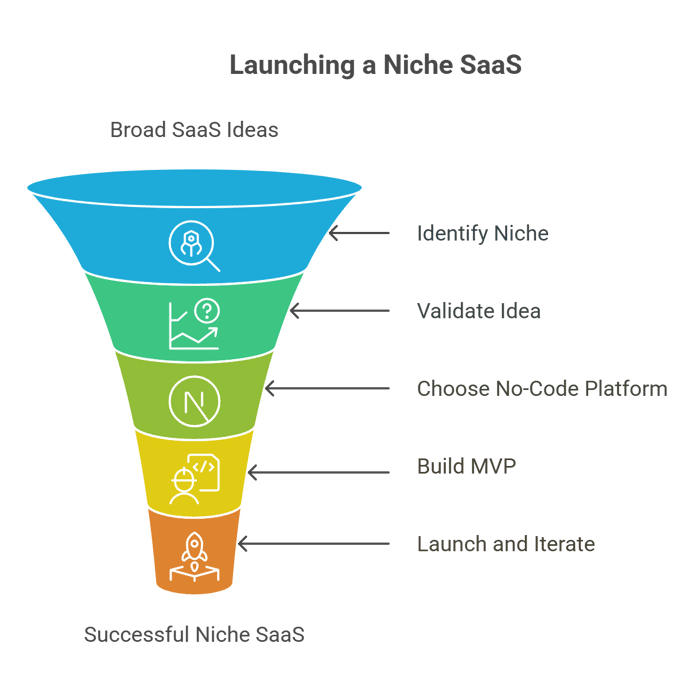
When I started my journey as an indie hacker, I remembered feeling overwhelmed looking at all the possibilities out there. The startup world felt saturated, with broad SaaS ideas fighting over market share. However, I soon realized something crucial: instead of being broad, the smartest path was incredibly specific.
Together, let's explore why industry-specific no-code SaaS solutions make fantastic beginner-friendly ideas—and exactly how you can start your own today.
Why Industry-Specific SaaS is Ideal for Beginners
As a beginner in SaaS, two thoughts probably dominate your internal dialogue:
- "How can I compete against other established platforms?"
- "How do I validate an idea quickly and affordably?"
When you target a niche industry, you drastically reduce your competition. Instead of competing with massive products aimed at millions, you're developing a solution tailored for thousands—or even hundreds—of professionals experiencing a specific set of problems.
That also means validation becomes simpler. Industry-specific communities are generally tight-knit and vocal about their pains and frustrations. It's easier to reach out, listen, validate, and build trust quickly.
No-Code Tools: Your Secret Weapon
Five years ago, launching a SaaS tool on your own was daunting. But no-code changed the game, leveling the playing field for non-technical SaaS founders.
Today, platforms like Bubble, Webflow, Airtable, Zapier, Glide, or Fuzen.io—(an intuitive no-code platform allowing anyone to quickly assemble internal tools and industry-specific SaaS products)—are affordable and accessible to everyone—from marketers, consultants to indie hackers like us.
Because you're building a focused, specific industry solution, no-code aligns perfectly. You don't need overly complex features or proprietary algos. You just need solid integrations, streamlined UX, and a clear solution to a distinct pain point—perfectly doable with no-code.
Promising Industry-Specific SaaS Opportunities (with Examples!)
So, what do industry-specific SaaS ideas actually look like? Let's go through a few promising categories you could tap into:
1. Real Estate and Property Management
The real estate sector is still incredibly underserved by tech. Realtors and property managers juggle tons of paperwork, communication channels, agents, maintenance requests and financial transactions.
Idea Examples:
- Simple repair and maintenance request tracker for property managers.
- Easy-to-use lease document signing and management app for rental businesses.
- Automated SMS appointment system tailored exclusively to real estate agents.
2. Micro-Fitness Studios and Gyms
Even though there are big names like Mindbody, smaller fitness studios often find these complex tools expensive and overkill. A simpler, affordable alternative can quickly gain traction.
Idea Examples:
- Compact SaaS to manage class bookings, waitlists, and communications for niche Yoga studios.
- Specialized client onboarding and progress tracking specifically for boutique personal trainers.
3. Independent Service-Based Businesses
Think freelancers, coaches, consultants, tutors. Huge market emerging rapidly but still lacking sophisticated but small-scale affordable tools.
Idea Examples:
- An easy-to-setup client portal software especially optimized for freelance copywriters or graphic designers.
- Automated invoicing and session-booking integration for personal coaches in a niche industry (like freelance career coaches, financial planners, or nutritionists).
4. Event Planners and Venue Managers
Event management software often caters to large enterprises or complicated setups. Small event planners struggle to find platforms that are just right in terms of ease-of-use and pricing.
Idea Examples:
- Simple RSVP management SaaS for small-scale weddings and birthday planners.
- Mini CRM specialized for local venue-government interaction and catering management.
Real-World Personal Experience (Mini Case Study)
A friend of mine, who formerly worked in the financial sector, recently built a tiny SaaS specifically geared at helping small investment advisory firms organize their client communications, compliance, and document management complexity. Built entirely on no-code in about a month, his tiny SaaS grew organically through word of mouth alone.
He validated with just five targeted customer interviews. Within a month after launching, he secured five paying customers—all without ever needing elaborate marketing or highly technical development.
Step-by-Step: Launching Your Industry-Specific SaaS Idea
Here’s the playbook I've used repeatedly for validating and launching niche-specific SaaS products:
Step 1: Identify your niche
- Reflect on your own experiences, hobbies, skills, or career background.
- Interview professionals in industries you or people around you are familiar with.
- Look at online communities (Reddit, LinkedIn, niche forums, FB groups). Identify recurring pain points.
Step 2: Validate your idea
- Reach out to at least 5 people directly in your niche at the early stage.
- Listen keenly to their problems. Validate if they're significant and worth paying for.
- Confirm pricing—the easiest method: ask "Would you pay X dollars monthly if I built a solution?"
Step 3: Choose an easy-to-use no-code platform
- Research No-code platforms—Bubble, Glide, Fuzen.io, Airtable (plugin-friendly solutions are excellent).
- Compare pricing, ease of use, integrations capability.
Step 4: Start small and simple
- Don't overwhelm your solution with too many features initially.
- Build MVP (minimal viable product), launch to early adopters.
- Prioritize capturing early customer feedback and iterate continuously.
Final Thoughts & Key Takeaways
Pivoting from a broad SaaS vision to an industry-specific niche dramatically increases your chances of early traction and profitability. No-code tools have lowered the barrier to entry, making startups accessible to indie hackers just like us.
If you're struggling to start or feeling overwhelmed, remember you needn't revolutionize an entire industry to create a fantastic, profitable niche SaaS.
Instead, just aim to genuinely solve real problems for a specific handful of real people. Every massive startup once began small, specific, and hyper-focused.
Now, ask yourself:
- Which industry do you understand well?
- Can you spot a recurring problem?
- Would addressing just that one tiny problem make their lives significantly easier?
That's your sweet spot.
Have you built your own niche-specific SaaS tool? What industries and pain points are you targeting? I'd love to hear your thoughts and experiences below! Let's learn and build together—a tiny solution at a time.
