No-code tools are meant to cut regular development times in half.... but do they actually?
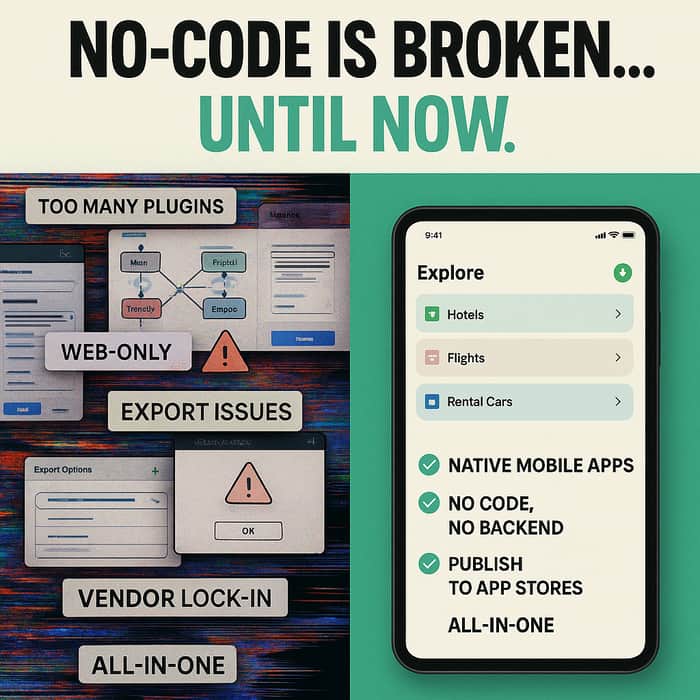
No-code is supposed to save time, right?
Then why does it still take weeks to build something that actually works?
Real talk: I’ve spent more time debugging and deciphering no-code tools than I should ever have.
Even after the unbelievably long learning time for most of these 'no-code tools', half of them don’t even do mobile properly. The other half lock you into limited components or force you to duct tape 10 plugins together just to get basic features.
And don’t even get me started on how most of the time, you’re just shipping a glorified webview with bad UX and no offline functionality. Like If ur not aactually creating real native apps, THEN DONT SAY SO!
But here’s the part that’ll probably get me kicked out of every no-code IH group:
🧨 MOST no-code tools aren’t made for real apps. They’re made for demos.
That’s why I was shocked when I tried nandbox. When I tell you guys it is the easiest UX i ever tried and only took a few hours to get the hang of fully. PLUS its the only no-code platform (and actually no-code. ZERO) that creates fully native apps. Real backend. No wrappers. No third-party glue. Just publish.
I built a mobile MVP faster than I could’ve mocked it up in Figma.
So now I’m wondering:
🧠 Are we ready to admit most no-code tools aren't serious enough for real users?
💬 Anyone else building native mobile apps with nandbox?
Curious to hear how others are navigating this. Especially if you’ve been burned by the promise of “launch in a weekend".

The pairing of 'runs locally' + 'no API keys' is undervalued positioning. It speaks to the technical buyer who has already been burned by SaaS tools that changed pricing, added rate limits, or went down at the wrong moment.
The one-time purchase model makes sense when the tool does a defined job well. What's the job this tool does?
Interesting question — no-code tools promise faster build times, but the real advantage shows up when those tools help you learn what matters fastest.
In practice, I’ve noticed speed alone doesn’t validate a product idea — what matters is whether the tool lets you:
You can build something fast with no-code, but if you’re not sure what user signal proves value, that speed doesn’t buy you much.
Curious — in your experience or opinion, what user outcome signal is the best indicator that the no-code build wasn’t just fast but meaningfully correct?