Non-obvious Lessons from Dabbling in Side-Project Marketing (And My Checklist for Deciding about Future Side-projects)
Side-project marketing is my favourite type of marketing. Could it have anything to do with the fact that it feels more fun – building a project, rather than (the horror!) a marketing activity?
But be that as it may, I’ve tried side-project marketing several times, and got a great deal out of it. Last month, in March, I released a product called Dopanope. It's a Chrome extension that stops you from mindlessly browsing the internet.
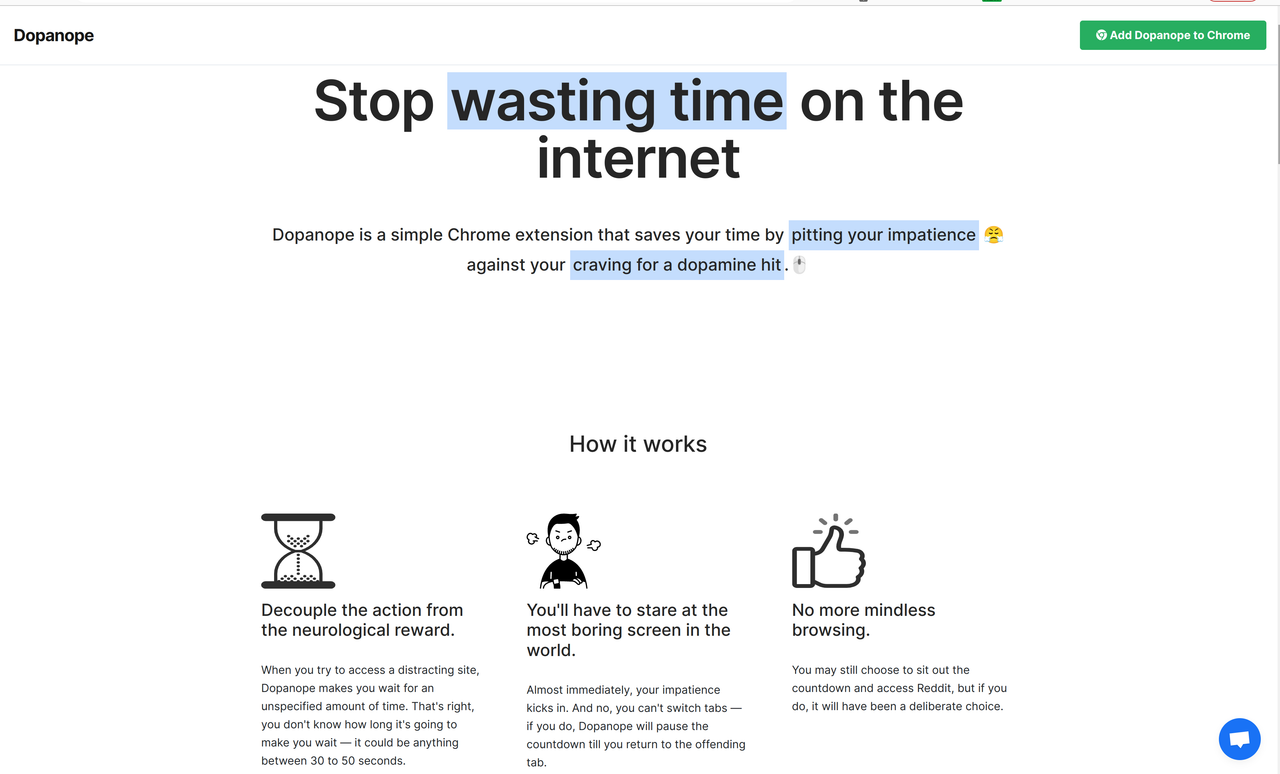
Originally, I built Dopanope for myself, and using it every day, found it a useful little tool.
So why not launch it as a side project? I thought.
And I did.
The launch went quite well, and we got some great reviews.
But since I’ve launched side-projects before, and since I definitely want it to be in my arsenal of marketing strategies in the future, I wanted to do a retrospective and figure out what really makes a side-project click. And as I thought more about this, I’ve come up with a checklist I'll use going forward, to validate and decide whether a product idea can work as side-project marketing material at all.
I’ve expanded on the points through the lens of two of my own side-projects – Dopanope, released last month, and Why Do I Procrastinate, launched a few years ago.
What’s it on the Side of? Some Context
To give you a bit of context (and not at all in the spirit of self-promotion) the main product I'm working on is Boss as a Service. We give you a Boss -- a real person who'll keep you accountable to actually following through on your plans. We'll reach out to you over your preferred medium -- Text, Email, Whatsapp or Telegram -- and bug you to get your goals done, and follow up relentlessly till you do. A lot of our users tend to be freelancers, students, writers -- people who work independently without the supervision and accountability that a "regular" job structure brings you. If you feel like you’ve already started slipping up on your 2023 goals, and feel like you could use a Boss, you should check us out!
With that plug delivered, let’s get back to side-project marketing.
What were the side-projects?
Dopanope: A Chrome extension to stop you from mindless browsing. At this point, we all know that tech companies use dark UX patterns and psychology-based tricks to keep you hooked. If you’re not conscious of the way you’re spending time, you might easily find yourself wasting away hours on clickbaity headlines and pointless social media drama. I got the idea for Dopanope from this old xkcd comic.
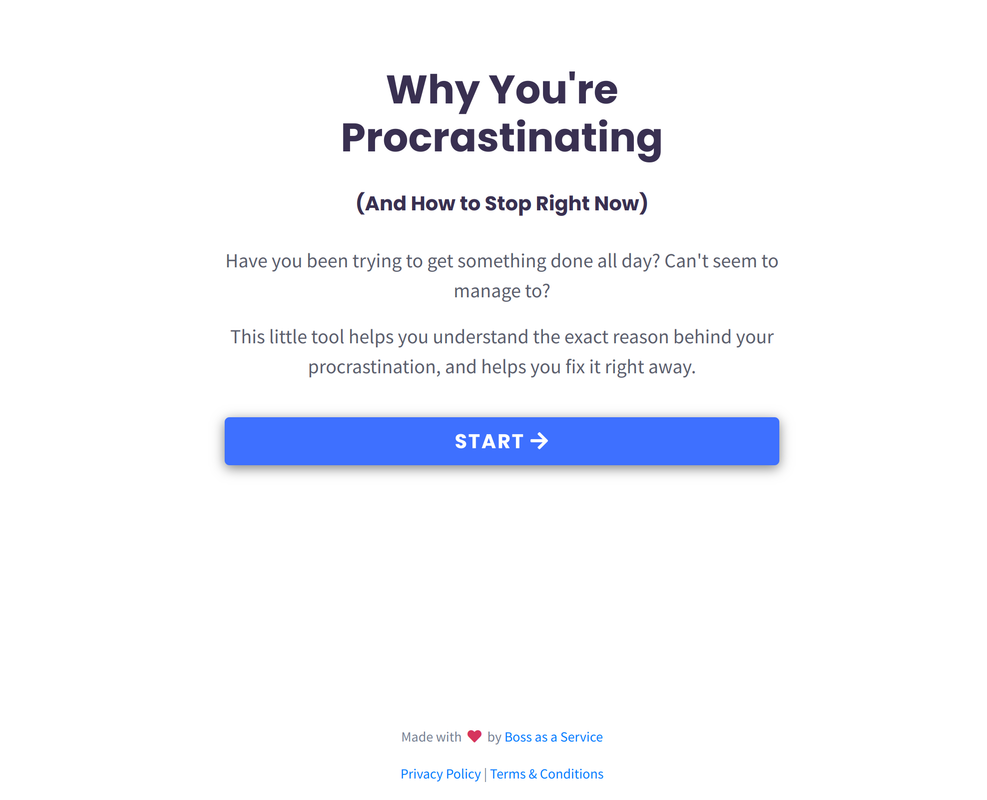
Why Do I Procrastinate: An interactive quiz that helps you figure out why you’re procrastinating, and then helps you fix the problem.
I. The most important aspect of side-project marketing - it needs to be a differentiated, unique product that catches people's attention.
The point of side-project marketing is to create an attention-catching, possibly novel project that has a good chance to go viral, that will eventually lead people back to your main project. Alex Tew, the founder of Calm.com, explains this in this video.
So the #1 requirement for the side-project is for it to actually be attention-catching.
In my (admittedly biased) opinion, Dopanope does have a couple of clever twists that make it differentiated. It works better because of a few unique features -- for example, it takes a different approach than other blocker extensions, using the endowed progress effect and not showing a timer.
But there's a problem here. These are subtleties that cannot be conveyed in a short headline. For someone browsing Hacker News, it's not easy to grab their attention about why this app works better than others because it doesn’t have a timer, without explaining for about 3 more paragraphs.
In contrast, my other side project's heading was simply, "Why do I Procrastinate - Web MD for Procrastination." This is short enough to fit into the character limit imposed by sites like Hacker News, intriguing enough to get people to click, and expository enough that people can understand what it is immediately.
Lesson: The side project concept needs to be unique enough that it catches people's attention, and simple enough to be explained in a short one-line heading.
II. Keep the side project idea simple.
This is likely to be the Achilles heel for many of us! It's so tempting to add just one more feature. Don’t let your creativity and imagination run away with you! There are many reasons to not get lost in building your side project as if it's your main project.
-
The more complicated it gets, the more the delay in shipping it. The more the features, the more the bugs, the more time you spend getting it ready for launch. This is the obvious reason.
-
Consider if you have the bandwidth and resources to support ongoing development, feature requests and bug-fix requests for a full-blown project that's also free. (Of course, since your side-project’s main goal is to drive traffic to your main project, it’s got to be free.)
-
More importantly, the more complicated it gets, at launch, the more time you'll spend convincing your potential user to download it, use it, read it, try it. After reading a whole landing page of your explaining benefits and objection handling, you know what happens? Your user has no energy or attention left to actually check out your main project -- which was, by the way, the whole point of this exercise.
I think, to an extent, this happened with Dopanope. People got lost in it as a standalone product. If it had been simpler, there'd have been more attention left to check out the main project.
Lesson: Keep it as simple as possible. Don't lose sight of the fact that this is supposed to be a marketing vehicle for your main project, and not a full-fledged project in itself.
III. Create a short, satisfying experience.
My previous side project, Why Do I Procrastinate, was short and sweet. You finished the quiz in a minute, you got a good feeling from the result. And when it's done, it's easy to point you to Boss as a Service.
With Dopanope, it got more complicated. When do you get that nice satisfying sense of accomplishing something, or something neatly coming to an end? That's easy to generate at the end of a quiz – the mere fact that you’re getting a special result tailored to you is enough. With Dopanope, the whole experience -- understanding what it is, why it's different, installation, dealing with Google Chrome's alarming permission warnings -- all of it is too long, distracting (from the overall aim of directing people to the main project) and there's no feel-good feeling as a result.
Lesson: The user experience needs to end well, preferably on a satisfying note, and no longer than 2 mins from start to end.
IV. Be careful with the CTAs.
If it’s true that you should try to have only 1 main CTA on the page – at a time, anyway – we need to think carefully about which one that should be.
The CTA on the Dopanope page was to go to Chrome store and install the extension. This ended up taking the limelight, and de-emphasised the "check out Boss as a Service" CTA. Two CTAs at a time is bad – and naturally, the user's attention gets directed to the giant "Download from Chrome" button, and the nudge to check out the main project becomes secondary.
Most important? Once the user goes to the Chrome store, the job is done -- they don't come back to the Boss as a Service website.
Let’s contrast this with Why Do I Procrastinate. It’s easier, and more natural, to gently nudge the user to check out BaaS, by showing a CTA to view the main project, after the quiz experience. This way, there’s only one CTA at a time, not several clamouring for attention, and taking away attention from the other.
Lesson 1: if possible, keep the entire side-project experience on your own website. Don't direct people away because once they finish the “job to be done” they're not likely to return.
With a Chrome extension, this isn't entirely possible -- I can't host a Chrome extension on my own website. So I’ll think twice before making any more Chrome extensions, unless the benefits from the other factors massively overweigh everything else.
Lesson 2: See if there’s a way to show only one CTA at a time – preferably, show the CTA to check out your main project after the side-project experience is over.
The Checklist - Run through these while deciding about a side project
Here are all the points in the form of a checklist! My recommendation: when you’re weighing up different side-project marketing ideas, see how many points each idea gets, and go with the one which gets the maximum points.
-
Is your side-project idea differentiated, unique and catchy? Or do similar products already exist? If yes - 1 point, if no - 0 points.
-
Is the side-project idea simple enough to be explained in a short headline? Try this before writing a single line of code. Can you put down the essence of it in a short and catchy headline? If yes - 1 point, if no - 0 points.
-
Does the entire experience of the side-project, from the user's side, take no more than 2 minutes from start to end? If yes - 1 point, if no - 0 points.
-
Does the user get a nice satisfying feeling at the end of the experience? If yes - 1 point, if no - 0 points.
-
Is it possible to keep the entire experience on your own website? If yes - 1 point, if no - 0 points.
-
Is it possible to insert the CTA to check out your main project after the experience of the side-project? If yes - 1 point, if no - 0 points.
The Good Stuff!
This said, launching side projects is great fun! Here are some of the good things that happened – and this was despite Dopanope not hitting every single one of my side project validation criteria.
-
I shipped the extension! This has been on my list for a while now, and while I've been using an early prototype of Dopanope myself, this launch gave me the impetus to polish it up, work on the design, and finally ship! Shipping is so important, as many founders and makers keep saying. For me, I love that I am sticking to my plan -- every time I do it, it's a vote of confidence in myself. In the productivity business we call it success spirals.
-
Many firsts. On a personal level, this was the first Chrome extension I made. And I'm giving myself props for completing the Google review process, also for the first time!
-
Increased the number of sign-ups! Yes, the all-important result! The Dopanope launch on Product Hunt, to our own internal newsletter and Hacker News all together added to our subscriber base!
-
Backlinks! I did get a good Product Hunt backlink! :)
-
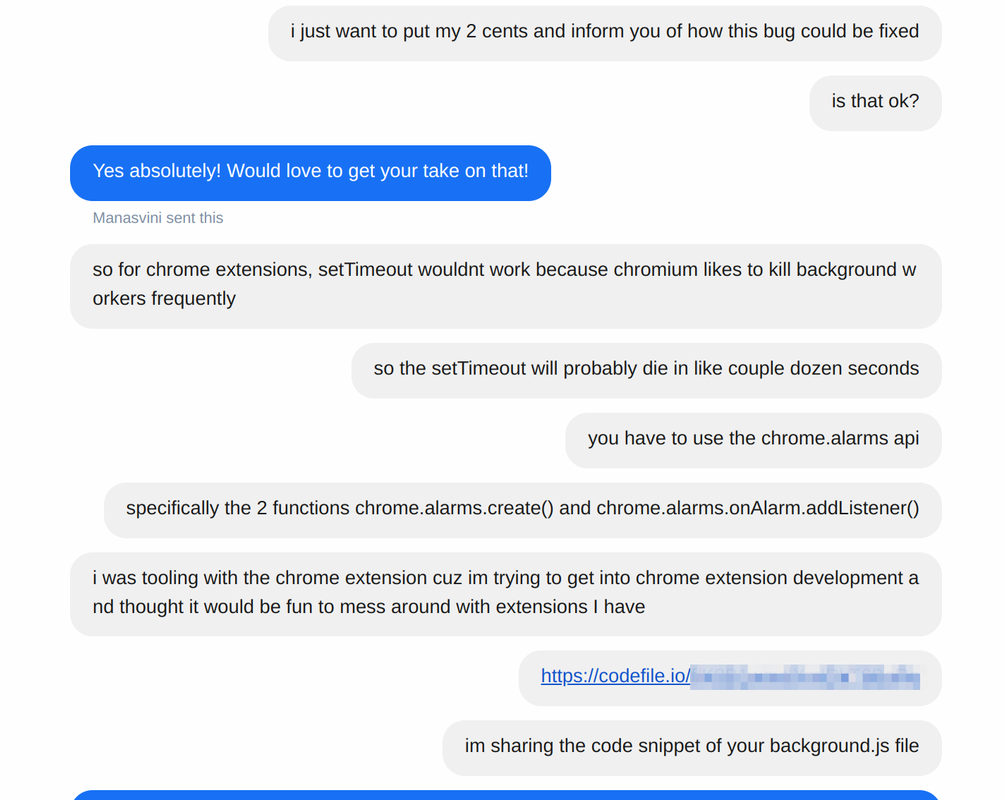
Good karma and serendipity! The best thing about launches is that unexpected cool things happen! One such cool thing happened during the Dopanope launch – a user stumbled upon a bug. I'd been working on it but had decided to ship regardless, and address it in v2. This user very kindly hit me up on our chat on the website, and pointed out the solution, which had been frustrating me for weeks! :) (Thanks a ton again, just in case you're reading this!)
Final Thoughts
Side project marketing is the most fun type of marketing, I suspect, for many makers. Just because it's so fun to build! Have you tried it? I’d love to hear your experiences!

This comment was deleted 3 years ago