On slowly growing a side gig for a decade, hitting 6 figures, and almost selling too soon: Anna Maste’s story
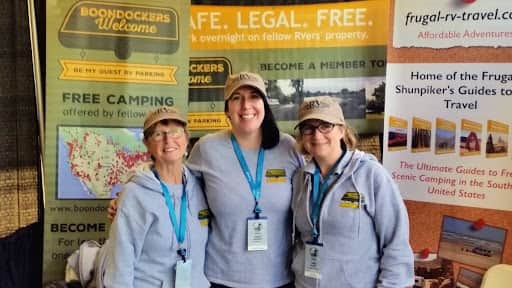
Indie Hacker: Anna Maste (@Skulegirl)
Founder of: Boondockers Welcome
ARR: Mid-six figures
Zone of Genius: Being a generalist
Anna Maste is a pro at persevering. She spent ten years slowly growing a business to six figures, and just recently, it got acquired.
Anna has renewed my faith in the possibility that slow and steady may just win the race afterall. I loved every minute of our interview, from her personal shares about mothering while indie hacking to her lessons on finding the sweet spot in email, and allowing community to help her through her imposter syndrome. I hope her story gives you as much life as it gave me!
On unexpected opportunities and partnering with her mom
I was on maternity leave. One day, my mother was over, visiting the baby, and mentioned that she had this idea for a company. She already had an audience of RV readers through some travel guides that she had self-published. So she was asking for my advice on hiring someone to develop a website that would be sort of like couch surfing for RVers. I very quickly said, “That's going to cost you a lot of money.”
I wasn’t sure she’d vetted the idea well enough to spend tens of thousands of dollars on it. So I said, “Why don't I see if I can develop it while you hang out with your grandson.” And so that was how the partnership between my mother and I came to be. She would come over once a week and spend most of the day with my son. And I’d work on the site.
She had the RV expertise. I had been a camper, but never RVing. I wasn't necessarily convinced her idea would work, but I was definitely bored and looking for something to do that would keep my skills sharp while I was on maternity leave, while also giving me an opportunity to expand my horizons a bit. My background before that had been as an embedded firmware engineer. I had never done any web development at all, so that was a big learning curve for me.
That was in 2010.
On over-engineering the MVP
By the time I went back to work full-time, we still weren't done. I definitely over-engineered the MVP — partly because I didn't know what I was doing and partly because I just wasn’t ready to launch yet.
I went back to my full-time job for a year, and continued to work on this as a side-gig at night and on the weekends. I felt super time-constrained at this point, having a toddler at home. But I just kept working on it little by little.
I then went on maternity leave again after the birth of my second child. And we picked up where we’d left off. Three or four months later, we finally launched.
On leaving her job to be a stay-at-home mom with a side gig
What started off as a favor for my mom, turned into an opportunity to break away from my 9-to-5 job. Once I had two small kids, I recognized what a challenge it was to maintain a full-time job and spend enough time with my family. At that point I started to think, like, maybe I could grow this business enough to quit my day job and have a more balanced life. Which is kind of a funny thing to say as a founder since running a company can be so insane. But it’s a different kind of insanity. You can be insane on your own schedule.
So after working on Boondockers for almost four years and growing it to around $30k ARR, I quit my day job. Essentially, I became a stay at home mom with a side gig.
My oldest was in kindergarten at that point and my youngest had just started preschool three days a week, so I spent the time he was away working on Boondockers.
On using open source
We had used FreeBSD, an open source Unix-based operating system, at my full-time job, and my husband is deeply entrenched in the FreeBSD community, so I was familiar with open source software from that perspective, although I’d never forked a repository until I started using open source libraries for Boondockers Welcome. But once I moved our tech stack to Django, I really became an advocate for open source. It’s amazing that the community can work together to build and improve software for all, rather than spend so many man-hours constantly reinventing the wheel in each private company.
It took a long while before I felt comfortable enough to start making pull requests to offer my own fixes to bugs I found, but now I realize that it’s not only essential to giving back to the open source community, but a great way to have a publicly visible summary of your skills as a developer.
On her tech stack
Our first MVP (which we ran with for 5 years!) was built on top of the Drupal CMS. In 2017, we relaunched with a new version of the site built on Django. It was amazing after years of being so constrained by Drupal, which was never meant to do what we needed it to. Our front end was never very fancy, just HTML/CSS and some vanilla javascript, although I did eventually also write a mobile app using React Native.
On motivation and working little by little for 10 years
For many years, Boondockers stayed as a side project that I only worked on 6-10 hours a week. Not putting too much pressure on it and never expecting it to be a giant success made it pretty easy to keep going.
When my youngest started school full-time in 2017, I rewrote the tech stack and relaunched. Having something new to learn and apply myself to was actually a lot of fun.
Whenever I got bored or struggled to stay the course, the secret was always to just find something new to learn about and implement.
Always thinking of the business as an opportunity to learn — rather than just earn — made me much more motivated to keep going.
I also definitely felt a sense of accountability to my mom since I had promised I would do it. I didn’t have any great expectations that this would set me free from my day job or anything. In some ways, it was just something that I had said I would do — I guess I was just keeping a promise to my mom.
We were lucky in that we were trying to break into a very nascent industry — the availability of good mobile data while travelling was still relatively new. So it actually didn’t hinder us too much to take our time and get done what we could, when we could. In some ways, our slow pace was helpful, because we ended up entering the market at just the right time. I don’t think this applies to every market, but it applied to ours.
On getting her first 100 customers
My mother had a series of ebooks that were essentially travel guides for RVers. When people signed up for the travel guide, she captured their email addresses. Our product is essentially a double-sided marketplace with hosts (people who have land capable of hosting RVs) and guests (those with RVs looking for camping for a night or two). So, when we were ready to launch we emailed her list and offered the first 200 people that signed up as hosts a free lifetime membership as a guest. It was also free to sign up for the first 6 months. That worked very well for seeding the initial network.
When we finally turned our payment portal on, things got a little slower. In the beginning people slowly trickled in. Maybe one a week for several weeks. But because of the initial seeding, we had a sort of momentum. It took about six months to get to 100 paying customers.
On finding the “sweet spot” with email
For our first five years, we really underutilized our email list. We would send sporadic, long emails to people who were already our customers. Then, finally, we got our crap together and added a signup on our main landing page and started sending a weekly newsletter. It was really simple. It basically showed all the new hosts that had joined that week. And that was surprisingly effective. Our open rates often exceeded 30%, and our click-through rates averaged around 8%, which is well above industry standards. We could eventually count on our newsletter to drive several thousands of dollars in sales every week.
We also started a blog in 2018 and we've found it to be so helpful with SEO. It’s definitely something we could have done earlier.
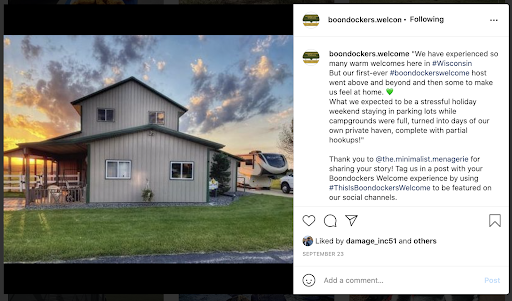
Finally, we learned that the value proposition for our customers wasn’t about saving money by not having to pay for a night in a campsite, but the amazing community they had access to when they joined. Once we recognized this, we were able to tailor our marketing, and use a lot of social proof from current members
On almost selling too early (and how MicroConf made her change her mind)
We almost sold the company about two years before we did sell it. It would have been a huge mistake.
So it would have been April of 2019. I had rewritten the whole website in late 2017 and that had actually been really good for business. We’d also changed our whole business model, because we realized we’d made some assumptions about our hosts that turned out to not be true. And all of that work had kept me entertained.
But when that was done, I felt like, is this the end? I’d stopped learning and I was just maintaining. And you know, working with your mother has its ups and downs. Plus, my mom was looking to retire. So at that point I wondered, “Should I buy her out? Or should we sell?”
We had an offer that came in from somebody in the RV space who knew our company pretty well. We had accountants look at it and it was very fair, so we seriously considered selling.
Then, I ended up going to MicroConf.
It was the first time I'd ever been. I met a bunch of other indie hackers, essentially people in the same space who were sort of struggling with the same things I'd struggled with. And many of them were earlier in their journey than I was.
It really made me realize how much success we'd had. I realized that lots of people were struggling to get to the point of success that we were at. It would have been so foolish for me just to say, “Pack it up. We’re selling.”
I realized what we had was special. At that point, I think we were at $100K ARR.
It would have been silly to walk away. Going to MicroConf was really a turning point for me.
I’m really glad we waited to sell. When we first considered selling, I’d been scared about the prospect of hiring someone to replace my mom doing customer support, and unsure if I had what it took to really grow the business beyond where it was at that point. But by not selling in 2019, I was really able to find my inner business person, not just my inner hacker. And when we did sell two years later, it wasn’t because I didn’t think I could grow the company further, it was because I really just thought it was a good time in my life and in the market to exit
On how finding community abolished her imposter syndrome
As indie hackers we’re often the only people we know who are doing this weird thing. Right? You see people on the internet who are doing it, or you listen to podcasts and stuff and hear about people doing it, but so much of that is just a one-way channel where you don’t actually get the opportunity to connect with other humans. To compare notes. To really feel a part of something.
I admit I was really bad at trying to find community for a long time. And that was part of why my imposter syndrome just kept ticking — because I didn't know if I fit in with a community. But now, because I’ve actually gone to MicroConf and connected with real people, I know I do fit in, even if I built my business with a baby on my lap.
Since then, I’ve become a lot more active on Twitter and I’m making an effort to find that community even more. I wish I had done it earlier. I really wish I had.
On being acquired
The acquisition process was possibly the most stressful six weeks of my life. While I’m sure it depends on the size of the company you’re selling and on the size of your acquirer, the due-diligence process for us was incredibly thorough and all-consuming. Our acquisition was in the mid-seven figures, and our acquirers had a VC fund they had taken investment from, so there were a lot of high-paid lawyers on their side who must have cost a small fortune for all the hours they spent on due-diligence. My lawyer earned every penny of her fee.
My tip to other indie hackers is to keep good documentation of EVERYTHING - you’ll thank yourself later. If you outsource anything, make sure you have signed contracts that assign the IP back to you! Having to hunt down contractors when you’re in the middle of an acquisition is not something you want to be doing. And make sure you have a good accounting system. We got by with spreadsheets for a while, but we would have never been able to survive the acquisition if I hadn’t moved us to a proper accounting system a few years prior.
On what’s surprised her most about indie hacking
I’m surprised by just how much I enjoy it. I was always the kind of person who had a lot of interests. I was very technically and mathematically inclined. And so I ended up doing an engineering degree, but I was also part of the communications team. I wrote, I was involved in theater, and I played music. I never really felt like I was harnessing all of my abilities by exclusively being on the technical engineering side.
Entrepreneurship was the first time that I really felt like all of those skills were really given an opportunity to work together and provide a whole that was more than the sum of its parts. Well, maybe not the music skills, but still.
And I really love learning. I was a giant nerd in school. I love schoolwork. And I’ve found entrepreneurship is a never-ending learning process. There's just always something new to learn. It's like, "Oh, this week I have to be dev ops. Oh, I have to be an accountant this week. I have to be the PR person right now." There's just so much to learn. That really prevents me from getting bored, and I definitely got bored in my day job before.
On what’s next
I've been working for our acquirers for a six-month transition period, which is actually wrapping up in a couple of weeks. From here, I hope to start another company as a solo founder. I have a couple of ideas I’m fleshing out around things that I struggled with while running Boondockers.
I'm trying to do some real customer development research too, to make sure that I'm addressing a problem that is real and relevant and financially feasible. I plan to start this whole indie hacking journey all over again.
What I’m reading:
I’ve been reading and re-reading both “The Mom Test” by Rob Fitzpatrick and “Deploy Empathy” by Michele Hansen as I’m doing idea validation for my next project. Fiction-wise, I’m currently reading “Pride” by Ibi Zoboi, which is a modern urban retelling of Pride and Prejudice.
What I’m watching:
We’re currently enjoying catching up on all the past episodes of Brooklyn Nine-Nine.
What I’m listening to:
I’m always listening to a podcast when I’m doing the groceries or cleaning, my favorites are Indie Hackers (of course!), Startups For the Rest of Us, and Software Social. Music-wise, my go-to albums when I need to disconnect from the real world are Fleetwood Mac’s “Rumors” and Joni Mitchell’s “Blue” - both are older than I am, but they fill me with a joy that I can’t even fully describe.
Quote I’m pondering:
I’ve always been drawn to a quote by Margaret Mead: “Never doubt that a small group of thoughtful, committed citizens can change the world; indeed, it's the only thing that ever has.” I don’t know if anything I’m doing is going to change the world, but it may change a small corner of it for the better.
Something I’ve changed my mind on:
That’s a tough one. I’d say that I always thought I’d never want to hire and run a company with actual employees, but I’ve since changed my mind. I don’t think I’d ever want a team bigger than one or two dozen people, but I could see myself growing a team that large if I had a company with enough momentum and revenue to justify it.
The task I spend the majority of my time doing:
Other than cleaning my kitchen? With a family, I feel like a ridiculous amount of my life is spent cleaning up after making a meal.
Business-wise, I’ve probably spent the most time doing software development. Other than a 4-month stint where I had a student intern who wrote a bit of code, all of the dev on Boondockers Welcome was done by me, and that included our mobile app. So I definitely spent the majority of my time writing code for Boondockers Welcome. I’m trying to change that with my next project though, which is why I’m focusing on idea validation before I write a single line of code.
One sentence of advice to new Indie Hackers:
Make perseverance your superpower!
Sign up below to get real stories from real founders 👇

Building a side-gig little by little for a decade — that is some good follow-through! Super inspiring.
Also, love this: "...the secret was always to just find something new to learn about and implement."
I loved how she named finding satisfaction not only in earning but also in learning. 🔥