One Dashboard for 190+ Countries: Effortless Global IP Management
Introduction: The Chaos of Global IP Management
Companies managing intellectual property across multiple countries often end up juggling a messy mix of law firms, service providers and etc. Many teams still rely on scattered email threads, outdated tracking systems, and spreadsheets held together with color-coding and hope.
Plenty of organizations continue using this fragmented setup simply because changing it feels overwhelming. But actually a modern platform brings order to the entire process and removes most of the usual friction.
1. Why Traditional Methods Fail for Global IP Portfolios
The classic approach to IP management tends to be local, reactive, and disconnected. Every country has its own attorney or service provider, and each operates in isolation.
This scattered workflow introduces several risks:
Operational: renewals or filings slip through the cracks
Strategic: limited visibility weakens long-term planning
Financial: administrative work inflates costs and makes budgets unpredictable
Instead of focusing on strategy and protection, teams get stuck in logistics and firefighting.
2. What a Unified IP Management Platform Offers
A centralized IP management platform solves these problems by bringing everything together in a single environment. With one system, companies gain:
- One source of truth: assets, deadlines, documents, and providers in one interface
- Global coverage: automatic updates for 190+ countries
- Smooth collaboration: direct communication with local counsel without switching tools
- Automated reminders: proactive deadline tracking across assets and jurisdictions
Even small legal teams can manage large portfolios with confidence, without chasing information across multiple systems.
3. Real Example
A mid-size tech company managing IP assets in more than ten countries moved its portfolio into a unified platform. Within a few weeks, routine administrative work dropped by about 40%, duplicate tasks across internal teams and local providers disappeared, and budgeting became far more transparent.
This shift gave them more control, lower costs, and a clearer overview of their entire portfolio.
For example, for a deeper look, see how iPNOTE helped a company with 100+ IP assets organize and manage it efficiently.
4. How It Works: Key Features of the Platform
A unified IP management system goes far beyond simple data storage. Modern platforms include:
-
Data import & integrations: onboard assets quickly and sync with existing tools
-
Access control: manage who can view or edit specific cases
-
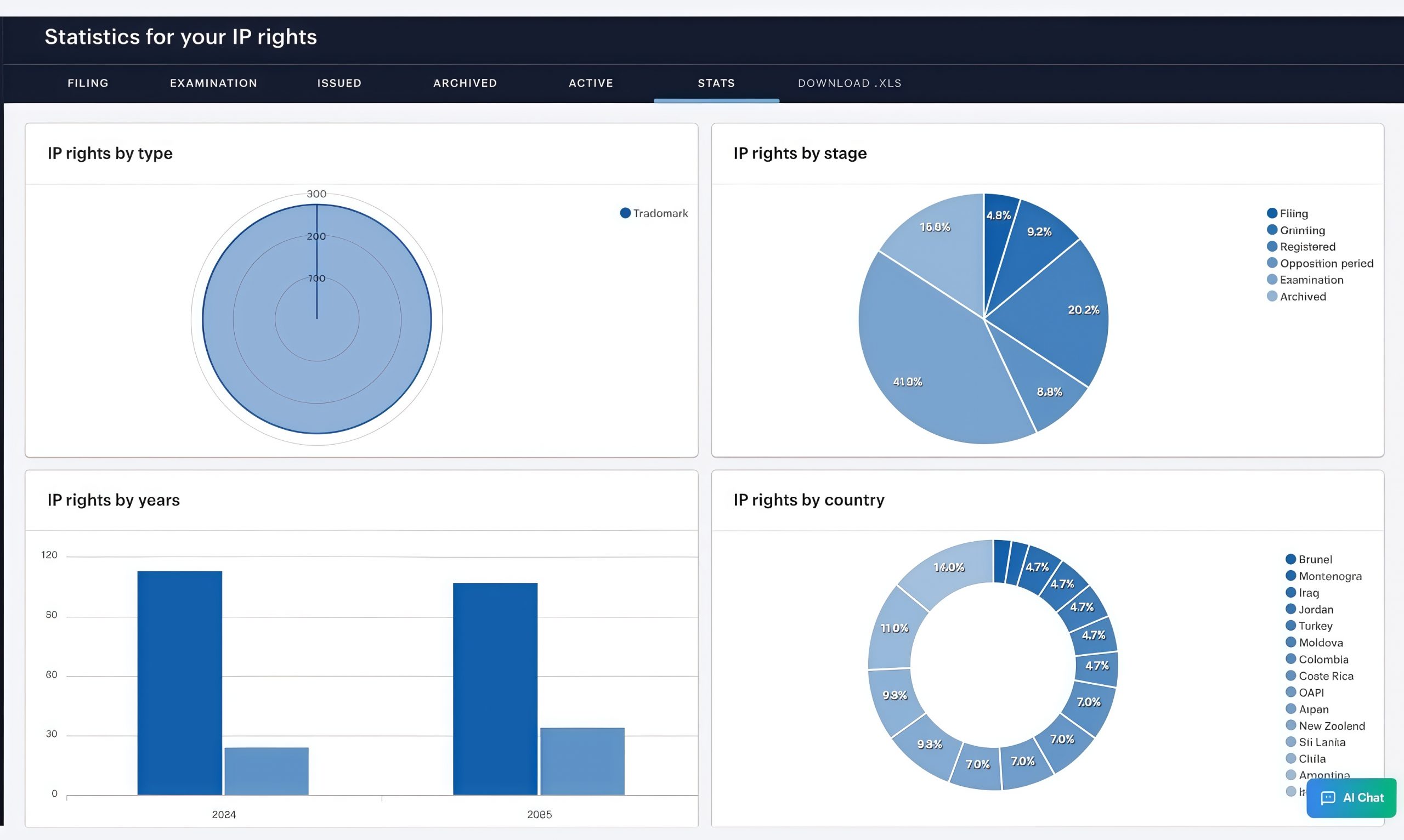
Smart dashboards & reports: track portfolio health and generate insights with an AI assistant
-
Scalable infrastructure: support growth from 10 to 10,000 assets without restructuring
These features give teams the visibility and flexibility needed to operate globally without confusion.
5. Breaking Barriers: Easy Onboarding, Immediate Impact
Getting started with a platform doesn’t require a full internal overhaul. The strongest solutions offer:
- a spreadsheet-free workflow
- secure migration handled by the platform
- fast onboarding with no long implementation process
- transparent subscription pricing with no hidden fees
For companies managing IP across several countries, centralization and automation unlock a level of clarity and control that spreadsheets and scattered providers can’t match.
If you want to experience the difference, explore a free trial on iPNOTE, request a demo, or connect with a local expert* and take full control of your global IP portfolio.

The "spreadsheets held together with color-coding and hope" line is painfully accurate for how most companies manage complex compliance workflows. IP management is one of those unsexy-but-critical areas where the pain is invisible until something slips through.
The 40% reduction in administrative work is a compelling metric. For legal/IP teams, that's not just cost savings - it's reduced risk of missing deadlines that could cost millions in lost protection.
A few thoughts on positioning:
The "one source of truth" angle is strong, but the real unlock is probably the cross-jurisdictional visibility. Being able to see patterns across 190 countries (which filings are coming up, which markets have gaps) is strategic intelligence that scattered providers can never provide.
The mid-size tech company example is interesting. Curious about your ICP - are you targeting companies that already have 100+ IP assets and are drowning in complexity? Or are you also going after fast-growing startups who need to build their IP strategy from scratch?
The "no hidden fees" positioning is smart for this market. Legal tech procurement is notoriously fee-heavy with add-ons.
What's the typical onboarding timeline for a company migrating from a fragmented setup?