Online Courses & Indie Hackers: Should You Go Self-Hosted or Marketplace?
I think online courses are a great idea for Indie Hackers.
Online courses:
- Are self-contained projects which aren't as demanding as trying to launch a SaaS product, so it's a nice gateway drug to bigger things later. 🚀
- It can also be a great way to diversify existing revenue streams 💰
- You can still learn/test a lot of Indie Hacker skills from the experience (even on a marketplace you'll still want to market your course as I explain below) 🗝
- There's a greater chance of some success (it's less all or nothing than many other products) 🎉
- It's the Feynman technique in action, so you will grow your core skills even if it doesn't bring in serious money. 👨🏫
How Much Are People Making?
John Purcell, who has earned over $1 million on Udemy put it best when replying to the infamous Quora question “How much does a Udemy Instructor make?”. His first response was “Some none, very many a bit, many quite a lot, and some are positively getting rich.” I think this is the reality.
Where to Sell Your Online Course 🤷♂️

Online Course Marketplace Pros and Cons
An online course marketplace such as Udemy, Pluralsight, or LinkedIn Learning contains a collection of online courses and an existing user-base of students.
Each marketplace is different, but the tradeoffs tend to be similar.
Pros
- Students are already on the marketplace so (in theory) if you create something in demand to a high quality there is are a large number of potential buyers.
- The platform does marketing for you (which also has downsides - see cons)
- No running costs
- The platform takes care of compliance
- Most major marketplaces have an adequate feature set so that you can focus on creating your course
Cons
- Marketplaces will take a significant proportion of your revenue. Udemy takes 50% as standard but in reality, it is much more than that because they take more for students who purchase from their AdWords campaigns - see sales deep dive below
- Marketplaces control your business model (and usually your pricing)
- Marketplaces control your customer email list
- Marketplaces tend to have big players you must contend with
- You are at the mercy of the marketplace student review system
- Potential lock-in
Sales Deep Dive & Gotchas: Udemy
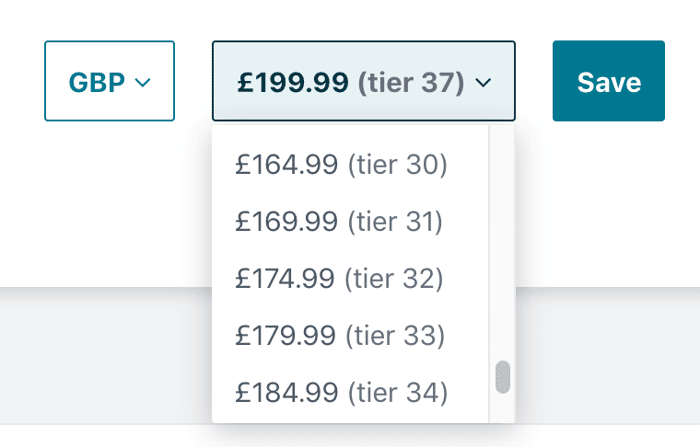
Two of the key downsides to a marketplace are that you do not have control over the business model, and you have limited control over the pricing. In the case of Udemy, your lack of control over the pricing is very pronounced. Whilst you may set your course price somewhere between $10-$200, through the mechanism Udemy refers to as the “Global Price Tier Matrix" the reality is that Udemy runs constant discounts on courses, so that:
- Students are trained to wait for discounts
- Realistically, the max price you can sell a course for is around $20
Udemy’s share of your course sales. This can be divided into the following three scenarios:
- Organic Sales - Udemy takes 50%
- Sales from Your Marketing - Udemy takes 3%
- Sales from Paid User Acquisition Channels (i.e. Udemy’s ads) They take approximately 75% “depending on the partner or costs of advertising”
You may be wondering what “Your Own Marketing” means at point 2. This is where a student clicks on a coupon code that you market yourself. The coupon is generated via Udemy’s coupon generation feature. Udemy also places restrictions on these coupons, making it mandatory for those offering a discount to expire within 1 month (this was a restriction introduced towards the end of 2019).
Self-Hosting Pros and Cons
Generally speaking, the pros and cons of self-hosting are the opposite of those for using a marketplace:
Pros
- You retain the majority of your revenue (excluding costs which we will describe)
- You control your business model and pricing
- You (potentially) have access to a larger feature set for creating your course
- Your course is not displayed right next to a very popular existing competitor
- You are not at the mercy of the marketplace student reviews
- You control your email list and marketing and can switch vendors without notice
Cons
- You have to do all of your marketing
- You now have running costs (more on this below)
- You have to be more vigilant with your compliance and admin
Key Evaluation Criteria
Now that we’ve considered the pros and cons, as well as the hidden gotchas, how do you make a decision?
I think the following criteria are the key areas to consider:
- Do you already have any kind of following? This could be in the form of a newsletter, blog, podcast, social media following, youtube/twitch channel, or access to other influencers in a space relevant to your course.
- How ready are you to hustle?
- How much experience do you have with course creation?
- How much control do you want over your course business?
If the answer to (1) and (2) is a straight “no”, then a marketplace is probably the best place to go. You can always change your mind later. If the answer to (1) is “no” but the answer to (2) is “yes” then I’d consider (3). If you’re ready to hustle but have no experience with course creation then a marketplace might make sense initially whilst you’re testing out a new course idea. On the other hand, for those authors with existing courses then if you want more control and are ready to do some of the marketing work self-hosting can be a great approach. Experimenting with these options can potentially course authors to cross the chasm from “side business” to “full-time career”.
Hopefully, this guide has given you a good idea about how to find the right platform for you. Good luck!
This is an excerpt from the much longer guide to creating your online course
If you found this guide useful, please consider signing up to the CourseMaker mailing list, as we produce quality content regularly

I love this guide. It's a common question that comes up a lot. I would always default to "self-hosted" in my opinion.
Thanks for this Chris :) it's something we thought about before launching the digiLab Academy
We defaulted to self-hosted for the following reasons:
Of course, it's come with a lot more development overheads!!!