Our finance stack was a disaster. Here's what we replaced it with.

For the first couple of years, we did what everyone does: QuickBooks for accounting, a Google Sheet for budgeting, another sheet for forecasting, Notion for the close checklist, and a lot of Slack messages saying "hey did you update the model yet?"
It worked until it didn't. The month we crossed $2M ARR, our close took 11 days and our forecast was wrong by 30%. That's when I started actually looking at what was out there.
I've spent the better part of six months digging into finance tools. Not demos — actual usage, trials, talking to other founders. Here's what I found, in the order I'd actually adopt them if I was starting over.
First: get your revenue data clean — Lucius
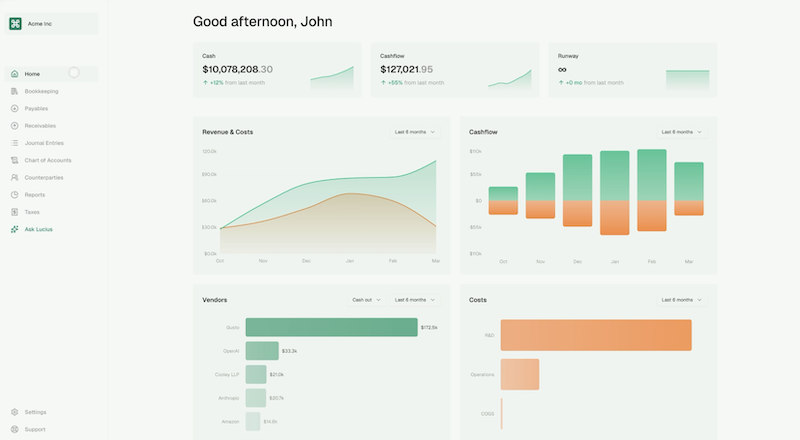
Everything else in your finance stack is only as good as the data feeding it. If you have subscriptions, contracts, or any kind of complex billing, that data is probably scattered across Stripe, your accounting tool, and a spreadsheet someone made 18 months ago.
Lucius is a financial system of record — it connects to Stripe, Xero, QuickBooks, Brex, Mercury, Rippling, Deel, and others, and creates one continuous ledger of what's happening with your money. You model your contracts once, and billing, receivables, and reconciliation flow from that.
It's still early-stage but it's the missing piece I didn't know I needed. We stopped doing manual revenue rec at month-end and that alone was worth it.
Second: stop running your close on Notion — Easy Month End
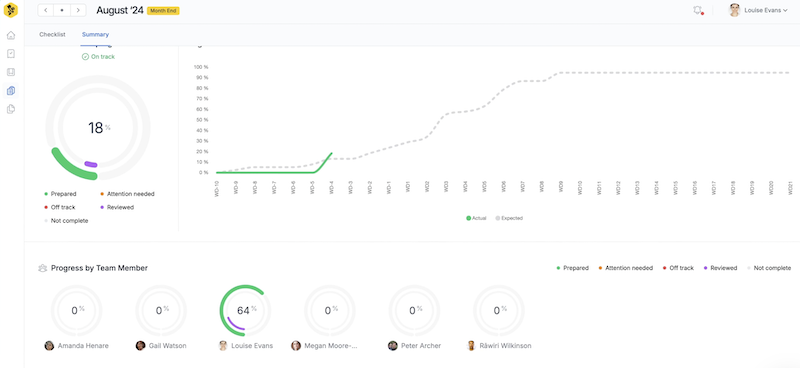
If your close process lives in Notion or a shared spreadsheet, you already know the problems. Tasks get missed, nobody's sure what's been signed off, and when the auditor asks for supporting docs you spend three days digging through email.
Easy Month End is basically a dedicated operating system for the close. Tasks are assigned to people, every action is timestamped, docs are locked in at upload. Auditors get read-only access to completed periods. That's it — that's the whole thing.
It sounds simple because it is. That's also why it works. We cut our close from 11 days to 6 in the first month.
Third: if you have multiple entities, BrightAnalytics saves hours
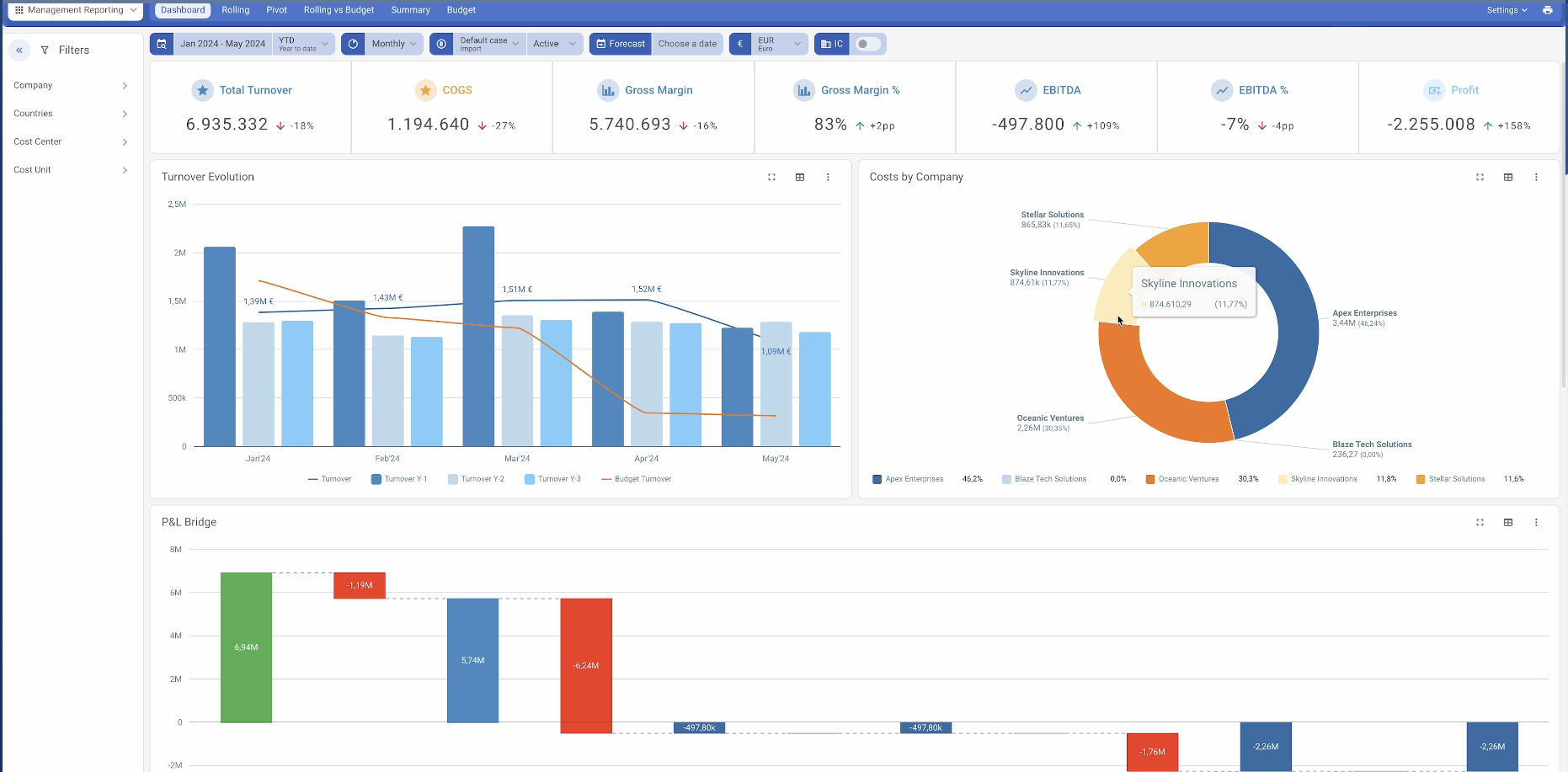
Once you have more than one entity — a holding company, a subsidiary, an international branch — consolidated reporting gets painful fast. Different charts of accounts, different currencies, manual copy-pasting into a "master" spreadsheet.
BrightAnalytics connects to 400+ accounting systems and pulls everything into one consolidated view automatically. P&L, balance sheet, cash flow, budget vs. actual — live, not as of whenever you last exported something.
The AI features are genuinely useful too: anomaly detection that flags weird numbers before you do, automated intercompany matching, and an Insights layer that tells you what's actually changing in your numbers. Over 1,000 companies in Europe use it and you can see why.
Not relevant if you're a single entity. Very relevant if you're not.
Fourth: replace the forecast spreadsheet — Drivetrain

This is the one most founders put off the longest and regret the most. The forecast spreadsheet works fine at $500K ARR. By $3M it's a liability — too slow to update, too easy to break, too hard to share with the board without explaining the color coding.
Drivetrain is where I landed after looking at everything in the FP&A space. It connects to 800+ systems, most teams are live in 4–6 weeks, and the AI is actually embedded — not a chatbot wrapper on top of a legacy product.
It auto-generates financial models from your ERP and CRM data, answers finance questions in plain language, flags anomalies 24/7, and handles 3-statement modeling, headcount planning, scenario analysis, and revenue forecasting. We use it for our board deck now and it saves us two days every quarter.
The one caveat: if you're very early and your forecasting needs are simple, it might be more than you need right now. Come back to it at Series A.
Fifth: the full stack play for when complexity gets real — Lucanet
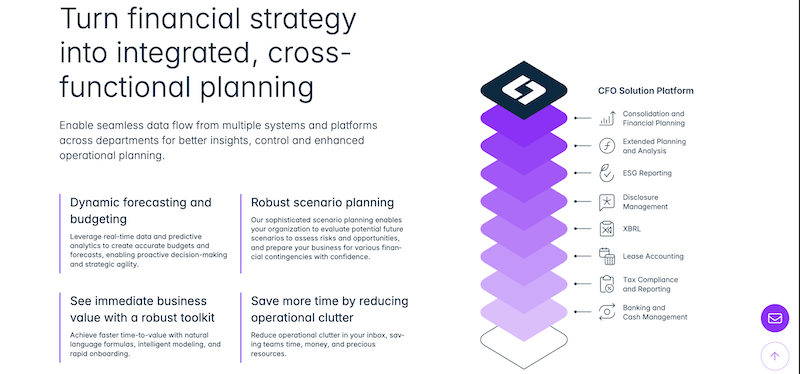
Most indie founders won't need this for a while. But if you're scaling fast, have serious multi-entity complexity, or are dealing with IFRS reporting, regulatory compliance, or ESG requirements — this is the tool the big finance teams use.
Lucanet covers consolidation, planning, budgeting, forecasting, tax compliance, lease accounting, and cash management in one platform. 6,000+ customers in 50 countries. 300+ ERP connectors. Drill-down to the transaction level. Ranked #1 in Ease of Use and Traceability in the 2026 BARC Survey.
The pitch is: stop stitching together four specialist tools. One platform, one data layer, done.
It's enterprise-grade and priced accordingly. But if you're at the stage where you need it, you'll know.
The honest TL;DR
You don't need all five of these. What you probably need depends on where you are:
- Pre-Series A, single entity: Easy Month End + Drivetrain will get you surprisingly far
- Multi-entity or international: add BrightAnalytics
- Complex revenue / billing: start with Lucius before anything else
- Enterprise complexity: Lucanet replaces several tools at once
The mistake I made was waiting too long on all of this. Finance infrastructure feels like a back-office problem until it's a growth problem. Get the stack right early.
Happy to answer questions if anyone's evaluating any of these.

This is the part most teams miss.
Finance tools usually get evaluated on dashboards and reporting.
The real filter is simpler:
can the system survive scrutiny when someone asks where the number came from?
That’s the shift.
Early on, finance tooling is about visibility.
Later, it becomes about defensibility.
Not just:
“can we see revenue?”
But:
can finance trust the source
can leadership trust the forecast
can the board trust the model
can someone explain variance without rebuilding the spreadsheet live
That’s usually the point where “finance stack” stops being ops infrastructure and becomes decision infrastructure.
And most teams realize it later than they should.
Crossing $2M ARR only to hit an 11-day close sounds like a total nightmare. It’s wild how those spreadsheets and Notion lists turn into liabilities so fast as you scale. Starting with Lucius for a clean revenue ledger is a smart way to kill manual reconciliation. Cutting your close time in half with Easy Month End is a huge win for your sanity. Did switching to Drivetrain finally make your board meetings feel less like a fire drill?