Passive Income Idea: AI-Generated Videos Are Monetized on YouTube
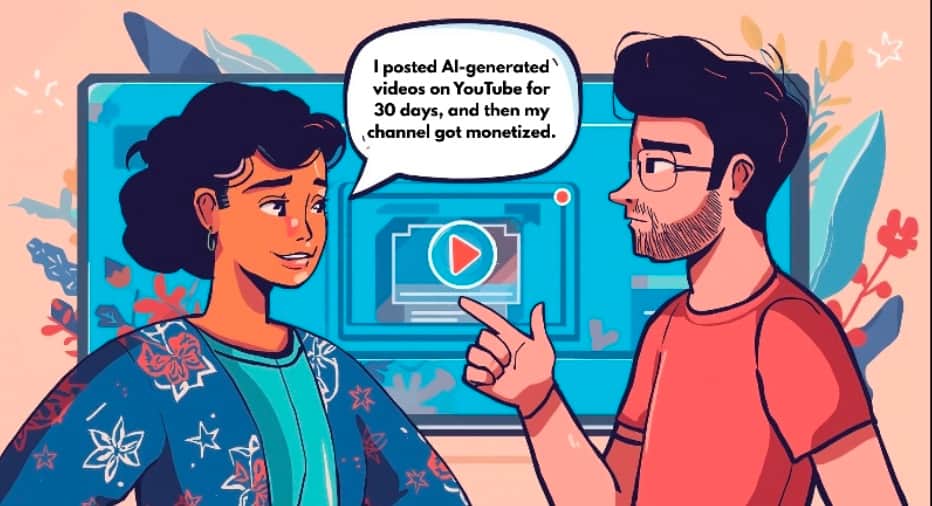
Artificial Intelligence isn’t just transforming workplaces — it’s quietly reshaping YouTube. From faceless narration channels to AI anime videos, AI tools are behind a growing share of the content you scroll past every day.
What used to take a full production team can now be done by one person and a smart algorithm. With text-to-video platforms, voice cloning, and virtual avatars, creators are producing studio-quality videos in record time—sometimes without ever hitting “record.”
The question is no longer if AI-generated videos can earn money on YouTube. The real question is: how do you do it right?
What Are AI-Generated Videos?
AI-generated videos are created (or largely produced) by AI video generation tools. These AI tools write scripts, generate visuals, clone voices, and even animate lifelike avatars. This technology is powered by machine learning models that can turn a short prompt into a polished, narrated video in minutes.
The Different Faces of AI Content
Spend a few minutes on YouTube and you’ll see them:
Faceless narration channels explaining random facts.
AI-generated animations retelling stories or news.
Auto-produced reviews, tutorials, and motivational videos.
Many creators are running entire networks of channels, each pumping out content quickly—thanks to AI video generation tools.
Why Creators Are Turning to AI
Speed, scale, and savings. That’s the trifecta.
AI drastically reduces production time and cost, letting creators upload more often and experiment with different formats. It’s like having a full production crew in your laptop—minus the overhead.
AI-Generated Videos Can Make Money on YouTube
YouTube’s Monetization Rules Aren’t Against AI
The YouTube Partner Program (YPP) allows creators to earn through ads, memberships, and other revenue streams. And good news—YouTube doesn’t ban AI-generated content.
What matters is how the content is used. It needs to follow community guidelines, avoid copyright violations, and add value for viewers.
What YouTube Looks For in Monetizable AI Content
Originality: Don’t just repackage stock visuals or AI scripts. Add commentary, education, or storytelling.
Compliance: Stick to YouTube’s advertiser-friendly guidelines.
Human Touch: Some degree of creative input is still required—editing, scripting, or presentation.
Why YouTube Supports the Trend
AI videos help YouTube, too.
They boost watch time, fill niche topics, and keep users scrolling. Bite-sized, visually engaging AI content—especially Shorts—keeps the platform sticky and profitable.
There are already successful channels earning ad revenue using AI-driven tools. The secret? They’re transparent, creative, and consistent.
How to Create Monetizable AI Videos
1. Be Original When Using AI
AI can generate, but you must direct it with your own idea.
Your perspective, tone, or humor makes a difference. YouTube rewards creativity, not duplication.
2. Pick the Right AI Video Generator
With the growing need for scalable content production and trend responsiveness, the ideal AI video generator should be intuitive to use, cost-efficient, and capable of delivering consistent, high-quality results.
One of the simplest and most user-friendly tools is LumeFlow AI, chosen for its affordability and cost efficiency.
It is capable of text-to-video, image-to-video, and video-to-video generation to bring your imagination to life.
Use its Video Remix and AI effects to enhance your content and keep it up to date with the newest trends in entertainment.
With this AI tool, you can access cutting-edge AI video models like Sora 2 and VEO 3 at a very affordable price without managing several subscriptions.
3. Follow YouTube’s AI Guidelines
Be transparent.
If your video includes AI visuals or voices, disclose it. Avoid deepfakes or misleading synthetic media—that’s where YouTube draws the line.
4. Ride Trends Fast
AI gives you speed. Use it.
Watch trending searches and hashtags, then create timely content that matches what people are already curious about.
5. Optimize for Humans, Not Just Algorithms
SEO still matters—but write like you’re talking to a person.
Craft relatable titles, design authentic-looking thumbnails, and use keywords naturally. Check analytics often to see what’s working and refine from there.
Final Thoughts
Creators use AI to handle tedious parts of production so they can focus on creativity and storytelling.
Of course, there are still difficulties. There are continuous discussions about viewer trust, misinformation, and copyright ownership. For this reason, YouTube is launching tools for labeling synthetic content and transparency features. The platform is embracing AI because it recognizes that it won't go away.
The Human Touch Still Wins.
AI enhances, not replaces, the vision of the greatest creators. They combine creativity and automation. Therefore, it is absolutely possible to make money off of AI-generated videos on YouTube. However, human ingenuity will always be the key.

