PCB Slip Rings: An Exploration of Their Practicality
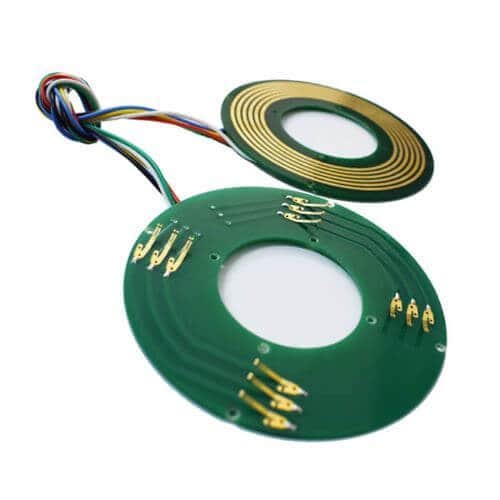
A revolutionary component, the PCB slip ring, plays a crucial role in ensuring seamless communication in rotating systems in a time of advanced technology. It is crucial to ensure efficient and reliable signal transmission across a wide range of industries today. In this article, PCB slip rings are examined in terms of their functions, applications, and practicality, as well as their construction, working principles, and their applications across a wide range of industries. PCB slip rings will also be discussed in terms of their advantages over traditional slip rings, important design considerations, and future prospects.
PCB Slip Rings: An Overview:
A PCB slip ring, also known as a printed circuit board slip ring, is a compact and highly reliable device used to connect a stationary structure to a rotating part by transmitting electrical signals, power, and data. As they rotate, they establish continuous electrical connections by integrating rotating contacts with a specialized PCB with conductive traces.
Construction and Working Principles:
PCB slip rings comprise multiple layers of conductive traces, carefully designed to carry different types of signals. These traces are connected to brushes or contacts on the rotating part of the slip ring, ensuring seamless transfer of signals. The stationary part of the slip ring is mounted on the fixed structure, while the rotating part is attached to the rotating component, allowing for uninterrupted signal transmission.
Applications of PCB Slip Rings:
The applications of PCB slip rings are vast and varied. They are extensively used in industries such as robotics, aerospace, defense, medical equipment, surveillance systems, and many more. In robotics, PCB slip rings enable the transmission of power and control signals to rotating joints, enabling precise movements and complex tasks. In aerospace and defense, they play a crucial role in transmitting signals between radar systems, antennas, and rotating radomes.
Advantages over Traditional Slip Rings:
PCB slip rings offer several advantages over traditional slip rings. Firstly, their compact design allows for easy integration into space-constrained systems. Secondly, the use of printed circuit boards ensures precise signal routing, resulting in improved signal quality and reduced signal loss. Additionally, PCB slip rings eliminate the need for separate brushes and provide a cost-effective solution for high-speed data transmission. More info: https://www.grandslipring.com/pcb-slip-ring/
Design Considerations:
When selecting a PCB slip ring, various design considerations should be taken into account. These include the number of circuits required, signal types (analog, digital, or mixed), current capacity, voltage rating, rotational speed, and environmental conditions. Customization options offered by manufacturers cater to specific project requirements.
Future Developments
As technology continues to advance, PCB slip rings are expected to witness further developments. Miniaturization, enhanced signal integrity, increased data transmission capabilities, and integration with advanced communication protocols are anticipated. The demand for PCB slip rings is likely to grow in tandem with the expanding automation and digitization trends.
