Personal Productivity Needs Better Systems, Not Just Motivation
A lot of personal development advice focuses on mindset.
Think bigger.
Stay disciplined.
Visualize success.
Set ambitious goals.
But in practice, most productivity problems aren’t really mindset problems.
They’re system problems.
If your routines, tasks, schedules, and responsibilities are scattered across different tools (or worse, your head), even the most motivated person eventually feels friction.
This is why many people gravitate toward tools like Notion — not just because they are feature-rich, but because they centralize life management.
In many ways, personal productivity needs the same philosophy that Notion brought to workspaces:
a single system where structure creates clarity.
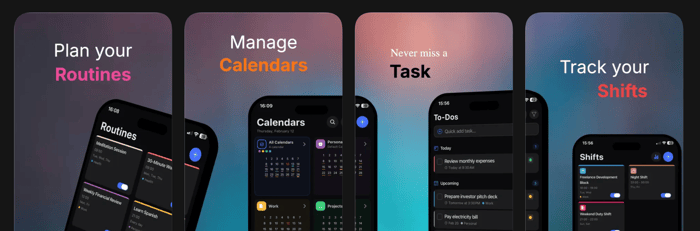
That same idea is what apps like Oria are exploring, but specifically focused on daily life structure instead of knowledge management.
The Real Bottleneck in Personal Productivity
Most people assume they need:
- more discipline
- better habits
- stronger motivation
But often the real bottleneck is simpler:
their life has no central operating system.
Think about how most people manage their day:
- Tasks in a to-do app
- Habits in a habit tracker
- Schedule in a calendar
- Work shifts somewhere else
- Personal routines floating between notes and memory
Individually these tools work.
But together they create fragmentation.
Every context switch creates small cognitive friction. Over time that friction becomes mental clutter.
Instead of focusing on work or personal growth, people spend time managing their own systems.
The “Personal OS” Concept
In tech, operating systems exist for one reason: to coordinate complexity.
Your computer runs dozens of processes, but the OS keeps everything structured and predictable.
Personal productivity increasingly needs the same idea.
Not just more tools, but a Personal OS for everyday life.
A system that brings together:
- routines
- tasks
- shifts
- daily structure
- weekly planning
Instead of juggling multiple apps.
This is one of the reasons many productivity tools are converging toward all-in-one structures.
Notion did this for knowledge and workspaces.
But everyday life — especially outside desk jobs — still lacks a clean equivalent.
Why Structure Creates Mental Clarity
Something interesting happens when life becomes structurally organized.
Your mind relaxes.
You stop trying to remember everything.
You stop asking yourself:
“What should I be doing right now?”
Instead, your system answers that question.
Mental clarity is often just the absence of system chaos.
Once routines, tasks, and schedules are visible in one place, your brain is freed for actual thinking.
From Knowledge Management to Life Management
Notion succeeded because it turned scattered information into structured systems.
But daily life has a slightly different problem space.
Instead of documents and knowledge, people need structure around:
- daily routines
- rotating work shifts
- personal schedules
- recurring tasks
- life organization
This is where newer tools are experimenting with a life-centric productivity model.
Apps like Oria, for example, approach productivity less like a workspace tool and more like a daily life management system, combining routines, shifts, tasks, and schedules into one place.
The goal isn’t complexity.
It’s reducing fragmentation.
Personal Growth Is an Infrastructure Problem
One realization that keeps coming up in productivity discussions is this:
Personal growth is rarely blocked by ambition.
It’s blocked by infrastructure.
People want to:
- build better habits
- organize their days
- balance work and life
- maintain routines
But without a clear system, these goals remain intentions.
Structure is what turns intention into repetition.
And repetition is what creates long-term change.
The Quiet Shift in Productivity Tools
The next generation of productivity tools may not look like traditional task managers.
Instead, they’re moving toward something closer to personal operating systems:
- unified structure
- low cognitive overhead
- life-centric organization
- routine + schedule integration
Not just for work, but for life as a whole.
Oria reflect this shift — focusing on simplifying everyday structure so routines, shifts, tasks, and schedules can live in one place.
Because at the end of the day, productivity is rarely about doing more.
It’s about removing friction from how life is organized.

The “personal OS” framing is useful, but I’d separate centralization from consolidation. A single source of clarity doesn’t always need to own every task/habit/calendar object — sometimes it just needs to answer “what mode am I in right now?” with almost no maintenance.
Have you noticed whether people want a full all-in-one system, or a lighter layer that reduces context switching without replacing their existing tools?
This is a strong framing — I like how you’re separating mindset advice vs system design, because most productivity content ignores that friction layer completely. The “Personal OS” analogy is especially clear; it helps explain why people keep bouncing between tools like Notion, calendars, and habit trackers without ever feeling organized.
If you’re exploring this direction seriously, it could be worth testing which “life structures” actually matter most to different user groups before going too broad. There’s a competition where you can submit it — entry is $19 and winner gets a Tokyo trip. Prize pool just opened at $0. Your odds are the best right now.
If you're working on something new, this could help 👀
$19 entry → idea competition
🏆 Tokyo trip
💰 $500 guaranteed
Round open 👉 tokyolore.com
Your point about productivity being an infrastructure problem rather than a motivation one is spot on. We’ve spent years "app-switching" between calendars and trackers, which just adds to the cognitive load instead of reducing it. Centralizing life into a "Personal OS"—like what Oria is doing—feels like the natural evolution of how Notion changed workspaces.
Since you're exploring this "Personal OS" philosophy and how systems like Oria create clarity, there’s a competition where you can submit the concept—entry is $19 and the winner gets a Tokyo trip.
Also, the prize pool just opened at $0. Your odds are the best right now.
What do you think is the hardest part of a person's life to bring into a "Personal OS" without making the system feel too rigid or overwhelming?