Polyimide PCB: Properties, Advantages, Manufacturing Process, and Applications
As modern electronics continue to evolve, the demand for materials that can withstand extreme conditions has grown significantly. Standard PCB substrates such as FR4 are widely used, but they may not perform well in high-temperature or highly dynamic environments. This is where the polyimide PCB becomes an essential solution. Known for its excellent thermal stability, flexibility, and durability, polyimide-based circuit boards are widely used in advanced and high-reliability applications.
Understanding the structure, properties, and applications of polyimide PCBs can help engineers and businesses choose the right material for demanding electronic designs.
What Is a Polyimide PCB?
A polyimide PCB is a printed circuit board that uses polyimide resin as the base material instead of conventional fiberglass-based substrates. Polyimide is a high-performance polymer known for its ability to withstand high temperatures, resist chemicals, and maintain stability under mechanical stress.
Polyimide PCBs are often used in both rigid and flexible configurations. Flexible polyimide PCBs, in particular, are widely used in applications where bending, folding, or space-saving designs are required.
Due to these characteristics, polyimide PCBs are commonly used in industries such as aerospace, automotive, medical, and consumer electronics.
Key Properties of Polyimide PCBs
The performance of a polyimide PCB is defined by several key properties. One of the most important is high thermal resistance. Polyimide materials can operate at temperatures exceeding 200°C without losing their structural integrity or electrical performance.
Flexibility is another major advantage. Polyimide PCBs can bend and flex without cracking, making them ideal for compact and dynamic designs.
Chemical resistance is also a key feature. Polyimide materials can withstand exposure to harsh chemicals, oils, and solvents, ensuring long-term reliability in challenging environments.
Additionally, polyimide PCBs offer excellent electrical insulation and stable dielectric properties, which are essential for maintaining signal integrity.
Their lightweight nature further enhances their suitability for applications where reducing weight is important, such as aerospace systems.
Structure of a Polyimide PCB
The structure of a polyimide PCB is similar to other PCBs but uses polyimide as the core substrate material. The base layer is a polyimide film that provides both flexibility and mechanical strength.
Copper layers are laminated onto the polyimide substrate to create conductive pathways. These copper layers are etched to form the circuit design.
In flexible polyimide PCBs, a coverlay is often used instead of a traditional solder mask. This protective layer shields the circuits while maintaining flexibility.
In rigid or rigid-flex designs, polyimide layers may be combined with other materials to create a hybrid structure that offers both flexibility and stability.
The overall structure is designed to meet specific performance and application requirements.
Manufacturing Process of Polyimide PCBs
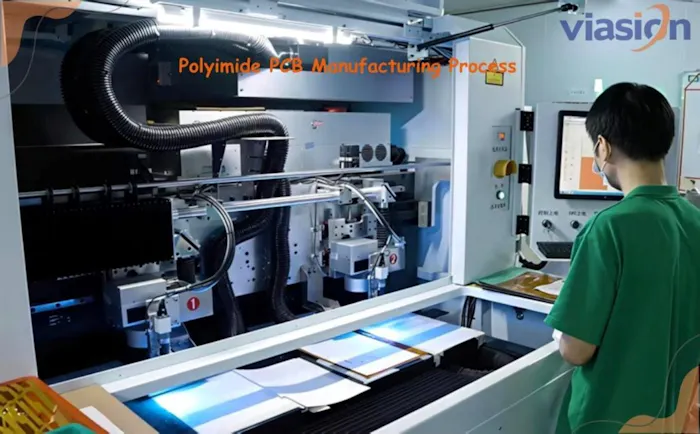
The manufacturing of a polyimide PCB involves specialized processes due to the unique properties of the material. The process begins with selecting the appropriate polyimide substrate based on the application requirements.
Copper foil is laminated onto the substrate using either adhesive or adhesive-less bonding techniques. A photoresist layer is applied, and the circuit design is transferred using photolithography.
The board is then etched to remove unwanted copper, leaving the desired circuit patterns. Drilling or laser cutting is performed to create vias and holes for electrical connections.
For multilayer or rigid-flex designs, multiple layers are stacked and bonded through lamination. Precise alignment is critical to ensure proper functionality.
A protective layer, such as a coverlay or solder mask, is applied to protect the circuits. Finally, the board is tested and inspected to ensure it meets quality standards.
Advantages of Polyimide PCBs
One of the main advantages of a polyimide PCB is its ability to perform in high-temperature environments. This makes it suitable for applications where standard materials would fail.
Flexibility is another significant benefit. Polyimide PCBs can bend and conform to different shapes, enabling innovative and space-saving designs.
Their durability and resistance to environmental factors contribute to long-term reliability. These boards can withstand mechanical stress, vibration, and exposure to chemicals.
Polyimide PCBs also provide excellent electrical performance, supporting stable signal transmission even in high-frequency applications.
Additionally, their lightweight design is beneficial in industries where weight reduction is a priority.
Applications of Polyimide PCBs
The versatility of polyimide PCB technology makes it suitable for a wide range of applications. In the aerospace industry, these boards are used in satellites, aircraft systems, and space exploration equipment, where extreme conditions are common.
In the automotive sector, polyimide PCBs are used in engine control systems, sensors, and high-temperature areas of vehicles.
Medical devices benefit from polyimide PCBs due to their flexibility and reliability. They are used in wearable devices, diagnostic equipment, and implantable systems.
Consumer electronics, such as smartphones and wearable devices, use flexible polyimide PCBs to achieve compact and lightweight designs.
Industrial applications, including robotics and automation systems, also rely on polyimide PCBs for their durability and performance.
Design Considerations for Polyimide PCBs
Designing a polyimide PCB requires careful consideration of several factors. Engineers must account for flexibility requirements, ensuring that the board can bend without damaging the circuits.
Thermal management is important, especially in high-temperature applications. Proper design can help dissipate heat and maintain stable performance.
Material selection plays a crucial role in achieving the desired balance between flexibility and rigidity.
Trace routing and component placement must be optimized to prevent stress points that could lead to failure in flexible designs.
Manufacturing constraints should also be considered to ensure that the design can be produced efficiently and reliably.
Conclusion
The polyimide PCB is a high-performance solution for electronic applications that require exceptional thermal resistance, flexibility, and durability. Its unique properties make it ideal for industries such as aerospace, automotive, medical, and consumer electronics.As technology continues to advance, the demand for polyimide PCBs will continue to grow. Businesses looking for reliable and high-quality circuit boards often collaborate with an experienced polyimide PCB manufacturer to ensure precision, durability, and consistent performance in their electronic products.
