Polymer clay earrings, Discord Bot Studio, +2 more trends to jump on
Exploding Topics scours the internet to find emerging trends before they take off.
Here are four of the latest developments, along with some insights and analysis to help you take advantage.
1. Polymer clay earrings
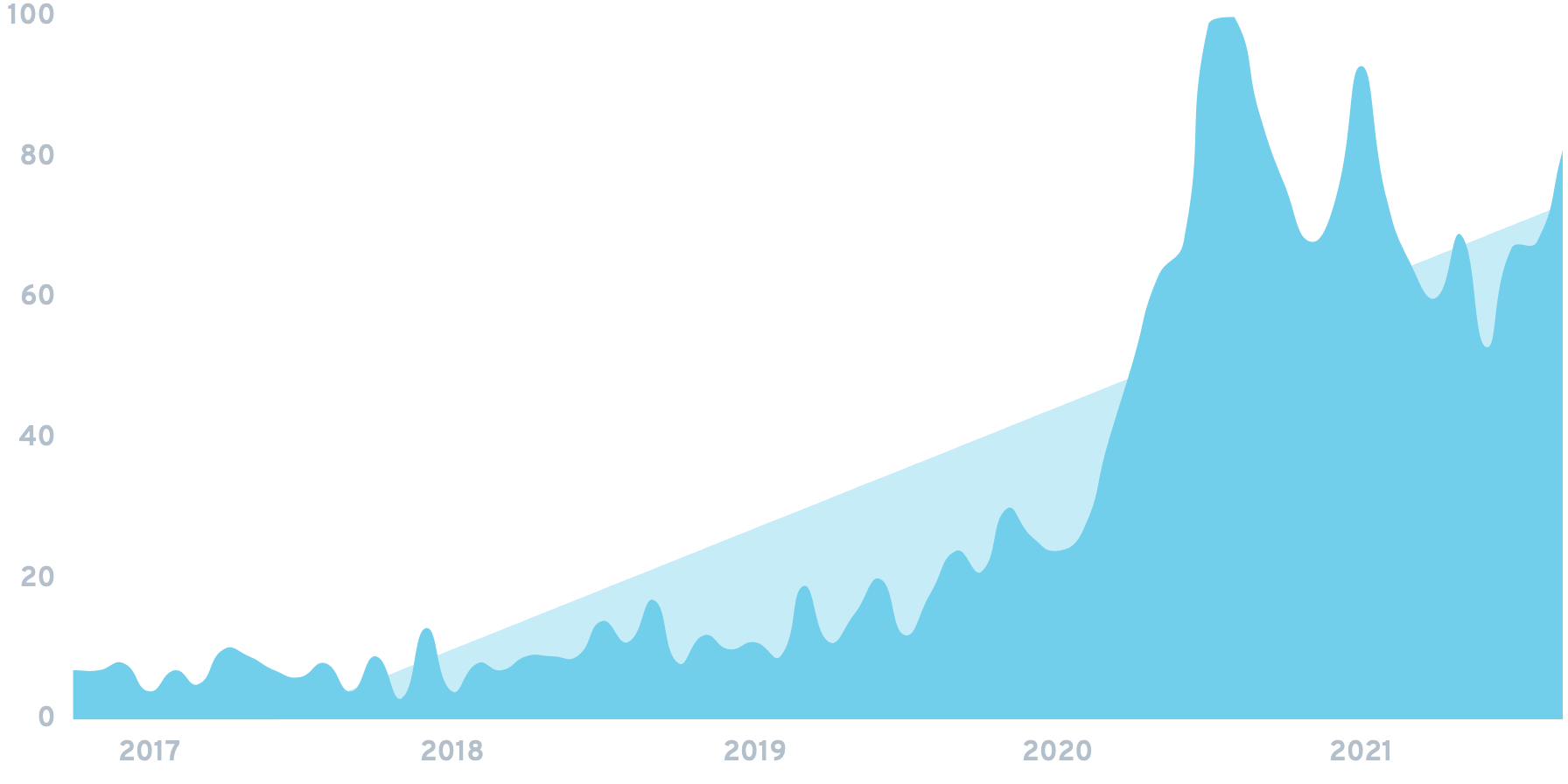
Searches for “polymer clay earrings” have increased by 885% over the last 5 years.
Polymer clay is a type of modeling clay made from vinyl, which can be used to make custom earrings.
The material’s unique versatility allows creators to sculpt it into a number of different shapes, add textures, and apply paint.
Polymer clay earrings are one of the hottest products on Etsy — there are around 260k polymer clay earring products on the platform.
Many polymer clay earrings retail for under $20, which puts them in the same price range as earrings from “fast fashion” brands like Zara. That affordability, along with growing demand for handmade fashion products, have helped this product category take off.
What’s next:
Polymer clay earrings are a part of the DIY fashion meta trend.
Consumer demand for handmade fashion itself is on the rise. Etsy has reported a 101.1% YoY increase of gross merchandise volume over the last year or so.
Examples of growing brands in the handmade fashion niche include:
Cricut: Produces a line of smart cutting machines for DIY crafts (including iron-ons, quilts, and leather goods).
Wool and the Gang: DTC brand that sells beginner knitting kits. The company has amassed a social media following of nearly 500K DIY fashion enthusiasts on Instagram.
Roxanne Assoulin: NYC-based jeweler that offers DIY kits for making custom bracelets and necklaces.
2. Discord Bot Studio
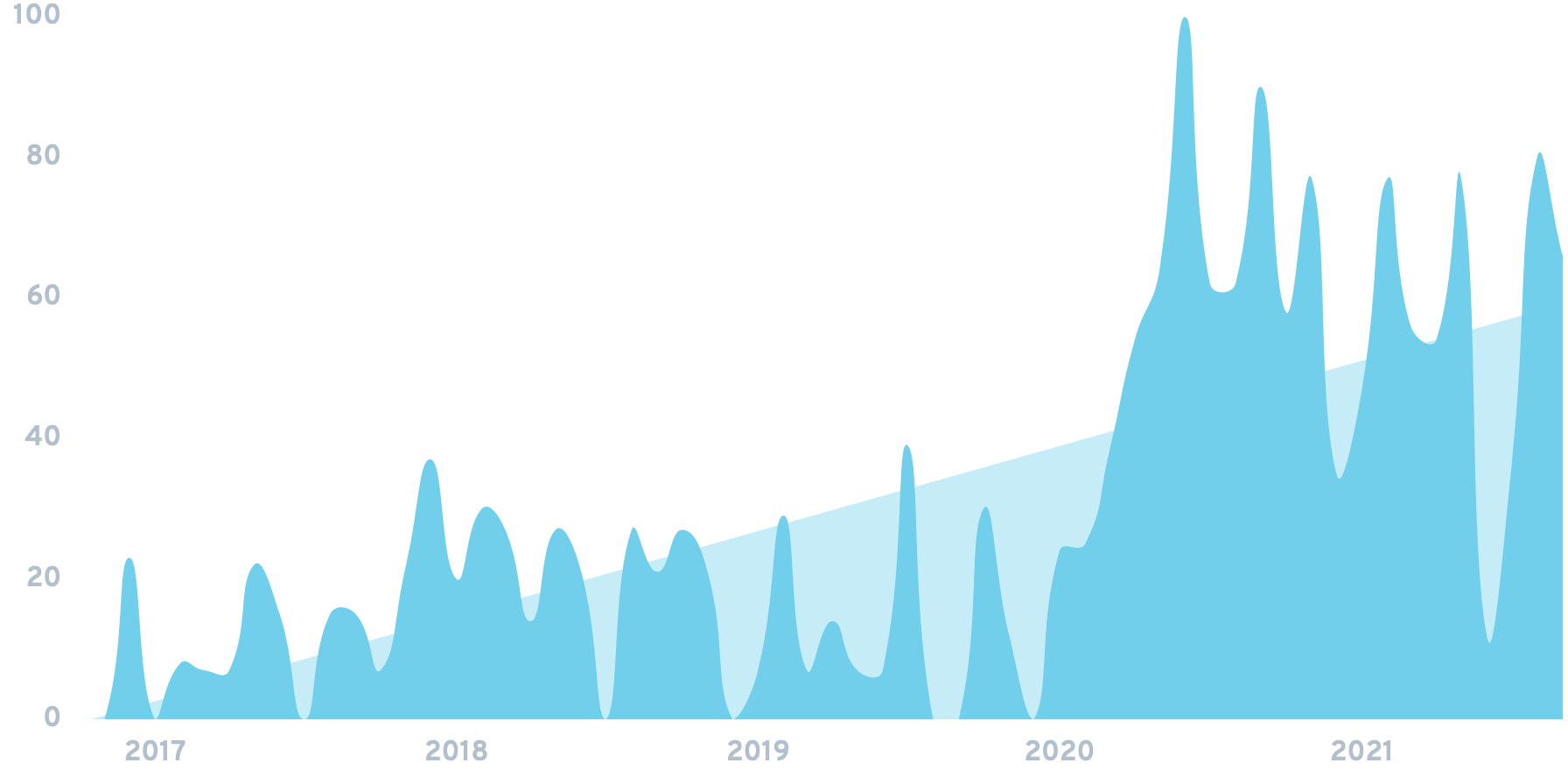
Discord Bot Studio is a no-code tool for creating Discord chatbots.
At launch in May 2020, the software was already on 4K Steam wishlists.
As a result, Discord Bot Studio sold 112 copies on its first day.
Since then, average monthly revenue has been at approximately $2.5K.
Discord Bot Studio has relied largely on micro influencers to spread the word.
What’s next:
Discord Bot Studio is part of the no-code creation tools meta trend.
Low-code and no-code companies raised an estimated $500M funding last year.
And a recent report predicted that the industry will be worth $21.2B by 2022.
Appsheet, a no-code tool for turning spreadsheets and databases into applications, was acquired by Google last year.
The purchase price was undisclosed, but Appsheet had previously raised $17M on a $60M valuation. Shortly before the purchase was completed, Appsheet reported annual revenue of $4.4M.
Other no-code tools showing strong search growth include AppyPie (apps and chatbots), Ninox (internal business apps) and AirDev (custom software).
3. Fungi protein
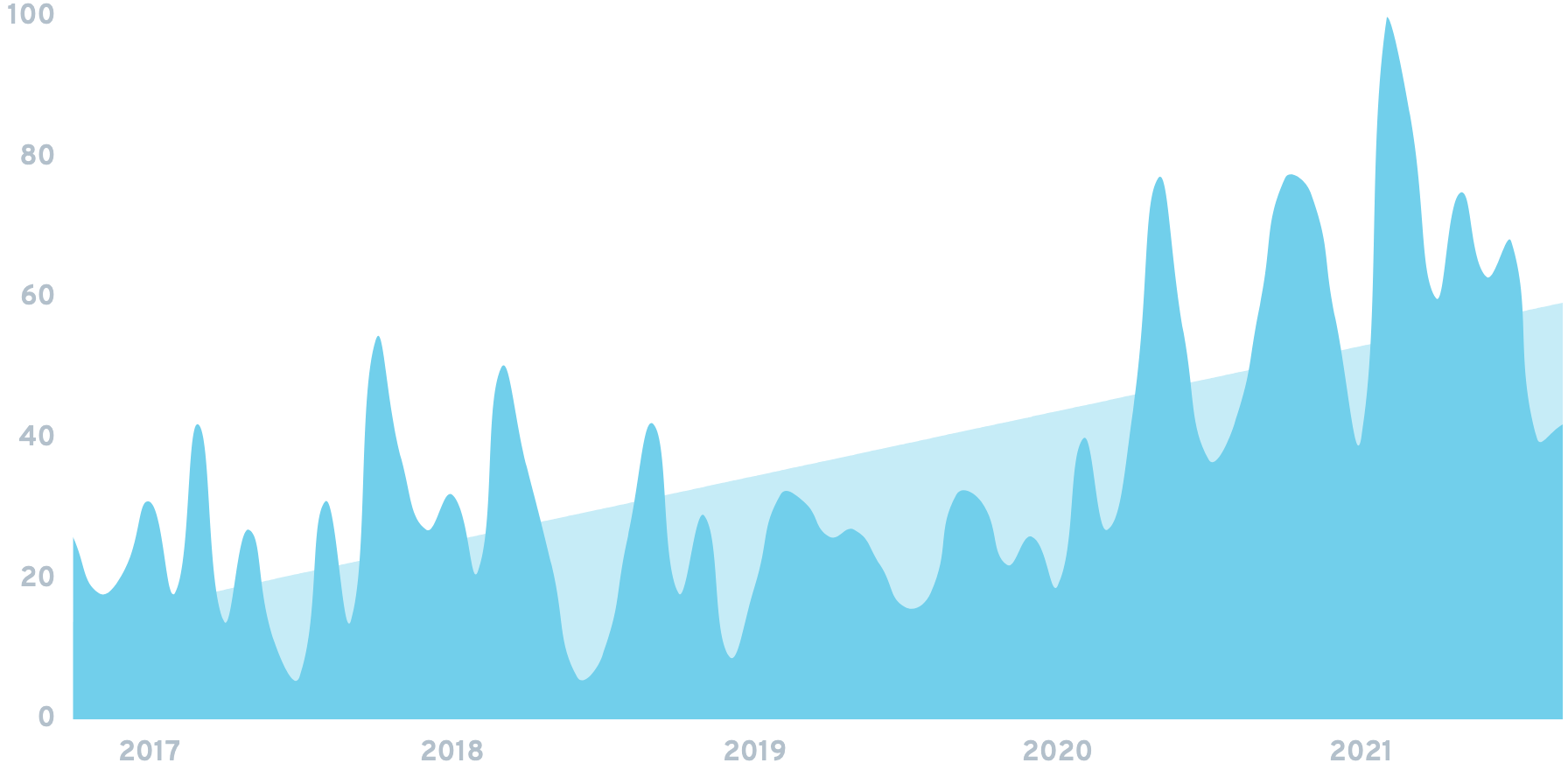
Fungi protein, also known as mycoprotein, is a form of fungus-grown protein commonly used as a meat replacement.
Fungi is protein-dense: there’s 11g of protein in 100g of mycoprotein.
Interest in fungi protein is on the rise largely due to environmental concerts — fungi’s carbon footprint is 10x lower than beef. And water usage is reduced 20x.
Currently, the only fungi protein approved for sale in North America and Europe is from Quorn.
Other fungi protein products are in development, including Perfect Day Milk. The startup uses microflora to grow genuine dairy proteins — not just imitations.
Perfect Day expanded its Series C round to $300M last year.
What’s next:
Fungi protein is part of the sustainable meat alternatives meta trend.
Demand for meat is forecast to rise 73% by 2050.
And the meat and dairy industries already contribute 14.5% of all global greenhouse gas emissions. With 66% of US consumers preferring eco-friendly brands, there’s a growing market for greener alternatives.
The Vegetarian Butcher uses soy to replicate traditional meat products. The Dutch company has an estimated annual revenue of $44.8M.
And as with Perfect Day for milk, there are also a number of brands looking to make “real” meat without the need for animals. The first lab-grown meat was sold in Singapore last December.
New Age Meats raised a further $2M in February to develop its synthesized pork. In total, the startup has raised $7M to date.
Other fast-growing brands driving this meta trend include Califia, Aleph Farms and BlueNalu.
4. Bought By Many
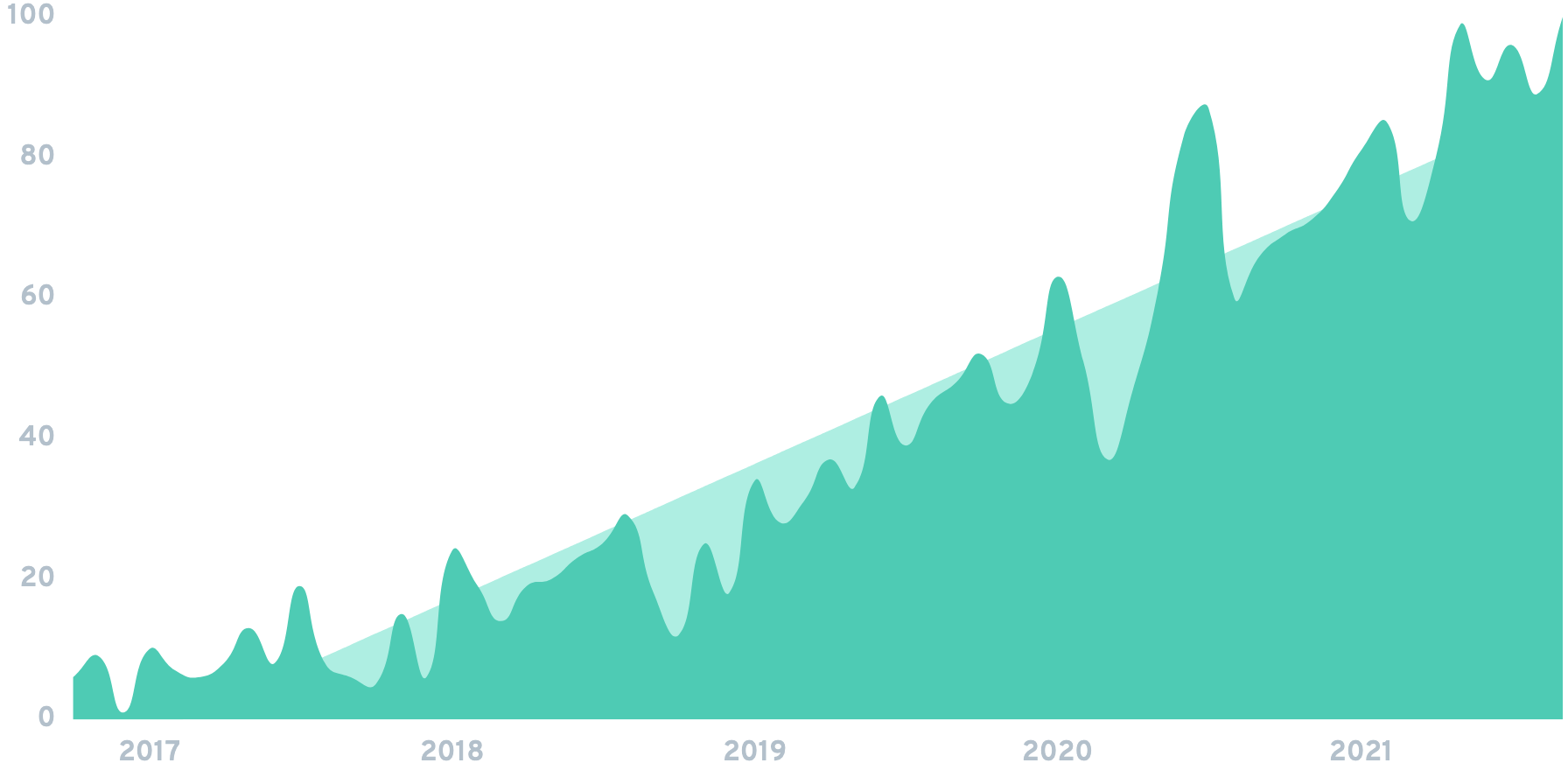
Bought By Many is insurtech for pets.
The startup has raised $483M in VC funding to date. Their latest funding round, a $350 Series D led by EQT, was announced in June.
Their pet insurance was initially only available in the UK only. But has since expanded to Sweden, with further plans for more international expansion in the near future.
And the global pet insurance market is estimated to be worth $11.25B by 2026, with a CAGR of 8%.
The number of insured pets in the US has been growing at an annual rate of 15.8% since 2015. However, only 2.8% of dogs (and 0.6% of cats) are currently insured. Which shows that there’s still significant untapped potential in this space.
Growing pet insurance providers include Figo Pet Insurance, Wagmo, OneDegree, Pawlicy Advisor.
What’s next:
Bought by Many is a part of the “pet health tech” meta trend.
And 92% of millennial pet owners care about their pet’s health as much as their own.
Which is why pet care spending is on a rapid rise, with $99 billion spent on pets in the US last year (the highest ever).
And we’re seeing a growing number of tech startups focused on pet health.
Overall, pet tech startups raised a total of $437.64M across 74 deals in last year.
Here are a few examples of growing pet health tech startups:
Pawp: A “digital clinic for pets”. Members pay a fixed fee of $19 per month for unlimited video chats with licensed vets. The NYC-based startup raised a $13M Series A in May.
Bond Vet: Walk-in vet clinic chain. The startup differentiates itself from traditional vets with tech-focused features, like a dedicated mobile app and telehealth appointments.
KatKin: Cat food subscription DTC startup. KatKin collects information about the cat's health and diet in order to create a personalized meal box. The startup has raised $6.1M in funding, including an October 2020 seed round for $3M led by Octopus Ventures.

Specialists love working with polymer dirt since it's adaptable, flexible, and can be heated in a customary home stove. What do you think diamond earrings for men are good with gold or clay? As we can see at https://www.itshot.com/jewelry/earrings/diamond/mens about this! Polymer earth is a brilliant material for making a wide range of gems, including present-day studs, globules, charms, and pendants neckbands.