Price Segmentation: Definition, Use Cases + Examples
Determining the correct pricing structure for your SaaS product or service is a complex endeavor, yet regrettably, often overlooked by founders and CFOs. Investing just six hours to pinpoint the right price for your product in a $237.48 billion market is grossly insufficient.
And with SaaS prices never static and utterly dependent on customers, choosing the correct monetization strategy should always be an unfinished project.
Luckily, there is something that can give you a helping hand in this ongoing priority or at least enable you to approach this task from a fresh perspective: price segmentation.
Join us in better understanding this pricing strategy, as we will be closely looking at:
- What is Price Segmentation?
- Why Does Price Segmentation Matter?
- 5 Types of Price Segmentation
- 3 SaaS Price Segmentation Real-Life Examples
- 3 Best Practices For Effective Price Segmentation
- What Are The Risks of Price Segmentation?
- The Four-Step SaaS Price Segmentation Process
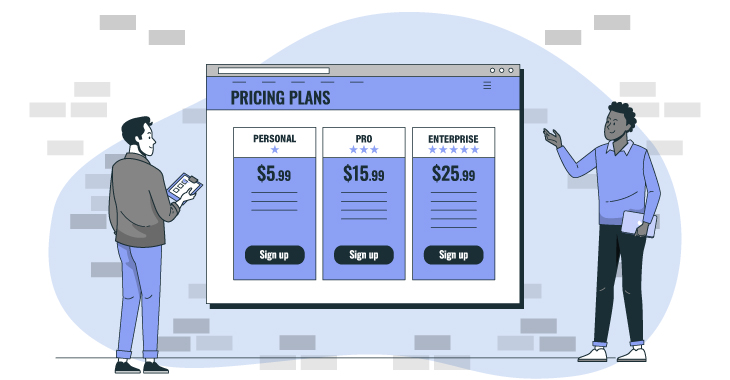
What is Price Segmentation?
The price segmentation strategy refers to the practice of charging different prices to different customer segments based on a number of criteria, including their willingness to pay.
The core concept driving this monetization tool is variable pricing, aimed at increasing revenue by considering specific customer data.
Instead of relying on a single price point, which can be a subject of debate, especially among price-sensitive customers, pricing segmentation creates several different revenue strategies for the same product while also taking into consideration consumer behavior.
Why Does Price Segmentation Matter?
Apart from being a helpful tool in identifying the optimal price for your product, segmented pricing is crucial for SaaS businesses operating worldwide because you can boost profitability from high-paying customers while winning accounts with lower spending power. But let’s look at the entire list of benefits the price segmentation strategy offers.
Increased Gains
No matter what you are selling or who is buying your product, you need to carefully handle the price sensitivity of your customer base. That’s why establishing the correct pricing strategy for your SaaS is such a tedious undertaking.
Implementing price segmentation solves this problem and helps you make sure that you are making a profit in all market segments.
Running a successful SaaS business usually involves increased operational costs. Charging a high single price for your product would, without a doubt, allow you to recover your investment and make a profit.
But what happens if your entire target audience isn’t ready to pay?
Well, you start losing money.
Segmented prices aimed at different customer groups allow you to generate the appropriate resources to ensure growth, capitalizing on an audience’s willingness to pay and then recovering operational costs from other lower-priced tiers.
Additionally, through the tiered pricing strategy, you can reduce operational expenses by limiting feature access from those lower priced tiers.
Versatile Marketing Approaches
Customer segmentation is a powerful tool in marketing, and the SaaS industry is no exception to this rule. Standing out in a competitive market can be challenging, so it’s important to make use of the best strategies for your business.
A segmented pricing strategy based on different tiers also gives the software company increased flexibility in developing various marketing approaches.
You can maximize sales potential and increase revenue by identifying each segment’s unique pain points targeting different customer groups.
Offering unique pricing packages for different segments gives your marketing team greater flexibility in crafting acquisition and retention strategies purposefully targeted to their unique needs.
High Growth Potential
While customer acquisition is a major concern for SaaS businesses, so is retention. It is customer retention that fuels sustainable growth. Introducing price segmentation in your monetization strategy allows you to make the most of various retention techniques.
From offering loyalty discounts to long-term clients to upselling existing users in order to boost customer lifetime value or customer satisfaction, segmented pricing allows you to adapt and evolve your monetization plan as you grow.
Moreover, price differentiation gives you increased flexibility to remain aligned with changing customer preferences and market conditions.
Faster Market Expansion
What’s the fastest way to gain attention in a competitive market? Lower prices.
Like the penetration monetization technique, where you break the barrier by pricing your product lower than your competition to gain market traction, having different pricing packages equates to fat market expansion.
A perfect example of this is streaming services like Netflix or Disney Plus that practice geographic pricing segmentation.
Keeping your prices competitive on a global scale improves customer satisfaction, undoubtedly leading to significant and steady revenue growth.
5 Types of Price Segmentation
To correctly implement price segmentation, you need to first identify the type of segmentation you wish to put into place. While there may be numerous ways to execute this pricing strategy, we will be looking at those that fit SaaS businesses.
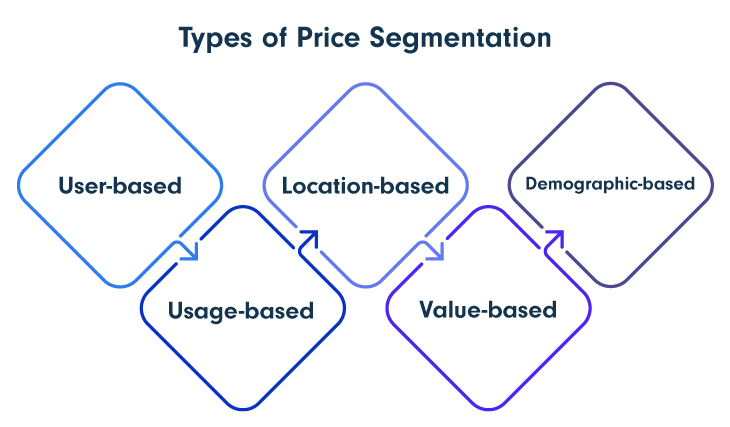
User-based pricing segmentation
Numerous SaaS businesses offer various pricing options based on the number of users or seats required. In this scenario, customers choose the package that aligns with their budget and needs.
This approach is scalable and simple to accommodate the requirements of different business sizes for anyone from startups to enterprises, and is also customer-centric. The user is free to identify the plan that fits their needs and the option to upgrade or downgrade in case those needs vary.
Usage-based pricing segmentation
Often mistaken for user-based, usage segmentation refers to developing different pricing strategies based on the amount of software utilization. This could be anything from data storage to the number of processed payments.
This approach gives the best results in industries where consumption levels can vary widely because the SaaS company practicing it gains a high level of flexibility.
Location-based pricing segmentation
Price segmentation based on your customer’s geographic location is a solid approach when looking to enter untapped markets. When calculating the differences between your pricing packages, you need to consider several things besides customer behavior.
Adjusting pricing based on your audience’s purchasing power is necessary for this strategy. For instance, Netflix has a higher price for customers in the European Union than those in India.
To achieve a successful price segmentation based on location, you need to perform thorough market research that takes into consideration the economic realities of the region you wish to expand in.
Value based pricing segmentation
When tailoring your pricing plans to different market segments based on the perceived value brought by your SaaS product, you are highlighting the specific benefits and features each package offers to its targeted audience.
To effectively perform this type of segmentation, you must carefully identify and separate customer segments based on pain points and key challenges. Then, you need to align your offer with their needs, thus enhancing overall product competitiveness and profitability.
As long as customers feel they are fairly priced for the received value, you can rest assured that you are doing a great job.
Demographic-based pricing segmentation
SaaS businesses tailor their pricing packages based on specific demographic factors like the targeted audience's age, income, or occupation. This approach is effectively implemented by creating packages that differ not only in price but also in a strong alignment of features and functionality.
For example, a freelancer’s needs are very different from those of SMBs or enterprises. Why should they pay for personalized customer support or system customizations when their business operations do not require such features?
Discover 3 Real-Life Examples on PayPro Global's Blog.
