Proactive AI Is the Next Big SaaS Opportunity
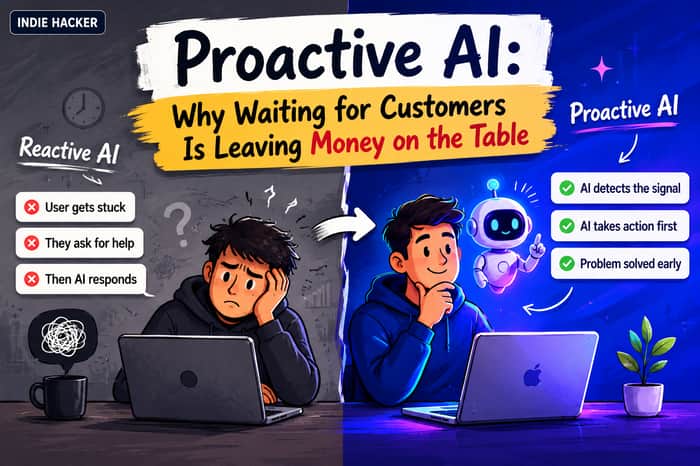
Most startups are still building reactive AI.
Customer asks a question → AI answers.
User clicks a button → workflow starts.
Ticket appears → chatbot replies.
That’s useful.
But the companies quietly winning are building proactive AI.
The difference?
Reactive AI waits.
Proactive AI acts first.
Examples:
→ User stuck on onboarding for 8 minutes?
AI offers help before frustration.
→ Customer visits pricing page 3 times?
AI sends the exact comparison they need.
→ Usage drops before renewal?
AI reaches out before churn happens.
→ Someone hits the same error repeatedly?
AI resolves it before a support ticket exists.
This is where AI stops being a “feature”
and starts becoming a revenue system.
The crazy part:
Most startups already HAVE the data.
They know:
where users drop off
who almost converts
which customers are likely to churn
what questions repeat every week
But instead of acting on signals…
they wait for the customer to complain.
That delay is expensive.
The next wave of SaaS won’t win because they have smarter models.
They’ll win because they:
detect intent earlier
intervene at the right moment
remove friction before it becomes a problem
That’s proactive AI.
And honestly?
It’s probably the biggest untapped opportunity for indie hackers right now.
Small teams can automate personalized outreach, onboarding, retention, support, and follow-ups at a scale that used to require entire departments.
One founder with the right workflow can now outperform a 50-person support team from 5 years ago.
The future isn’t “AI chatbots.”
It’s systems that quietly solve problems before users even ask.
That shift changes everything.
