Prompt Management Is the Missing Layer in Modern Building Workflows
We’ve reached a point where prompts are no longer “inputs” — they are infrastructure. Whether you’re building software, designing products, writing content, doing research, or even planning strategy, AI is now part of the daily workflow.
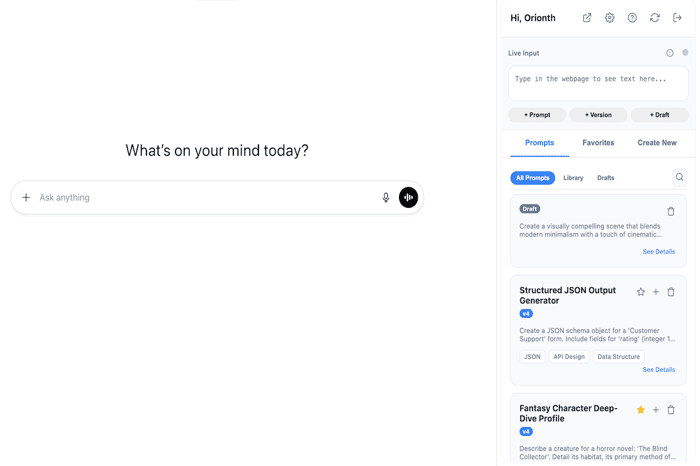
However, integrating AI deeply requires more than just chat interfaces; to keep this workflow efficient and organized, we need to manage AI systematically using tools like Lumra.
The way we interact with AI — through prompts — directly shapes outcomes. Yet most builders still treat prompts as disposable text. That’s a mistake.
Prompts Are Not Conversations Anymore — They’re Assets
In real development workflows, prompts evolve:
- You tweak wording to improve output
- You add constraints to reduce hallucinations
- You layer context as systems grow
- You reuse what worked before
- You fear touching something because “it finally works”
At that moment, prompts stop being casual text and start behaving like code. They have:
- Logic
- Dependencies
- Versions
- Regressions
- Improvements
But unlike code, they usually live in random notes, chat histories, Notion pages, or copy-paste limbo. This creates invisible technical debt.
The Real Cost of Unmanaged Prompts
When prompts aren’t managed, teams and solo builders face the same problems:
- ❌ You can’t reproduce results
- ❌ You don’t know why something worked
- ❌ Iteration becomes risky instead of experimental
- ❌ Knowledge lives in people, not systems
- ❌ Scaling AI usage becomes chaotic
This isn’t just a software problem. It applies to any domain where AI is part of thinking or production.
Prompt Management Is Workflow Management
A proper prompt management system treats prompts as first-class citizens:
- Versioning: Track changes over time.
- Comparison: See what actually improved results.
- Reusability: Build libraries instead of rewriting.
- Context preservation: Understand why decisions were made.
- Collaboration: Share prompt logic without friction.
This is the same evolution we saw with:
Code → Git
Design → Figma
Content → CMS
Infrastructure → IaC
AI workflows are no different.
Why This Matters Even More for Indie Hackers
Indie hackers move fast, iterate constantly, and wear multiple hats. AI helps with MVPs, landing pages, copywriting, user support, and coding.
But speed without structure eventually slows you down.
Prompt management is not bureaucracy — it’s leverage. When your prompts are organized, versioned, and reusable:
- You ship faster.
- You experiment more safely.
- You build systems, not hacks.
- You compound learning instead of losing it.
Lumra: Treat Prompts Like the Logic They Are
This is exactly the problem Lumra is built to solve.
Lumra is a professional prompt management platform designed for real workflows — not just experimentation. It helps you:
- Manage prompt versions like code
- Reach your prompts in the action with chrome extension
- Build prompt libraries for reuse
- Turn AI interactions into structured systems
If prompts are part of how you think, build, or create, they deserve proper tooling.
The Bottom Line
AI isn’t replacing builders — it’s amplifying them. But amplification without structure leads to noise.
Prompts are no longer just messages. They are logic, decisions, and workflow encoded in language. And like every other critical layer in modern building, they need to be managed.
If AI is part of your process, prompt management isn’t optional anymore — it’s inevitable.
Check out Lumra to start managing your prompts professionally.
