Prompt to Production: The Technical Architecture of Autonomous Full-Stack AI Generation
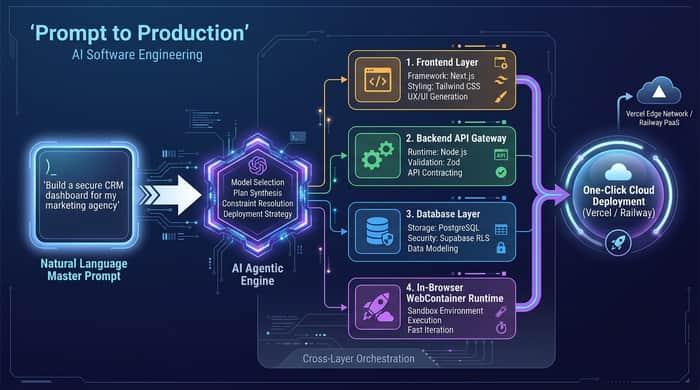
Building a SaaS MVP used to mean spending weeks writing boilerplate code, setting up auth middleware, and wrestling with database schemas.
In 2026, that entire flow has fundamentally shifted. With Agentic Full-Stack Generation (or "Vibe Coding"), I go from a single structured prompt to a live, multi-tenant SaaS application running on production infrastructure in under 60 minutes.
Here is a quick breakdown of the core architectural framework I use:
The Multi-Layer Execution Flow: Modern AI app engines (Lovable, Bolt.new, Blink) parse natural language prompts directly into Next.js App Routers, Tailwind UI components, serverless Edge routes, and PostgreSQL schemas in parallel.
Master Prompt Blueprinting: Vague prompts fail. High-converting builds rely on constrained prompts specifying tech stacks (Next.js, Supabase, Prisma), data relationships, and RBAC security rules upfront.
In-Browser WebContainer Sandboxing: AI agents execute code inside browser WebContainers, automatically catching TypeScript compiler errors and self-healing stack traces before deployment.
Zero-Trust Security Hardening: Always enforce Row-Level Security (RLS) policies on Supabase tables and Redis rate-limiting on API routes to isolate multi-tenant data before exposing your app to live traffic.
One-Click Cloud Deployment: Export clean codebases straight to GitHub and trigger automated CI/CD edge builds on Vercel or Railway in seconds.
The bottleneck for solo founders is no longer execution capacity or syntax fatigue—it is the clarity of your system architecture.
Want the full step-by-step implementation guide?
I’ve published the complete deep dive covering master prompt templates, database migration code snippets, RLS security policies, and the full 2026 AI app builder matrix on TheFluxRead.
👉 Read the Full Technical Guide Here: https://www.thefluxread.com/2026/09/prompt-to-production-technical.html
