Prompt versioning matters more than people think
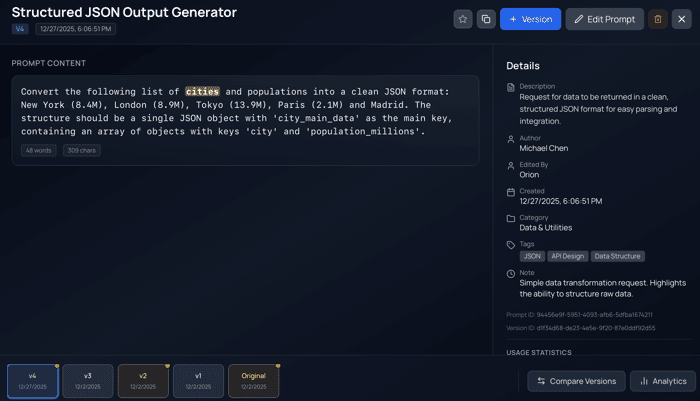
As prompts increasingly act as real building blocks in modern products and workflows, the way we manage them hasn’t really caught up yet.
Prompts evolve.
They get refined, reused, and adapted to new contexts.
But in most cases, we still overwrite them in docs or notes — which hides why a prompt worked and what actually changed over time.
That’s where versioning makes a real difference.
Treating prompts as versioned components turns iteration into a deliberate process. You can see how a prompt evolved, compare changes, keep context with notes, and understand which versions are actually being reused.
That mindset is what led me to build Lumra.
Lumra is a prompt management platform built around versioning as a first-class concept. Prompts evolve through clear versions, can be compared word-by-word, and stay organized across workflows. The Chrome extension keeps this process inside the browser, so versioning doesn’t interrupt your flow — it just happens as you experiment.
Lumra is indie-built, still early, and live. Versioning is the foundation everything else is being built on.
👉 Check Lumra: https://lumra.orionthcomp.tech/explore
Would love to hear how others here are handling prompt iteration and versioning today.

I 'm learning so much about prompts! I never really thought about the importance of saving different versions. Great content
Thank you. Even though prompts may feel new, they’re really the building blocks of an emerging development culture. Versioning, along with more advanced methodologies and practices, helps teams establish more mature and reliable workflows as this space evolves.
The "overwrite in docs" problem is real. Most people treat prompts like disposable inputs when they're actually iteration artifacts. The context of why a prompt changed often matters more than the prompt itself.
Versioning as a first-class concept is the right framing. It forces you to treat prompt engineering as engineering - with history, diffs, and the ability to roll back when a "refinement" actually made things worse.
The word-by-word comparison feature sounds particularly useful. Small changes in prompts can have outsized effects on output quality, and being able to see exactly what shifted helps build intuition for what works.
Curious about the collaboration angle: when multiple people iterate on the same prompt, do you capture who changed what? In team settings, that attribution becomes valuable for understanding which team member's instincts tend to produce better results.
Building on our earlier thread - this versioning layer seems like the foundation that makes the organizational flexibility we discussed actually work. You can experiment freely knowing the history is preserved.
Agreed — versioning is much more than change tracking. Over time, it can evolve into a core piece of organizational logic, enabling teams to experiment confidently while preserving context and intent.
Tying version history to output evaluation could even turn it into a meaningful signal of what works and why. That foundation is what makes scalable, collaborative prompt workflows possible.