Prototype Model in Software Engineering: A Practical Approach to Better Software Development
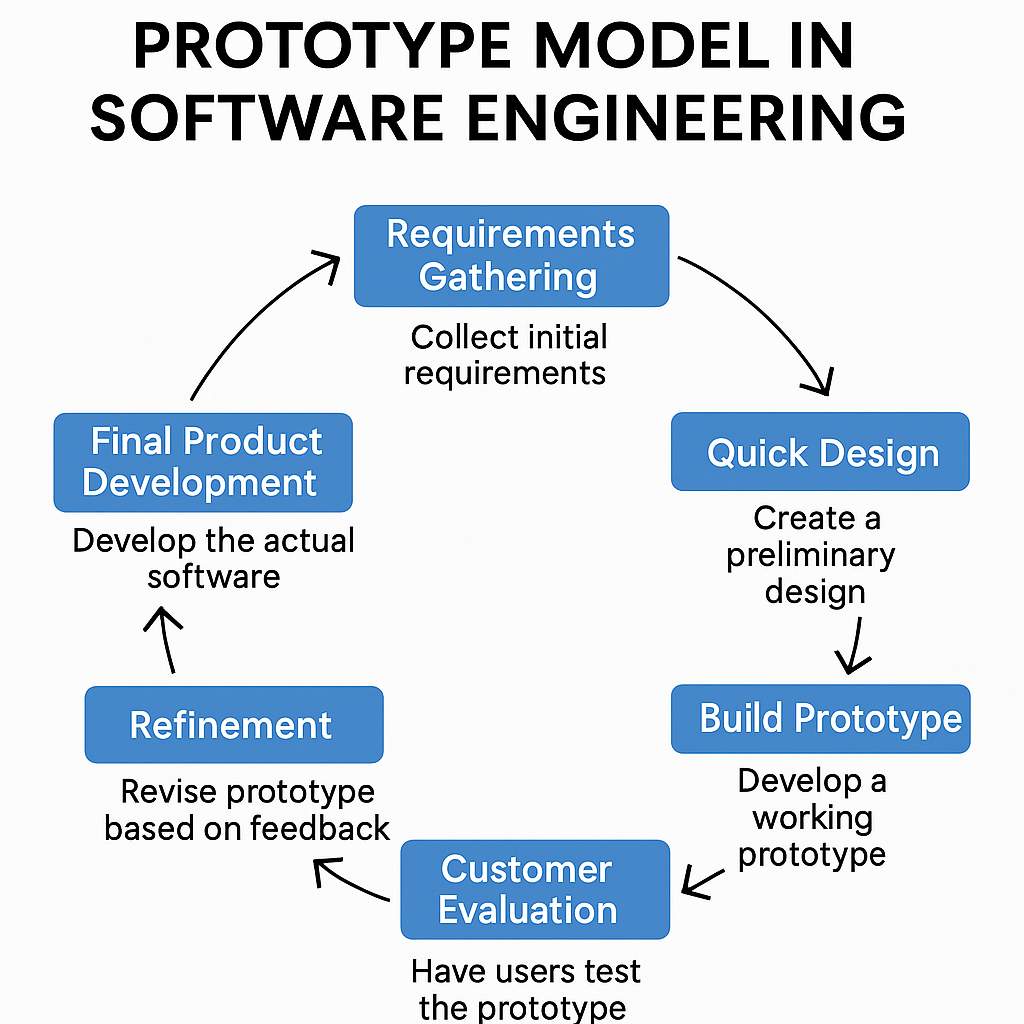
In software engineering, choosing the right development model can determine the success or failure of a project. One such highly effective model is the prototype model, especially useful when requirements are not clearly defined at the beginning. At Elite Mindz, we often apply the prototype model to help clients visualize their software early, gather feedback, and make improvements before final development.
What is the Prototype Model?
The prototype model in software engineering is an iterative process where a basic version of the software (the prototype) is built, reviewed, and refined through multiple feedback loops. It focuses on creating a working model of the application that stakeholders can interact with before full-scale development begins.
This model is particularly effective for complex and dynamic projects where client requirements evolve during the project lifecycle.
Key Phases of the Prototype Model
Requirement Gathering
Initial requirements are collected based on business needs. This may include workflows, user roles, integrations, and expected features. At Elite Mindz, our business analysis and consulting team plays a critical role here.Quick Design
A preliminary design of the system is created, focusing on key features and user interface elements.Prototype Development
A working prototype of the application is developed to simulate the core functionalities. We often include elements of UI/UX design in this stage.Customer Evaluation
The client or end-users test the prototype and provide feedback on usability, features, and workflows.Refinement
Based on feedback, the prototype is modified and improved in iterations.Final Product Development
Once requirements are finalized, the actual software is developed using stable technologies. Our in-house teams specialize in custom software development and mobile app development.
When to Use the Prototype Model
The client is unsure about detailed system requirements
UI-heavy applications where design matters significantly
New product development and startup MVPs
Projects that need early proof of concept
High-risk or high-investment software initiatives
Benefits of the Prototype Model
Early detection of requirement mismatches
Increased stakeholder involvement and satisfaction
Improved software quality and usability
Reduced overall development risks
Lower chances of project failure or rework
At Elite Mindz, we apply this model in sectors like healthcare, eLearning, eCommerce, and government projects.
Prototype Model vs. Other Software Models
Compared to the traditional Waterfall model, the prototype model offers more flexibility and continuous feedback. It is also different from Agile, which focuses on small incremental releases, while prototyping emphasizes early visual validation.
We often combine prototypes with our agile software development practices for better results.
Our Approach at Elite Mindz
Elite Mindz leverages the prototype model to reduce development time, clarify goals, and align software with client expectations. Whether you're building a CRM solution, ERP system, or a custom SaaS application, our team ensures your software delivers exactly what your users need.
Final Thoughts
The prototype model in software engineering bridges the gap between abstract ideas and functional software. It minimizes guesswork, boosts collaboration, and reduces costly rework. For businesses looking to develop reliable, user-centered applications, prototyping is a smart first step.
Want to see how a prototype can bring your software idea to life?Contact Elite Mindz today for a free consultation.

