Raising Prices vs. More Customers: The SaaS Growth Dilemma
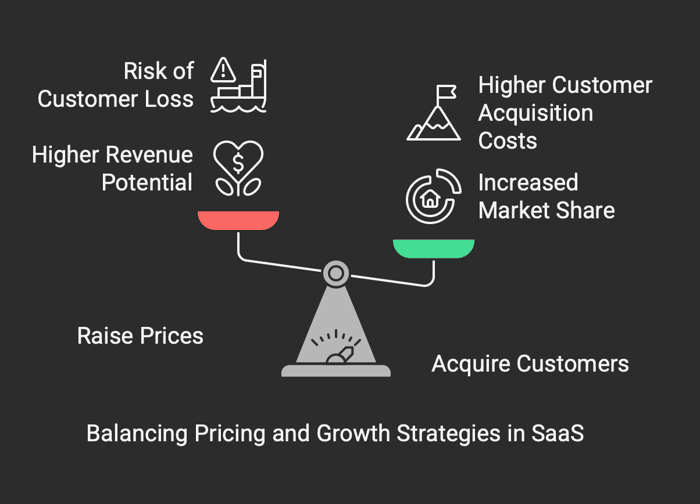
When you're trying to grow a SaaS business, you're faced with a constant dilemma: should you raise your prices or focus on acquiring more customers? I’ve been there, staring at my revenue dashboard, wondering if increasing the price would scare customers away or if I should just focus on getting more signups.
Let’s break it down.
The Case for Raising Prices
Raising prices feels risky, but it has its benefits. Here’s why it might be the right move:
1. Higher Prices Mean Higher Revenue Per Customer
If you’re charging $10/month and you double it to $20, you don’t need as many customers to hit the same revenue target. Instead of acquiring 200 customers at $10, you only need 100 customers at $20 to make the same amount.
2. Attracting Higher-Quality Customers
Cheaper pricing often attracts price-sensitive users who might cancel at the first inconvenience. Higher prices bring in customers who are willing to pay for value, leading to lower churn and better long-term retention.
3. Profitability Over Vanity Metrics
It’s easy to get caught up in the number of users. But 1,000 free users don’t help if they aren’t converting. A small number of paying users at a higher price can be a better foundation for sustainable growth.
The Case for More Customers
On the other hand, keeping prices lower and focusing on acquiring more customers has its own advantages.
1. More Users, More Word-of-Mouth
More customers mean more people talking about your product, which leads to organic referrals. If your product is good, a high volume of users can help you grow faster through word-of-mouth.
2. Upselling and Expansion Revenue
Once you have a large customer base, you can introduce new features, upgrades, or add-ons. A lower price point gets users in the door, and then you can increase their value over time.
3. Network Effects (If Your SaaS Supports It)
If your SaaS benefits from having more users (e.g., a marketplace or collaboration tool), then lower prices can help you reach critical mass faster. More users make the platform more valuable, leading to long-term success.
Finding the Right Balance
The reality is that there's no one-size-fits-all answer. The best approach depends on your business model, customer base, and goals. Here’s what I learned when I experimented with pricing changes in my own SaaS:
Test Price Increases Gradually – Instead of a massive jump, try small increases to see how customers react.
Segment Your Pricing – Offer different pricing tiers so users can choose based on their needs.
Run A/B Tests – Experiment with pricing models and measure the impact on conversion rates.
Listen to Your Customers – If customers consistently say you’re underpriced, take that as a sign to increase prices.
Conclusion
Growing a SaaS business isn’t just about getting more users or raising prices—it’s about finding the balance that works for your product. If I had to give one piece of advice, I’d say start by ensuring that your product delivers real value. If people love your SaaS, they’ll be willing to pay for it—whether that means a higher price or just more of them signing up.
What’s your experience? Have you tried raising prices or focusing on volume? Let’s discuss in the comments!
