Rapido Clone App Development Company: Complete Guide for Startups in 2026
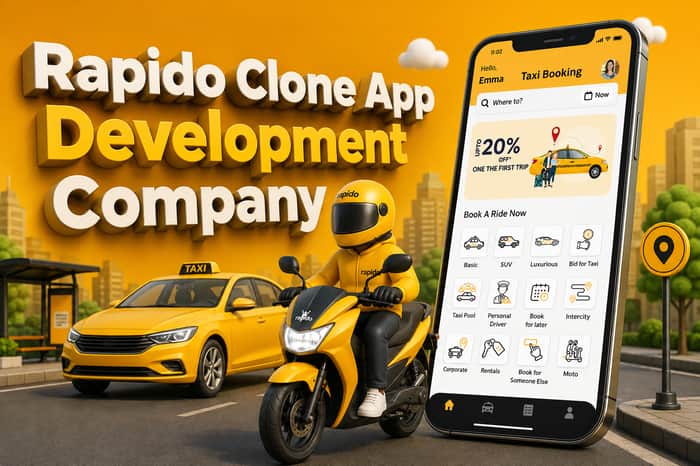
Rapido Clone App Development Company: Complete Guide for Startups in 2026
The demand for convenient, affordable, and fast transportation services is growing rapidly across cities worldwide. While traditional taxi services continue to operate, app-based mobility platforms have changed how customers book rides. Bike taxis, in particular, have become a popular transportation option because they can navigate traffic efficiently and often provide affordable fares.
For entrepreneurs planning to launch a bike taxi or ride-hailing startup, Rapido clone app development can provide a practical way to enter the market. A ready-made or customizable Rapido-like solution can include essential passenger, driver, and admin features while allowing businesses to build their own brand and business model.
Choosing the right Rapido clone app development company is an important decision because the quality of the software, scalability, security, customization options, and post-launch support can directly affect the success of the business.
This guide explains what a Rapido clone app is, its important features, development process, cost factors, business models, and how to choose the right development company.
What Is a Rapido Clone App?
A Rapido clone app is a ride-hailing application inspired by the core functionality of bike taxi platforms. It allows entrepreneurs to launch their own branded transportation marketplace where customers can request rides and drivers can accept and complete bookings.
A typical solution consists of three major components:
- Passenger App
- Driver App
- Admin Panel
The passenger application allows customers to register, select pickup and destination locations, request rides, track drivers, make payments, and provide ratings.
The driver application enables drivers to register, submit documents, receive ride requests, navigate to customers, manage trips, and monitor earnings.
The admin panel allows the business owner to control users, drivers, rides, payments, commissions, promotions, reports, and other platform operations.
A clone app should not simply copy another company's branding or intellectual property. Instead, it should provide similar business functionality while allowing the entrepreneur to create an independent brand and customized user experience.
Why Start a Rapido-Like Bike Taxi Business?
Bike taxis can address several common transportation challenges, especially in busy urban areas.
Affordable Transportation
Bike rides can be more economical than many traditional four-wheel transportation options. This can make them attractive to students, office workers, tourists, and daily commuters.
Faster City Travel
Two-wheelers can often move through congested roads more efficiently than larger vehicles. This can make bike taxis useful for short-distance urban transportation.
Lower Driver Entry Costs
Depending on local regulations and operating requirements, two-wheelers can require lower operating expenses than cars. This can make it easier to build a driver network.
Growing Demand for On-Demand Mobility
Customers increasingly expect transportation services to be available through their smartphones. A dedicated bike taxi platform can provide a convenient booking experience while creating a scalable marketplace.
Essential Features of a Rapido Clone App
A professional development company should provide the core features needed to operate the platform efficiently.
Passenger App Features
The passenger application should offer a simple and fast booking experience.
Important features include:
- Registration and login
- Social login
- Profile management
- GPS-based location detection
- Pickup and destination selection
- Fare estimation
- Bike selection
- Ride booking
- Driver information
- Real-time driver tracking
- Ride status updates
- Multiple payment options
- Ride scheduling
- Booking history
- Ratings and reviews
- Promo codes
- Push notifications
- Customer support
- Emergency assistance
A simple interface can reduce booking friction and improve customer satisfaction.
Driver App Features
Drivers need an application that allows them to manage their availability, bookings, and earnings.
Key features include:
- Driver registration
- Profile management
- Identity verification
- Document upload
- Vehicle information
- Online/offline status
- Ride request notifications
- Accept/reject ride requests
- Navigation
- Trip management
- Earnings dashboard
- Ride history
- Ratings
- Incentive management
- Withdrawal options
- Support
- Push notifications
Driver verification is especially important because transportation businesses must establish trust between drivers and passengers.
Admin Panel Features
The admin dashboard provides complete control over the platform.
Common features include:
- Admin dashboard
- Passenger management
- Driver management
- Vehicle management
- Ride management
- Commission settings
- Payment management
- Coupon management
- Promotional campaigns
- Driver verification
- Geographic management
- Reports
- Revenue analytics
- Customer support
- Notification management
- Content management
A powerful admin panel can help business owners monitor day-to-day operations and make data-driven decisions.
Advanced Features for a Rapido Clone App
To compete effectively, entrepreneurs can introduce advanced features beyond basic ride booking.
Multiple Vehicle Categories
A platform can support different transportation categories, such as:
- Bike taxi
- Scooter
- Auto rickshaw
- Economy car
- Premium car
This allows the business to target different customer segments.
Ride Scheduling
Customers can schedule rides in advance instead of requesting transportation immediately. This feature can be useful for airport trips, office commutes, and planned journeys.
Real-Time Tracking
GPS tracking allows passengers to monitor their driver's location and estimated arrival time.
Drivers can also use navigation functionality to reach pickup and destination points efficiently.
AI-Based Demand Prediction
Artificial intelligence can analyze historical ride data and identify periods of high demand.
Businesses can use these insights to improve driver allocation, pricing strategies, and operational planning.
In-App Chat and Calling
Secure communication features can allow passengers and drivers to communicate without exposing personal phone numbers.
Referral Programs
Customers can receive rewards for referring new users to the platform. Referral campaigns can help startups acquire users organically.
Corporate Transportation
Businesses can offer corporate accounts that allow organizations to arrange transportation for employees and manage their business travel expenses.
How Does a Rapido Clone App Work?
The basic workflow is straightforward.
Step 1: Passenger Opens the App
The customer logs into the application and enters the pickup and destination locations.
Step 2: Fare Calculation
The system calculates the estimated fare based on factors such as distance, ride category, pricing rules, and applicable charges.
Step 3: Ride Request
The customer confirms the booking request.
Step 4: Driver Matching
The system identifies suitable nearby drivers and sends the ride request.
Step 5: Driver Accepts the Ride
Once a driver accepts the request, the passenger receives driver and vehicle details.
Step 6: Driver Reaches Pickup Location
The driver uses navigation to reach the passenger.
Step 7: Trip Begins
After pickup, the driver starts the trip and follows the route to the destination.
Step 8: Payment
The customer completes payment using the selected payment method.
Step 9: Rating and Review
Both passenger and driver can rate each other after the ride.
This automated workflow helps create a convenient transportation marketplace.
Rapido Clone App Development Process
Choosing an experienced development company can simplify the entire development process.
1. Business Requirement Analysis
The development team first understands the business model, target location, customer segment, service categories, pricing structure, and required features.
2. UI/UX Design
The design team creates user interfaces for passengers, drivers, and administrators.
The goal should be to make ride booking, driver management, payments, and other important actions easy to use.
3. Backend Development
The backend manages users, bookings, drivers, payments, GPS information, notifications, pricing, and other core operations.
4. Mobile App Development
The passenger and driver applications are developed for the required platforms, such as Android and iOS.
Cross-platform technologies can also be considered when businesses want to reduce development complexity.
5. API and Third-Party Integration
A bike taxi application commonly requires integrations such as:
- Maps APIs
- Payment gateways
- SMS services
- Email services
- Push notifications
- Analytics
- Identity verification services
6. Testing
The application should undergo functional, security, performance, usability, payment, GPS, and device compatibility testing.
7. Deployment
After successful testing, the applications can be prepared for app-store submission and production deployment.
8. Maintenance and Updates
After launch, regular maintenance is required to fix bugs, improve security, update integrations, and introduce new features.
How Much Does Rapido Clone App Development Cost?
The cost depends on several factors, so there is no single fixed price for every project.
Important cost factors include:
- Number of platforms
- Feature complexity
- UI/UX customization
- Backend architecture
- Number of integrations
- Payment gateways
- GPS and mapping services
- AI functionality
- Admin panel complexity
- Security requirements
- Development team location
- Post-launch support
A basic ready-made solution can generally require less investment than a fully customized application built from scratch.
Entrepreneurs should also consider ongoing expenses such as hosting, third-party API charges, maintenance, marketing, customer support, and driver acquisition.
Revenue Models for a Rapido-Like App
A bike taxi platform can generate revenue through several methods.
Commission-Based Revenue
The platform can retain a percentage of the fare from every completed ride.
Surge or Dynamic Pricing
Prices can be adjusted according to demand, availability, time, or location, subject to applicable regulations.
Cancellation Charges
The business can introduce cancellation fees under clearly defined conditions.
Subscription Plans
Drivers or passengers can be offered subscription packages with benefits such as reduced commissions, discounts, or special offers.
Advertising
Businesses can generate additional revenue by displaying relevant advertisements or sponsored promotions.
Corporate Plans
Corporate customers can be offered customized transportation packages based on their requirements.
Using multiple revenue streams can help create a more sustainable business model.
How to Choose the Best Rapido Clone App Development Company
The development partner you select can significantly affect your project's quality and long-term success.
Consider the following factors before making a decision.
Experience
Check whether the company has experience developing ride-hailing, taxi, bike taxi, or on-demand applications.
Customization
Avoid solutions that provide only fixed functionality. Your development partner should allow you to customize the application according to your market and business requirements.
Source Code Ownership
Understand the licensing and source-code ownership terms before purchasing the solution.
Scalability
The platform should be capable of handling increasing numbers of passengers, drivers, bookings, and transactions as the business expands.
Security
Ask about authentication, data protection, secure payment processing, server security, and other security measures.
Third-Party Integrations
Confirm whether the company can integrate the payment gateways, maps, notifications, analytics, and other services required for your target market.
Support and Maintenance
Post-launch technical support is important because applications require updates and maintenance over time.
Portfolio and Reviews
Review previous projects, customer feedback, product demonstrations, and the company's development experience before making a final decision.
Legal Considerations for a Bike Taxi Business
Before launching a Rapido-like platform, entrepreneurs must research the laws and transportation regulations applicable to their target location.
Depending on the country or city, requirements may involve:
- Business registration
- Transportation permissions
- Driver licensing
- Vehicle documentation
- Insurance
- Tax compliance
- Data privacy
- Payment regulations
- User agreements
- Driver contracts
Because transportation laws can vary significantly by location, entrepreneurs should obtain appropriate local legal advice before launching.
How to Make Your Rapido Clone Business Successful
Technology alone does not guarantee success. A successful ride-hailing business needs strong operations and customer acquisition.
Start in a Focused Market
Instead of launching everywhere at once, consider starting in one city or selected service areas. This makes driver acquisition, customer support, and marketing easier to manage.
Build Driver Supply
Customers expect short waiting times. Therefore, attracting and retaining enough drivers should be a major priority.
Offer Competitive Pricing
Research existing transportation services and establish a pricing strategy that balances customer affordability with driver profitability.
Prioritize Safety
Driver verification, trip tracking, emergency assistance, ratings, and secure communication can help create a safer platform.
Deliver Excellent Customer Support
Fast responses to payment issues, cancellations, lost items, and ride complaints can improve customer trust.
Use Data Analytics
Monitor metrics such as:
- Daily bookings
- Active drivers
- Customer retention
- Average ride value
- Cancellation rates
- Driver acceptance rates
- Revenue
- Customer acquisition cost
These insights can help business owners improve their operations.
Final Thoughts
Rapido clone app development can be an attractive opportunity for entrepreneurs interested in launching a bike taxi or broader ride-hailing business. A customizable solution can provide the core technology required to connect passengers and drivers while reducing the time and resources needed to build a platform from scratch.
However, choosing the right Rapido clone app development company is critical. Look for a provider that offers customization, scalable architecture, secure technology, third-party integrations, source-code clarity, and reliable post-launch support.
Start with a focused market and an MVP, validate customer demand, build a strong driver network, and gradually introduce advanced features based on real user requirements. With the right combination of technology, operations, marketing, and customer service, a Rapido-like platform can become a scalable transportation business in 2026 and beyond.
