Realizing his business was a $1M ARR
trap
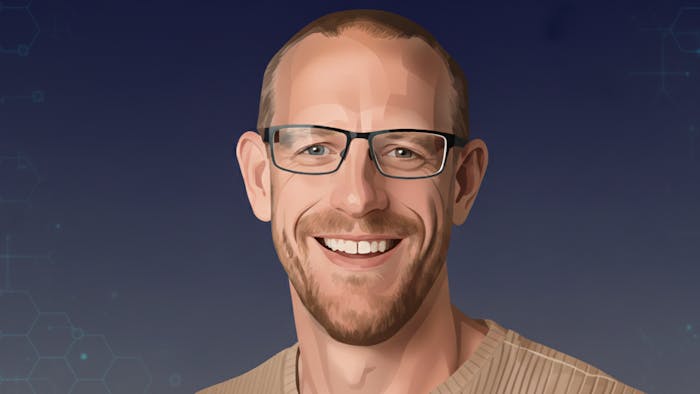
Torben Anderson left a 20-year corporate career and built a $1M+ ARR service business, Rewired.one. Then, he realized that it was no different than the corporate world: He had put the golden handcuffs back on.
Now, he's building products again in an attempt to take them back off.
Here's Torben on how he got here. 👇
Leaving behind $6 billion projects
I started coding at 8 when my dad brought home a computer in 1986 and said, "Figure this out." My mom would bring tea that went cold while I got lost building software. That was me, a pure builder.
Then the corporate world derailed me for 20 years. I had all the tech skills, all the knowledge, but I became trapped on the treadmill managing other people's visions. I led global banking projects, $6 billion in value, teams of 60. But it was someone else's version of success.
So, in 2018, after 20 years in the corporate hamster wheel, with a small amount of savings, I plunged out of the "cushy" work world.
Starting out, I built rewired.one, a blockchain consulting practice. By 2022, it hit $1M ARR.
Starting a $1M+ ARR business
The story of rewired.one started with a school friend who was building blockchain infrastructure.
When his product launched, his customers needed help building software on the platform. He introduced me to my cofounder and we hit it off immediately. We started rewired.one and gave my school friend 20% of the company for perpetual referrals. This single decision unlocked a continuous pipeline.
But it wasn't an immediate success. We made 50 calls before our first sale. Most people would quit. We didn't.
Once we got traction, we just executed: solving real problems, hiring right, scaling. At one stage, we had a team of ten.
The wild part: My cofounder is in Australia. We've still never met in person. We built a million-dollar business across continents on Zoom. Here, my corporate life came back in spades. Years of executive project management, running agile teams, and working with offshore teams in banking meant I had the playbook. Solid systems. Async first.
That applied to our enterprise sales — we sold deals remotely. Some, as high as $500k.
Realizing the business was a trap
Leaving corporate broke my brain. I was wired to optimize for someone else's metrics. Rewiring to care about revenue and impact took time.
And building rewired.one to $1M ARR was a trap. I'd just recreated the banking world: trading time for money. Services are golden handcuffs.
If I started over, I'd build products from day one, not services. Services funded me but distracted me.
I think the reason I didn't do that was that Corporate taught me to be risk-averse. Unlearning that fear and shipping faster was the breakthrough.
Becoming a builder again
In 2023, I went back to my roots. I started coding again, using React Native and Flutter, and working hands-on with founders.
Over the years, I built all my own tools and systems to support my businesses. I realized some of them were worth spinning out.
That's how Slack started, right? Internal tool becomes the product. So now, I'm a builder again.
I'm focused on two things:
Icebox, a secure digital vault that keeps your passwords and access safe from everyone, even Google. You'd never hand your house keys to a stranger, so why give away your digital keys? It's password-free access. It's currently pre-revenue.
And fractional CTO services at rewired.co, where I help founders turn ideas into revenue machines by providing technical leadership and hands-on development without the $300K+ full-time cost. It's currently bringing in $5k+ MRR.
Fractional CTO work pays the bills and I genuinely love problem solving. But ultimately, I'm moving away from services to product. Icebox is my first real bet. Services don't scale as products do.

Solving security
I started working on the tech for Icebox when an employee left with all my passwords. He wasn't malicious, but I lost three weeks, putting my client's work at risk. That's when I knew password managers weren't enough.
Password breaches cost billions. The internet is broken, security-wise. I'm passionate about solving that problem and I'm not the only one. When you have a team that believes in the mission, you move faster.
Six years of R&D at Rewired Labs already solved the tech. The challenge with Icebox was stripping it down and making it simple enough for people to actually use instead of going back to passwords.
To do that, I followed Elon's algorithm: dumber, delete, optimize. Question every feature. Why does it exist? Is it solving a real problem or just complexity?
Delete ruthlessly. If a feature doesn't directly support password-free access, I remove it. The idea is one tap, you're in. No mental overhead, no settings to fiddle with, no false sense of security. Security that's so simple you forget you're using it.
The best stack is the fastest stack
The best stack is whatever gets user value fastest. I'd rather ship and iterate than wait for the perfect tech choice.
For Icebox, I use Rust for the backend because security is critical. Flutter for cross-platform mobile, deployed via Xcode and Google Play. Shuttle for Rust deployments.
For blockchain work, most dev is frontend; most people don't know this. I use React or Flutter, depending on the project. And all my websites are built on Next.js.
Learning and vibe coding
AI coding changed everything. English is the new programming language.
I use Cursor. AI teaches me the actual syntax of the language I'm using as I build the product. Sounds weird, but I'm learning the language as I ship features. Two birds, one stone.
The real trick is a /learn folder where AI generates a live course that morphs to my understanding and learning style. AI iterates on every word and syntax I don't understand, sometimes splitting lessons to create a complete flow.
The bonus: I don't learn against a Hello World app. It teaches me against the actual app I'm building. This is a superpower on steroids. That course then becomes part of my prompt template, so AI always knows what I'm trying to do.
In corporate life, we never had time or budget for testing suites, refactoring code, writing docs, or squashing bugs. Project managers wouldn't carve out time for it. If you know how to use AI, I believe code quality is back.
Growth via client fountains
I've attracted users via word of mouth. Find people who believe in what you're building and let them tell others. The secret is finding "client fountains." These are people who constantly get referrals, and have networks to refer you.
That's how I grew Rewired.one. And it's how I'm growing my current businesses.
Don't get stuck on one big account
As far as business models, flat rate recurring always wins. Not hourly, not project-based. Recurring revenue is the only revenue that matters because it compounds.
The trap in services is easy to fall into. You get one big client paying you a ton for multi-month work. Feels great. But it hogs your time and you can't scale.
Coming from the corporate world, I learned the opposite works better: Keep recurring rates lower, push more clients, and more volume. Less chance of getting stuck on one account.
With recurring, you know what's coming in. You can plan. You can invest in building instead of constantly hunting the next deal.
A hack most people don't know about
Here's the hack most people don't think about: Ask someone to mentor you while you help serve their clients.
A lot of people are close to retiring — or just tired. They're very willing to hand off excess work. You get the leads, they get relief. And they also love to mentor, so you learn the business from someone who's done it for years.
It's a win-win-win.
What's next?
I want to build a mega brand under "Rewired" with a portfolio of products. The $1B single founder is real now with AI.
I want to get better at marketing, so I'll code it, as this is the best way to learn a new domain. My rule: If I can't code it, then I won't do it. This keeps me focused and stops shiny object syndrome.
Other than that, freedom! Freedom! Freedom!
You can follow along on X, LinkedIn, and my personal website.

Leave a Comment
The idea of a "$1M ARR trap" really stood out to me. Most founders dream about reaching that milestone, but very few talk about the tradeoff between revenue and freedom. I'm curious about one thing: Looking back, at what ARR level did you first realize that the business was becoming a trap rather than a vehicle for freedom? And for founders currently running service businesses, what would be the earliest signal that they're building golden handcuffs instead of a scalable company? Really appreciated the honesty in this story.
The
/learnfolder concept is absolutely brilliant. Generating a dynamic, AI-driven course against your actual production codebase instead of relying on generic 'Hello World' tutorials is a game-changer for picking up new languages fast. I also strongly agree with your take on AI bringing code quality back. Finally having the bandwidth to generate robust test suites and documentation without having to fight a project manager for budget is huge. How do you manage the context window in Cursor as that/learnfolder grows?this hit hard. “$1m arr trap” is real, services can turn into a job real quick
curious: what was the first moment you knew it was golden handcuffs again, like the exact breaking point
also how are you planning to keep icebox product-led without the fractional cto work swallowing all your time
Yes afcores
I’ve been developing a premium AI app concept called INNER — The Mirror to Your Mind. It’s designed to help users uncover subconscious patterns through subtle interactive choices and daily micro-interactions.
The goal is to create a deeply engaging and emotionally resonant experience that encourages self-insight, personal growth, and consistent engagement.
I’d love to hear feedback from fellow founders and developers on how to refine the experience and make it even more impactful.
Realizing his business was a $1M ARR trap” refers to a founder discovering that even though the company is generating $1 million in Annual Recurring Revenue, the business itself isn’t truly successful or scalable. It may look impressive from the outside, but margins are thin, growth has stalled, operations are chaotic, customer churn is high, or profits are low. In short, the business earns big revenue but traps the owner with stress, no freedom, and limited long-term value.
That "services funded me but distracted me" line is so true! It’s easy to fall into the trap of making money but not really building anything lasting, because you have to start from scratch each month. That 20% equity deal with your friend for referrals is genius. It's all about setting things up right.
Most people would try to get that number lower or just pay a one-time fee, but you built a system that keeps on giving. Getting clients from referrals beats cold emails any day. I get why you're so strict about deleting things in Icebox. Security stuff fails if it’s too annoying. If it's too hard, people will just go back to simple passwords.
Despite generating $1M ARR, he identified a trap: high costs, low margins, and unsustainable growth. The pursuit of revenue alone without profitability, scalability, or market fit can lead entrepreneurs astray. A business that thrives long-term, not just looks big, isn't just about revenue. It's about sustainable growth, efficient operations, and building a business that thrives over time.
Thanks for sharing this. Did you try any version of this before building fully, or was this the first iteration?
Great story, thanks for sharing!
The idea of a “$1M ARR trap” captures something a lot of founders only see in hindsight: revenue on its own doesn’t equal freedom. Without leverage, it can quietly turn into another set of constraints.
What resonated with me is how similar this is to corporate conditioning — optimizing for delivery, reliability, and client happiness, even after you’ve technically gone independent. Services don’t just pay the bills; they shape how you think, often making product risk feel uncomfortable or even irresponsible.
The shift where internal tools start becoming products feels like the real turning point. That’s when effort begins to compound instead of resetting with each new client. Treating services as a way to surface repeatable pain and language — not as the final destination — seems like the most practical bridge into product.
I’m curious: during the process of aggressively simplifying Icebox, what was harder to cut — features you were personally attached to, or things users claimed they wanted but rarely used?
Hey Torben, this is gold – your journey from corporate $6B projects to $1M ARR services to finally breaking the golden handcuffs and going back to pure building mode hits home hard.
The "services funded me but distracted me" line? Brutally real. And "the best stack is the fastest stack" - 100% agree, vibe coding all the way. Icebox sounds like exactly what the world needs (password fatigue is real). Would love to hear more about how you're stripping down the UX to make it "one-tap forget you're using it"
Any early learnings on that ruthless deletion process? Rooting for you to ship and scale the product side hard. Keep building!
The framing of services as "golden handcuffs you put on yourself" is the most honest description of this trap I have seen. What makes it so insidious is that the metrics look like success from the outside - revenue is up, clients are happy, team is growing - while the founder is quietly losing the optionality they originally left corporate to find.
The /learn folder approach for AI-assisted coding is a genuinely clever hack. Most people use AI to ship faster but miss the compounding benefit of learning the underlying system while building. Teaching yourself against your actual codebase instead of toy examples removes the biggest friction point in self-directed learning.
Question: When you realized the business was a trap, did that recognition come gradually through accumulated frustration, or was there a specific moment where the pattern became undeniable? Curious whether the "breaking point" for service founders tends to be a single event or slow erosion.
This is a sharp illustration of how easily a successful”services business can recreate the same constraints people leave corporate to escape. The distinction between revenue and leverage is the key insight here and why shifting back to product thinking changes everything, even at lower short-term numbers.
That was very helpful to realize that ARR is not reality. Most entrepreneurs are unaware of this issue. Great post! Much appreciated.
Achieving $1M ARR trapped James Fleischmann's business, revealing growth plateaus, hidden operational strain, and the need to reconsider scaling, systems, and strategy to escape sustainable stagnation.
🤖 An automation tool to build apps / tools / websites like Google’s AI Studio — but lighter, faster, and more cost-efficient.
⚡ Runs on Cursor and leverages AI to generate code, build logic, optimize workflows, and dramatically shorten development time.
🧩 Supports the whole journey: idea → MVP → production-ready product. Easy to customize and scale as your needs grow.
💰 Operating cost is only ~500,000 VND/month (≈ $20), ideal for individuals, indie hackers, small startups, or teams that need to experiment fast.
—
(Available on GitHub for download, testing, and demo.)
🤖 An automation tool to build apps / tools / websites like Google’s AI Studio — but lighter, faster, and more cost-efficient.
⚡ Runs on Cursor and leverages AI to generate code, build logic, optimize workflows, and dramatically shorten development time.
🧩 Supports the whole journey: idea → MVP → production-ready product. Easy to customize and scale as your needs grow.
💰 Operating cost is only ~500,000 VND/month (≈ $20), ideal for individuals, indie hackers, small startups, or teams that need to experiment fast.
—
(Available on GitHub for download, testing, and demo.)
github. /onmou/runner
Thanks for sharing and appreciate the honesty.
I kept thinking my funnel wasn’t working because I didn’t know enough.
Turned out the real problem was I was asking users to make too many decisions at once.
Once I reduced everything to a single, clear next step, things finally started moving.
Thanks, appreciate that. It’s been an interesting shift, actually. Once I started looking at funnels as decision environments rather than structures, it changed the way I think about almost everything. Still early, but it’s been clarifying.
Yeah that's a useful way of looking at it. When you start seeing funnels as decisions environments you realise that 'small' things (like wording, timing, what someone is asked to consider) can completely change whether momentum continues or stalls.
If you want to chat more in depth let me know and we can arrange a quick call.
Appreciate that — happy to chat. Lately, I’ve been trying to keep things light before jumping into a call. Typically, I’ll do a quick async to see if there’s anything concrete to dive into. If that’s helpful, I’m happy to dive deeper after that.
Yeah sure, I understand that. I was just thinking about connecting a little further, nothing heavy. Let me know if there's another medium you're happy to chat on and we can see what happens.
Makes sense — always good to connect with other builders. I’ve mostly been keeping conversations here for now while I’m testing a few small ideas, but happy to keep exchanging thoughts here when something interesting comes up.
Really appreciate the honesty and depth here — that “$1M ARR trap” lesson hits hard for so many indie builders chasing revenue without clarity on real product value.
One pattern I’ve seen across services → products transitions is that founders often treat the product like a service with code instead of solving the user’s internal process problem. Shifting from “we build for you” to “we solve a recurring workflow” can unlock real scalability.
I’m building an AI meeting assistant focused on turning chaotic meetings into clear action items — and that same lesson rings true: you don’t sell the tech, you sell the outcome.
Thanks for sharing such a grounded perspective!
Really appreciate this honesty. It feels like a common trap to celebrate revenue without checking whether the business will actually sustain itself once the early demand settles.
I’ve seen a few projects plateau hard once they hit that first meaningful number because the foundation wasn’t built around repeatable value. It makes sense that treating the product as work first and revenue second changes how you think about growth.
I’d be interested to hear how you shifted your priorities after realizing that point, and what specific changes felt most impactful.
Thanks for sharing Torben's story. It's interesting how a business can become a trap even at $1M ARR. I appreciate the focus on finding freedom and what he did next.
What are the safest ways to find reliable sources for minecraft indir apk, and what should users look for to ensure they are downloading a secure and up-to-date version of the game?
Thanks for sharing this interesting perspective.
This is definitely surprising. Why is this the case?
I assumed most, if not all, blockchain work is heavily cryptographic and back-end focused.
Is your business in web3?
Nope. Why do you ask?
Just because you mentioned blockchain - my mistake. What area of business are you in?
I checked out your fractional CTO services. The idea of providing CTO services to tech startups is new and a compelling one for founders looking for a good technical leader to scale their product.
This really hits home, especially the “golden handcuffs” insight. A lot of founders escape corporate only to recreate it through services. The shift back to products + recurring is the real unlock.
One growth angle that fits this transition well is Reddit when it’s treated as long-term discovery, not promotion. Threads around security, founder burnout, and “services vs products” already rank on Google, thoughtful replies there compound far beyond word-of-mouth and don’t tie growth to your time.
Curious if Reddit is something you plan to use intentionally as you move deeper into product-led growth, especially for Icebox
If you have the skills, always start businesses that revolve around products.
This story hits a nerve a lot of founders don’t talk about enough: services can look like freedom but quietly recreate employment.
From a growth and positioning standpoint, the “$1M ARR trap” shows up clearly in how services scale revenue grows, but distribution doesn’t. You’re still selling time, just at a higher price point. That’s something I see often when helping service founders shift their narrative and audience toward products.
What stood out to me is the idea of “client fountains.” That’s essentially distribution before product and it mirrors how the most sustainable Reddit and community-led growth works too: trusted nodes > mass exposure.
The transition back to building (and using services as a funding layer, not the end goal) feels like the right long-term play. This is a solid reminder that ARR alone isn’t the metric leverage and ownership matter more.
As someone who served clients for more than 20 years, I agree. But switching from service mode to product mode is not an easy task
Completely agree the switch is mentally harder than it is technically.
Service mode trains you to optimize for delivery, clients, and short-term certainty. Product mode forces you to sit with ambiguity: slower feedback loops, unclear distribution, and no guaranteed revenue at the start. That whiplash is what makes the transition so uncomfortable for people who’ve been successful in services for decades.
One pattern I’ve seen work well is treating services as a distribution and insight engine, not just a revenue engine. The founders who transition cleanly usually:
– Use service work to surface repeatable pain (not custom solutions)
– Build in public around that pain so demand forms before the product
– Shift their narrative early, even while services still pay the bills
Communities like Indie Hackers and Reddit are surprisingly good mirrors for this phase you can pressure-test ideas, language, and positioning long before a full product exists. The product shift gets much easier when the audience is already there.
thanks a lot
Glad it was helpful 🙏
If you ever decide to explore that transition more deliberately, I’m happy to share how other service founders have used communities like Reddit and Indie Hackers to validate product ideas before fully committing to the build. Even a few well-placed discussions can surface positioning and demand signals pretty quickly.
Feel free to reach out to me on my gmail "[email protected]" if you want to compare notes or pressure-test an idea sometime.
The "$1M ARR trap" is one of the more honest framings of a problem that a lot of service founders discover too late. A consulting practice that hits $1M ARR did it by adding complexity: more clients, more delivery staff, more coordination overhead. The founder's job slowly becomes "manage the machine that generates revenue" rather than "build things." That's exactly the corporate treadmill — just with a different logo on the door.
The blockchain consulting window (2018–2022) was genuinely good timing. Enterprise blockchain interest peaked, the term commanded premium day rates, and anyone who could navigate both the tech and the enterprise sales cycle could build a profitable practice fast. The problem is that blockchain consulting also tied revenue directly to crypto market cycles rather than to durable business value — which means the $1M ARR was always fragile in a way that a sticky SaaS product wouldn't be.
The services → productized service → product escape route is well-trodden but genuinely hard. The main obstacle isn't building the product — it's that every hour you spend on product is an hour not billing clients, and clients are how you pay the team you built to deliver services. The transition requires either a real financial runway or the willingness to shrink the service side before the product side is ready to carry weight.
"All the tech skills, all the knowledge, but managed other people's visions" — this framing matters. After 20 years in corporate and a few years in services, the identity shift back to builder is the real work. Icebox is the test of whether that shift is real or just a storyline. Rooting for it.
"This is a great update! From an SEO perspective, I’d suggest focusing on long-tail keywords and optimizing your on-page content early on to build a solid foundation. If you need any specific tips on improving your search rankings, feel free to ask. Happy to help a fellow indie hacker!"
The "services funded me but distracted me" line hits different when youve been in corporate for 14+ years yourself. Its so easy to default to what you know — delivering for clients, managing scope, hitting deadlines. Feels productive but youre just building someone elses thing again.
Currently trying to go straight to product and skip the services trap entirely. But honestly the hardest part isnt building — its the distribution. You mention "client fountains" for services growth, but curious how your thinking about distribution for Icebox? Is it the same referral-based approach or something completely different for a product vs services?
Also that /learn folder hack with Cursor is genius. Never thought about using AI to generate a custom course against the actual codebase im building. Stealing that immediately
This resonated with me a lot. It’s surprising how easy it is to get trapped in a pattern where progress feels real (MRR ticking up) but the underlying fundamentals aren’t there, and it eventually becomes harder to break than it was to start.
It also highlights something I’ve seen in a few founders: the difference between proof of concept and proof of scalability. The former can feel like traction, but without repeatable demand or clear leverage it often plateaus or becomes a burden rather than a growth engine.
I’d be curious to know what your biggest takeaway was — was it a specific moment when you realized it was more of a trap than a business, or did it become obvious only in hindsight?
This touches a nerve. We don't talk about the '$1M ARR trap' nearly enough. ~
This situation arises when the revenue stream outpaces optionality. You have built a solid business. However, as you try to take the next step, things feel ever-heavier. More people, more process, more risk. And the upside never seems worth the stress.
A useful frame that I’ve used is separating income quality from income size.
Revenue of high quality buys you time, energy choice. Although they may appear good on paper, they lock you in.
In the light of information, it makes sense to become a builder again. Less dependency. Greater influence for each choice. Reduced work related to machine assembly.
I'm interested how you recognized the trap in real time.
Was it exhaustion, a decline in learning, or the acknowledgment that growth meant more complexity?
If we could go back in time, is there a sign you would watch for earlier next time to not get stuck in that middle?