Recover Lost Organic Traffic with an Advanced Google Penalty Checker
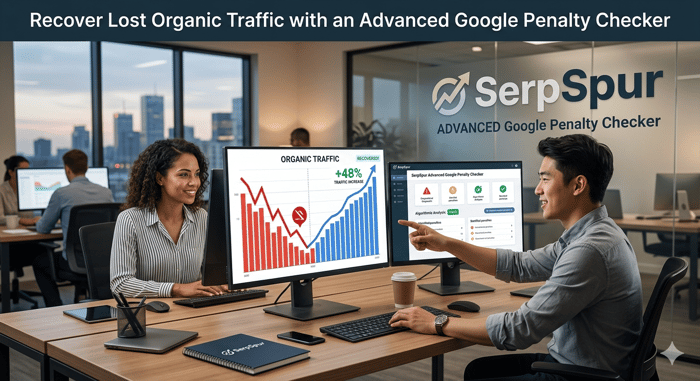
Like many SEO professionals, I've experienced that sinking feeling when a client's website suddenly loses rankings overnight.
No warning. No obvious technical issues. Just a sharp decline in traffic and visibility.
After dealing with multiple cases like this, I realized there wasn't a simple way to quickly check whether a website might be suffering from indexing problems, blacklist issues, or other search engine penalty signals.
Most website owners end up guessing.
So I built Search Engine Penalty Radar.
The goal was simple:
Detect indexing issues quickly
Check for blacklist warnings
Surface common penalty indicators
Help site owners identify potential SEO problems before they become disasters
Instead of spending hours digging through multiple tools and reports, users can scan their site and get immediate insights into potential issues affecting visibility.
The Problem
When rankings drop, most people assume:
Google updated its algorithm
Competitors outranked them
Content needs updating
Sometimes that's true.
But in many cases, the real issue is something more serious:
Pages no longer being indexed
Technical SEO errors
Search engine penalties
Domain reputation problems
Manual action-related signals
Finding these issues often requires checking several different sources and interpreting complex data.
I wanted to simplify that process.
Building Search Engine Penalty Radar
I created a tool that analyzes a website and highlights warning signs that could impact organic search performance.
The tool focuses on:
✅ Indexing status checks
✅ Blacklist detection
✅ Search visibility signals
✅ Potential penalty indicators
✅ Early warning diagnostics
The idea is not to replace Google Search Console but to provide a fast first layer of investigation when traffic suddenly drops.
The Reddit Experiment
After launching the tool, I shared it in a Reddit discussion where users were talking about recovering from a Google manual action.
I explained how the tool helps identify potential issues that often go unnoticed.
The response surprised me.
That single Reddit post generated:
80 signups
Valuable user feedback
New feature ideas
Discussions about SEO recovery workflows
It reinforced something I've learned repeatedly:
People actively search for solutions when rankings disappear, but they need tools that are easy to understand and use.
What I've Learned
Building SEO tools isn't only about features.
It's about reducing uncertainty.
When a website loses traffic, business owners want answers quickly.
Even if a tool doesn't solve every problem, helping users identify possible causes saves time, frustration, and lost revenue.
Looking for Feedback
If you've ever dealt with a sudden ranking drop, I'd love to hear how you investigate it.
What tools do you use first?
What signals do you check?
You can also try the tool here:
