Recovering from a 100% Traffic Drop: Shifting from Social Video to SEO-Focused Metadata
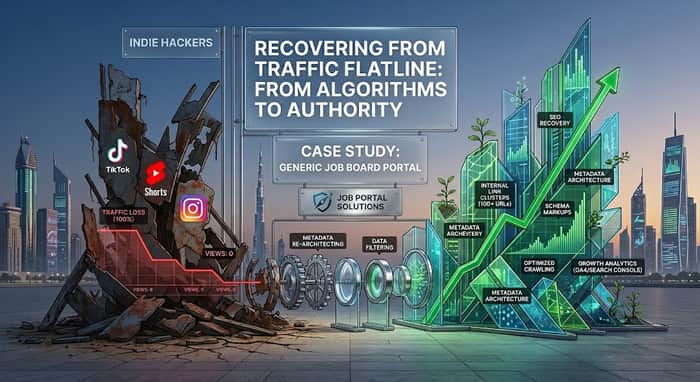
I woke up one morning, checked my dashboard, and stared at a flatline.
My YouTube Shorts, which had been pulling in thousands of views consistently, had suddenly dropped to absolute zero. Not a gradual decline. A complete, 100% algorithmic wipeout overnight.
When you are managing a regional employment directory, traffic is your lifeblood. At UAEWalkins, my goal has always been to connect technical and industrial professionals with active, face-to-face interview opportunities across the Middle East. For a while, short-form social video felt like the ultimate growth hack. It was visual, it was fast, and the reach was intoxicating.
But relying on a "For You" feed is like building a house on rented land. When the algorithm changes its mind, you get evicted.
Here is the technical reality of what happened and how I pivoted the platform's entire discovery strategy away from unpredictable social feeds and towards a rock-solid, SEO-focused metadata architecture.
The Problem with the Algorithm
Social video platforms optimize for retention and entertainment, not utility. Job hunters, especially in specialized sectors like petrochemicals or facility management, are looking for specific, timely data.
When the views disappeared, I realized I was fighting the wrong battle. I was trying to entertain an audience that actually just needed a well-structured database. The zero-view day forced a hard stop. I looked at the core architecture of how UAEWalkins was being indexed and realized things had to change.
The Shift to SEO-Focused Metadata
I decided to stop chasing virality and start building authority. If a candidate was searching for a specific walk-in drive in Dubai, I wanted our site to be the definitive answer, not a fleeting video.
Here is the exact strategy I used to recover and stabilize the traffic:
1. Scrapping Boilerplate for Precision
Instead of throwing generic tags onto videos and hoping for the best, I audited our entire dynamic directory. I implemented strict rules for our metadata. Every single job cluster had to follow a precise H1 heading pattern—strictly kept within a 50-60 character limit (e.g., "[Company Name] Careers 2026"). It wasn't about being catchy; it was about exactly matching user search intent.
2. Building Deep Internal Link Clusters
I took the high-volume keywords that used to live in social video captions and integrated them directly into our site's structural architecture. By mapping out over 100 internal URLs specifically for our industrial and technical engineering verticals, I created a tightly woven web of relevance that search engines could actually crawl and understand.
3. Writing for Humans, Optimizing for Crawlers
One of the biggest traps in SEO is sounding like a robot. I completely banned "AI-trap" phrases (like "vet candidates thoroughly" or "bypasses the noise") from our job descriptions. The copy had to clearly and simply state the facts: role, location, and date. We focused on keeping our visual text boxes clean and accessible, ensuring the crawlability of our dynamic pages wasn't hindered by heavy, decorative design elements.
The Result
It took time to see the needle move. Fixing sitemap fetch failures and waiting out crawling delays is a slow burn compared to the instant dopamine hit of a viral Short.
But as the sitemaps processed, the organic traffic returned. More importantly, the quality of the traffic transformed. We weren't just getting passive viewers scrolling on their lunch breaks anymore. We were getting high-intent professionals actively seeking out the exact technical engineering opportunities we were curating.
The Takeaway
If you are building a directory, a marketplace, or any platform that relies on connecting two sides of a niche, do not bet your core acquisition strategy on social video algorithms.
Build for search intent. Structure your metadata obsessively. Create deep, tightly linked clusters of relevant content. It is less glamorous than going viral, but when the algorithm changes next week, your traffic will stay exactly where it belongs.

"Building a house on rented land" is the most accurate description of algorithm-dependent traffic I've read. The zero-view day is brutal, but it's also the only thing that forces the architectural work that should have come first.
The metadata rebuild is the right call. For a jobs board specifically, the highest-leverage piece is JobPosting schema on top of the usual titles and descriptions. Mark up each listing with the JobPosting type (datePosted, validThrough, hiringOrganization, jobLocation) and you become eligible for the Google for Jobs widget, which is pure intent traffic that sits above the normal blue links.
The validThrough field also handles the perishability trap. A walk-in interview this week is dead in a month, but an SEO page can take months to rank, so individual listing pages rarely rank in time. Point the SEO weight at durable category pages instead, like petrochemical walk-ins in Abu Dhabi or facility management jobs in Dubai, and let the listings flow through them as inventory that keeps the page fresh.
The category page earns its ranking once, and every new role you post under it renews the freshness signal for free.
"Relying on a For You feed is like building a house on rented land."
That line is the whole post. Algorithm traffic is borrowed. SEO traffic is owned.
I went through the same realization with Scriptonia. Was chasing social media spikes until I realized every spike came with a hangover. Now I focus on comments on IH and Reddit — they keep pulling months later.
Good pivot. The metadata obsession is the right move for a directory.
This line stuck with me: "I was trying to entertain an audience that actually just needed a well-structured database."
It feels like the pivot wasn't really from social to SEO. It was from optimizing for attention to optimizing for intent.
Those look similar on a traffic graph, but they're completely different businesses.