Retention Is Often About Recovery, Not Features
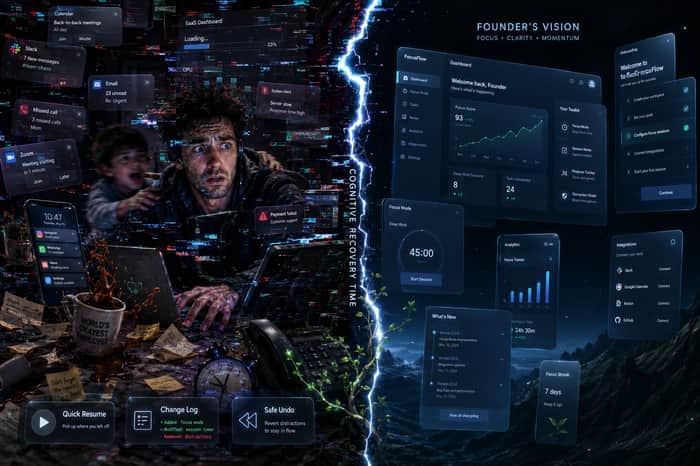
One of the hardest parts of building SaaS is realizing users almost never experience your product the way you designed it.
They experience it in the middle of interruptions.
Between meetings.
During incidents.
While multitasking.
Half-paying attention.
Usually already stressed about something else.
Founders obsess over onboarding flows and feature depth.
Meanwhile a huge amount of retention comes down to much simpler questions:
Can someone recover quickly after getting distracted?
Can they safely leave and come back later?
Can they understand what changed since yesterday?
Can they trust themselves not to break something accidentally?
A lot of “power users” are just people whose workflow survived enough chaos to become a habit.
The products that stick are often the ones that reduce cognitive recovery time, not the ones with the most functionality.

Recovery over features is the underrated retention insight. Most churn happens at specific friction moments - a confusing step, a broken flow, a moment where the user loses confidence. Adding features doesn't fix the friction; it adds more paths to get lost on.
For Notion-based products specifically, the recovery problem is acute. Users who install a template but don't finish setup almost never come back. The recovery moment has to be designed in - a 'getting started' checklist, a first-week nudge, a weekly review template that makes the system feel alive.
Building a Solopreneur Notion OS with this in mind: each database has clear 'first-use' guides and the weekly review is the designed recovery point that brings users back even after they drift. What's the recovery moment you've found works best for your users when they start to fall off?
Recovery beats features - this holds for client retention in service businesses just as much as SaaS.
A solo founder who spots a client going quiet (fewer emails, slower sign-offs, skipping check-ins) and proactively reaches out before the client raises a formal issue keeps 90% of those accounts. The ones who wait until the client says 'we need to talk' keep maybe 40%.
The operational requirement: you have to have somewhere that surfaces those signals. If your client relationships live in email threads and memory, you have no early warning system. A CRM with 'last contact date' and 'engagement trend' visible at a glance changes the math - you see the drift before it becomes a decision to leave.
Most solo consultants lose clients they could have saved simply because they had no visibility into deteriorating engagement until it was too late to recover it.