RPC Nodes | The Invisible Layer Powering Web3
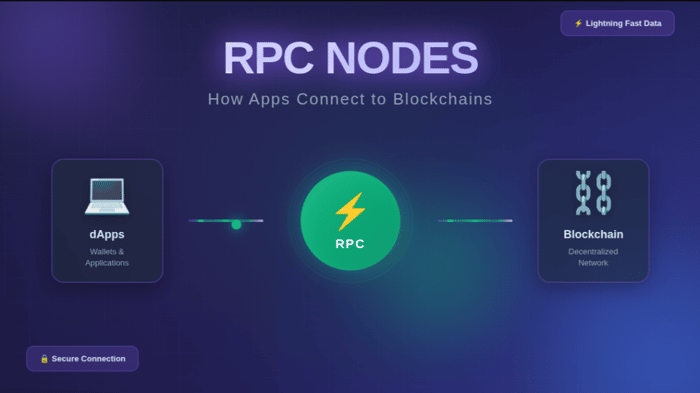
Every interaction you make on a blockchain, checking a balance, calling a smart contract, or sending a transaction, runs through one silent layer: RPC nodes.
They’re the bridge between your app and the blockchain, the reason wallets, dApps, and APIs actually work.
But here’s where it gets interesting.
RPC nodes are evolving.
They’re no longer just messengers that pass data.
We’re starting to see nodes that compute.
Imagine every node in a network not only validating transactions but also running AI inference, model serving, or data analysis, directly inside the consensus.
That’s the next step for decentralized infrastructure.
It’s a shift from “nodes as gateways” to “nodes as computation.”
Less dependence on the cloud.
More transparency.
More scalability.
And for developers, an entirely new design space for AI + blockchain applications.
This is where the quiet revolution in infrastructure begins.

RPC nodes are one of the most underestimated components in Web3 infrastructure. Most users only see wallets and smart contracts, but production-grade blockchain systems heavily depend on reliable RPC architecture, latency optimization, failover strategies, monitoring, and scalable request handling.