Safari to block Google Analytics and more reasons why you should remove Google Analytics from your site
@ukutaht and I are working on a leaner and more transparent alternative to Google Analytics without all the privacy baggage. It's called Plausible Analytics, you can see the live demo here and follow our news here on Indie Hackers.
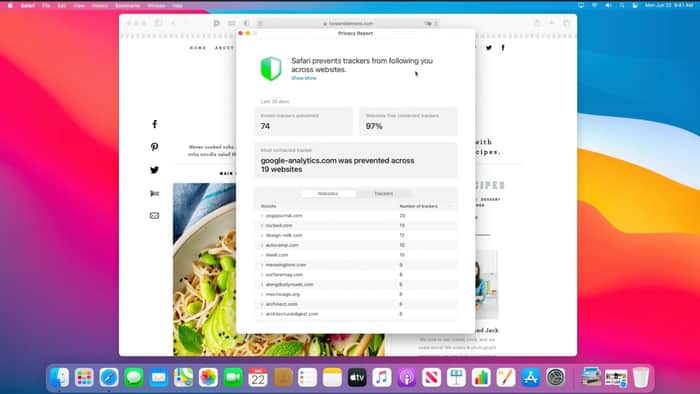
Google Analytics has been in the news yesterday as Apple announced that the upcoming version of Safari will start blocking Google Analytics from cross-site tracking. Site owners now fear that Google Analytics stats may become less accurate.
EDIT: Here's a deeper overview of what Apple Safari actually means when they say they are "blocking" and "preventing" Google Analytics.
Here’s a look at other reasons why I believe you should stop using Google Analytics on your site and help create a more open, independent web that’s more friendly to your visitors. Let's start.
It’s owned by Google, the largest ad-tech company in the world
53% of all sites on the web track their visitors using Google Analytics. 84% of sites that do use a known analytics script use Google Analytics. It’s the most popular third-party request on the web accounting for 0.64% of all network requests.
Google Analytics is run by the largest ad-tech company in the world. A company with a business model that loves to devour all the personal data it can get access to. Google’s products are free to use because Google has built its wealth by collecting huge amounts of personal information and using these personal and behavioral insights to sell targeted advertising.
It’s a bloated script that affects your site speed
Web analytics like any other element add extra page weight. Google’s Global Site Tag and the Universal Analytics script can be considered bloat if you only care about the most useful website stats and want to make your site as lean and fast as possible.
Global Site Tag, the recommended way of integrating Google Analytics, weights 28 KB and it downloads another JavaScript file which adds an additional 17.7 KB to your page size. Every KB matters when you want to keep your site fast to load.
It’s overkill for the majority of site owners
For most site owners, the amount of data Google Analytics collects is overkill. Most people find real and regular use for only a fraction of the metrics it measures.
Google Analytics has more than 125 different reports and more than 290 different metrics you can gather your insights from. Analyzing these is a full-time job that requires a lot of time, effort, expertise and experience to do well.
It’s a liability considering GDPR and other privacy regulations
Different personal data and privacy regulations have been introduced such as the GDPR in Europe, CCPA in the US and PECR in the UK. All these privacy regulations are a good step towards a better web and are a necessary thing in the world of surveillance capitalism.
Google Analytics collects a lot of personal data. Many Google Analytics users also enable different advertising features such as remarketing, demographics reporting and interest reporting. All this collection of personal data is a liability for your site.
It uses cookies so you must obtain consent to store cookies
Google Analytics is a cookie-based analytics tool and it's not possible to use it without cookies. It sets multiple cookies and it “uses cookies to identify unique users across browsing sessions”.
Privacy regulations have a say about cookies too. PECR, for instance, requires a site owner to tell their visitors about cookies that they use to track personal data and give visitors the choice of whether to accept them or not.
It requires an extensive privacy policy
In addition to the cookie notice and the GDPR consent prompt, Google has further requirements for your use of Google Analytics:
“You must post a Privacy Policy and that Privacy Policy must provide notice of Your use of cookies, identifiers for mobile devices or similar technology used to collect data. You must disclose the use of Google Analytics, and how it collects and processes data”.
It worsens your user experience due to the annoying prompts
To abide by the privacy regulations while collecting the personal data, you need to compromise the visitor experience by displaying annoying cookie banners and GDPR or CCPA consent notices. You also need to present comprehensive privacy policy regarding analytics tracking.
Google Analytics makes the user experience on your site more inconvenient. And if you’re simply using Google Analytics for basic web statistics, it’s worth considering the dramatic effect it has on the visitor experience and the loading time.
It’s blocked by many so the data is not very accurate
Google Analytics script is blocked by millions of people who use adblockers such as the uBlock Origin and by users of popular browsers such as Firefox and Brave in addition to the upcoming block by Safari.
There’s no definite answer on how many people block Google Analytics as that depends on the audience of your site, but for a tech audience, you shouldn’t be surprised to see 50% or more of the visitors blocking Google Analytics.
It’s abused by referral spam that skews the data
You may have noticed referrer URLs in your dashboard that are spam. Bad actors send fake visitors to your site which then shows their URL on your referral sources list. The intention is to get you to get curious and visit their site.
This referral spam has been going on for years and it can really skew the stats you see. Many site owners put a lot of effort and spend a lot of time blocking the referral spam. Some do it manually one domain at a time while some use more automated systems.
It’s a proprietary product so you need to put your trust in Google
As it says on the very top of the Google’s privacy policy: “When you use our services, you’re trusting us with your information”. In the case of Google Analytics, you’re not only trusting Google with your information but also the information of all your website visitors.
Google Analytics is a closed source, proprietary product. There have been many rumors for years on what Google uses all the data for. Google has denied many of the accusations and rumors but there’s no way of knowing what’s going on behind the scenes. You have to simply put your trust in Google, the world’s largest ad-tech company.
Plausible Analytics as an alternative
Plausible Analytics is not designed to be a clone of Google Analytics. It is meant as a simple-to-use replacement and a privacy-friendly alternative that we believe can help many site owners.
- It's quick, simple to use and understand with all the metrics displayed on one page. We don't track hundreds of metrics like Google Analytics does
- Lightweight script of less than 1 KB so sites load fast. Our script is 45 times smaller script than the Google Analytics one
- Doesn't use cookies so there's no need to worry about cookie banners
- Doesn't track personal data so it's compliant with GDPR out of the box and you don't need to worry about ask for data consent
- It's open source with the code available on GitHub so you can even self host exactly the same product free as in beer
- Unlike Google Analytics, our cloud product is not free as in beer because our business model is subscriptions rather than selling the data of your visitors. We're bootstrapped without any external funding so the subscription fees help us cover our costs and time spent on development etc
Sign up for a 30-day free trial and give Plausible Analytics a chance. And if this message resonates with you, do spread the word to your favorite site owners. Friends don’t let friends use Google Analytics.

And who says that adblockers or browsers wont add your tools script file to their list as Well in a few months? 🤓
Anything is possible with blocklists! :)
Plausible doesn't use cookies, doesn't collect any personal data and doesn't do any cross site tracking people around the web (we're isolated to one individual site) so these types of blocks like Apple does on Google Analytics are not really necessary for us.
But obviously some blocklist creators may want to be even more strict than Apple or Firefox and block everything possible to do with any type of website stats so that may affect us too.
Yeah thats what im afraid of
You can serve the Plausible script from your domain as a first-party connection if that's a concern.
you can always self-host and change the script name/location from "tracker.js"/"analytics.js" to "IAmAPrettyScript.js" and the blocklist won't catch it.... but that's sneaky with your users
Just wanted to point this article out debunking this myth:
https://www.simoahava.com/analytics/no-safari-does-not-block-google-analytics/
Yes, safari will block the third party cookie that google analytics sets, but it will not prevent google analytics from working. the identifiers that google sets is technically "first party"
thanks for sharing! I mentioned it's cross-site tracking but Apple definitely needs to work on their wording as they confused a lot of people listing GA as "blocked".
Seems like Plausible is worth giving it a try. Looking forward to sharing my thoughts on it after testing!
Thanks Austin! Looking forward to hearing your thoughts!
Plausible looks great, I'm going to give it a shot on my next launch. GA has felt like too much info for me from day 1.
thanks Nick, sounds good!
I am using Plausible for https://uxbrains.co/ and I can't recommend it enough. Aside from all the great privacy upsides, it has great support, it's easy to implement and very satisfying to look at.
oh that's great to hear and thanks for the kind words! I may need to share this on our Twitter :)
btw, just found this from Matomo about the referrer spam list:
https://github.com/matomo-org/referrer-spam-list/blob/master/spammers.txt
It's funny. at first when you think about removing GA you think there is no way to live without it. But in fact there are plenty of alternatives out there and they are either on par or sometimes even better.
I guess nowadays only if you need very specific Retargeting lists having GA is unique.
Apart from that one can easily set up proper analytics using the tool you mentioned and a plethora of other tools.
I've found pretty useful to go with Matomo.org for regular analytics (visitor counting, bounce rates etc) and Mouseflow.com for something more qualitative(session recording, heatmaps, form analytics, etc). Both with decent privacy settings and GDPR compliance
Very true, thanks!
Two questions:
Can I transfer my GA data over to you guys if I join? I really enjoy seeing 10+ years of traffic data...
does the page view pricing really need to be that high for a user who gets a million page views?
Thanks!
You cannot transfer at this time unfortunately but it's something we'd love to support. It's already on the roadmap so it's something we plan to build but difficult to promise any timeline right now.
We've recently made our setup more efficient so were able to introduce new pricing tiers and made some of the other tiers more affordable. The up to 1 million page views/month tier is $48/month or $32/month on the annual plan. It's difficult to compete with GA on price as we have different business models but this pricing is very competitive when compared with other GA alternatives.
This comment was deleted 6 years ago
This comment was deleted 5 years ago
Some people think Google is evil and so do I. Some people have no problem with Google and that's fine too.
Like mentioned in the post, Plausible is not meant as a clone or a full blown replacement of Google Analytics. Some people are fine running GA and are happy to use Google Ads, track and market to people around the web and use the rest of the Google ecosystem.
On the other hand, some would prefer to focus more on privacy of their visitors or on not having to get cookie / GDPR consent etc. Plausible is more meant for those use cases.
This comment was deleted 4 years ago
Thanks Mick for your support!
This comment was deleted 5 years ago
This comment was deleted 4 years ago