Scaling from Remote to IRL: The Physical Safety Checklist for Tech Founders
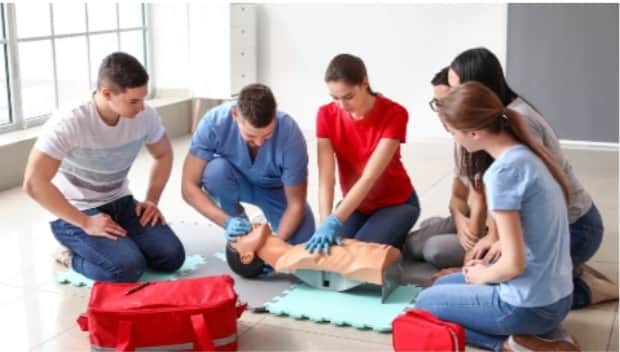
Transitioning your tech startup from a remote team to a physical office brings unexpected legal liabilities. This guide breaks down Occupational Health and Safety (OHS) compliance for founders, explaining why physical risk management and mandatory first aid certifications are just as vital as your cybersecurity protocols.
You spent the last two years obsessing over server uptime, data encryption, and SOC 2 compliance. You successfully bootstrapped your SaaS, hired a remote team, and now you are finally signing a lease on your first real office. But as you transition from a Slack channel to a physical headquarters, your risk profile completely changes. You aren't just dealing with server crashes anymore. You are legally responsible for the physical bodies in your building. Booking on-site first aid training is not just a corporate formality. It is a mandatory compliance step that most first-time founders totally ignore.
When your team works from home, their physical safety is mostly their own problem. The minute they step into an office with your company's name on the door, that burden shifts to you.
Why Do Tech Startups Need to Think About Physical Safety?
Founders often have a blind spot when it comes to office safety. We assume that because we aren't operating heavy machinery or pouring concrete, our teams are perfectly safe. It is just laptops and coffee, right? Wrong.
Look at Calgary's rapidly growing tech hub. Dozens of software companies are moving into newly renovated downtown spaces or repurposed industrial lofts. These cool, open-concept offices come with hidden dangers. Exposed brick and industrial aesthetics often mean exposed wiring, concrete floors, and tricky staircases. A developer slipping on a spilled oat milk latte in the breakroom is a very real liability.
If someone gets hurt on your watch and you do not have proper Occupational Health and Safety (OHS) protocols in place, the financial penalties are severe. Your insurance premiums will skyrocket, and provincial boards can hit you with massive fines. You worked too hard building your MRR to lose it over a totally preventable compliance violation.
What Are the Hidden Liabilities of a New Physical HQ?
Moving into an office means you are now subject to provincial or state labor laws. You have to provide a safe working environment, and the government defines exactly what "safe" means.
First, you need to look at ergonomics and workspace setup. Staring at screens for twelve hours a day wrecks the human body. Poor lighting causes chronic migraines. Cheap chairs lead to repetitive strain injuries and back problems. These are legally recognized workplace injuries. If a designer develops severe carpal tunnel syndrome because you refused to buy proper desk equipment, your company is liable.
Second, you have to manage physical emergencies. What happens if an engineer suddenly collapses from cardiac arrest during a high-stress launch week? If nobody in your office knows CPR, the outcome will be tragic. You cannot just rely on an ambulance getting through downtown traffic in time.
How Many Employees Actually Need to Be Certified?
You cannot just buy a first aid kit and assume you are covered. OHS laws clearly dictate that you must have a specific number of certified staff members on-site at all times. This number depends entirely on your total headcount and the square footage of your office.
If you are a small, scrappy team of five, you still need at least one person fully trained in Standard First Aid and CPR/AED. As your headcount scales, that number goes up. You need to designate safety wardens for different zones of your office.
This is where planning ahead saves you a massive headache. Instead of waiting for a random inspection, you can easily review the requirements and book your team for compliance training at https://www.c2cfirstaidaquatics.com/calgary-first-aid-cpr-aed-training/ before you officially open your doors.
How Do You Keep Costs Low While Staying Compliant?
Bootstrappers hate wasting time and money. Sending your lead developers to a classroom for two full days to learn how to put on a bandage sounds like a terrible use of resources. Fortunately, the safety industry has modernized.
Blended learning is the best solution for busy tech teams. It takes the heavy lifting out of the classroom and puts it online. Your team can complete the theoretical modules asynchronously. They can read about emergency protocols while sitting on the train or during a quiet Friday afternoon.
After they finish the online quizzes, they only need to attend a brief, in-person session to physically practice chest compressions and AED usage. It minimizes downtime while keeping your business 100% legally compliant.
What Else Should Be in Your Office Emergency Plan?
An emergency plan is basically your company's physical incident response protocol. Just like you have a playbook for a massive data breach, you need a playbook for a fire alarm or a medical event.
Print out clear evacuation maps and stick them on the walls. Do not hide them behind a whiteboard. Everyone needs to know exactly which stairwell to use if the elevators shut down.
You should also invest in an Automated External Defibrillator (AED) for your main hallway. Modern AEDs are basically foolproof. They give verbal instructions and will not deliver a shock unless the person actually needs one. Having an AED on site drastically increases survival rates for sudden cardiac events, turning your office into a genuinely safe space for your team.
If you are looking for first aid training near Capitol Hill, the Trans-Canada Highway and 14th Street NW area, or other neighborhoods close to our facility, then you may reach out to Coast2Coast First Aid/CPR - Calgary in that area. For more info and articles like this visit our main website.
Frequently Asked Questions
- Do small tech startups really need to follow OHS regulations? Yes. The moment you hire an employee and move into a physical workspace, you are legally required to comply with local Occupational Health and Safety (OHS) or OSHA laws, regardless of your industry.
- How many employees need to be first aid certified in a new office? This depends on your specific regional laws and the number of people working per shift. Typically, a small office needs at least one certified employee present at all times, with the requirement scaling up as your headcount grows.
- Does a co-working space cover my startup's physical compliance? Not necessarily. While the building management handles structural safety and fire codes, you are still legally responsible for the direct medical safety and ergonomic health of your own W-2 employees or direct contractors.

I realize this is from a while ago, but I’m curious—has anyone recently moved to a physical office and found any new OHS compliance tips or resources that are especially useful? Personal stories or advice on what worked (or didn’t) would be great. Also, is anyone using any tech tools to streamline the compliance process? Let’s get this conversation rolling again!