Scarcity Marketing In SaaS: Definition + Tactics
Have you ever heard the phrase sale ends tomorrow and found yourself in an instant shopping frenzy?
There is a reason why.
Scarcity marketing functions on a straightforward and simple principle: people from all walks of life want what they can’t have.
The rarer a product is, the more valuable it becomes. And this fear of missing out translates into a higher conversion rate for your business.
While scarcity marketing is often associated with the B2C sector, the SaaS industry is quite skilled at creating and leveraging a sense of urgency as well. In this article, we’ll be diving deep into:
- What is Scarcity Marketing?
- How Scarcity Marketing Works
- Why Scarcity Marketing Matters in SaaS
- 4 Scarcity Marketing Tactics
- 5 Ways To Avoid Scarcity Pitfalls
What Is Scarcity Marketing?
Scarcity marketing is a powerful strategy used by business owners that creates a perception of limited availability to encourage customers to take quick action, which increases sales.
Using scarcity tactics like time-limited offers extensively leverages the fear of missing out (FOMO), intensifying a must-have feeling for a specific product, as well as a shopper’s desire to obtain something that is difficult to come by.
How Scarcity Marketing Works?
It all started with two jars of cookies.
As part of a marketing experiment, shoppers were given two cookie jars to choose from, one that had 10 cookies inside and another with only two. Guess which one won!
Exactly, the two-cookie jar.
It wasn’t about taste but availability.
In any competitive industry, which the SaaS one happens to be in, the key to boosting sales is to position your product as a premium option. This will guarantee a constant flow of users and allow you to increase prices without losing your customer base.
And fortunately, you can achieve both goals by using scarcity marketing.
In the world of SaaS and software products, the idea of stock is non-existent, so developers need to think outside the box to create a sense of artificial scarcity and get customers excited. This can be done through time-limited discounts, exclusive access for early adopters, or special features available for a select user group.
In this industry, the psychological principle that is most used is the sense of exclusivity, combined with a higher value perception. This guarantees that the product sells.
Why Scarcity Marketing Matters in SaaS
To put it bluntly, the scarcity principle is playing with our emotions.
SaaS users might be into technology, but they have powerful feelings, which is why the scarcity marketing strategy is just as relevant in the software market as anywhere else. And it brings forward several benefits worth mentioning.
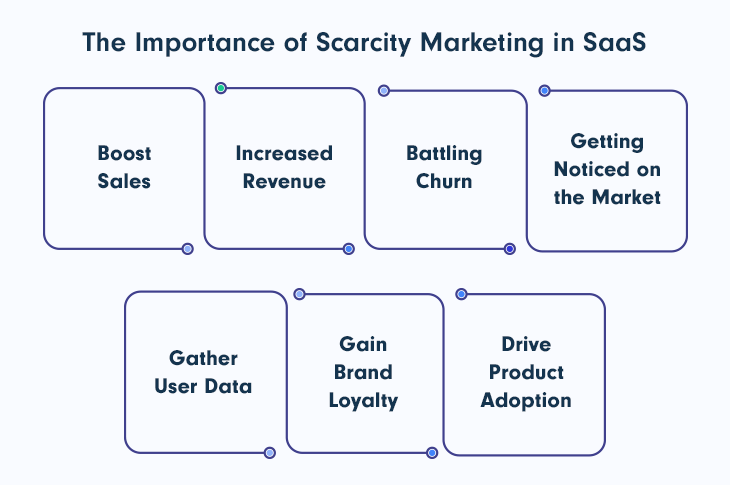
1. Boost sales
Exploiting FOMO (fear of missing out) through exclusive features or limited-time offers pushes customers to make quicker buying decisions. As a result, SaaS businesses witness a higher free-to-paid conversion rate, as well as more upgrades from existing customers.
2. Increased Revenue
Through scarcity marketing, products gain more value. Customers want to get their hands on a product temporarily discounted, as they believe they are getting a great deal. Thus, when the promotion is over, SaaS companies can easily revert to the initial price, having boosted product value and demand.
Plus, the profit margin is in no way affected during this pricing experiment because increased sales volumes can balance the books.
3. Battling Churn
This marketing strategy isn’t only about winning new leads. Retaining new ones is also possible through scarcity tactics. 53% of customers state that discounts incentivize them with a brand over a longer period of time or even upgrade their plans. After all, this is also another way to gain more money.
4. Getting Noticed on the Market
With approximately 30,000 SaaS companies out there, you need to fight for your 15 minutes of fame. And what better way to generate buzz within the SaaS community than through great prices?
Highlighting exclusive offers or price promotions can help businesses stand out in the crowd and become more appealing to potential customers.
5. Gather User Data
Although gathering user data may not be the primary objective of scarcity marketing, which aims to expand the user base and increase revenue, it remains a valuable benefit.
SaaS companies that offer access to premium features in return for user information can obtain substantial insights about their target demographics, allowing them to enhance their marketing strategies.
6. Gain Brand Loyalty
Promotional offers don’t just help you earn the favor of social media and help spread the word about your business. They allow customers to build a stronger bond with your brand.
Buyers who successfully snag products in high demand at discounted prices often transform into loyal customers. They perceive their accomplishment in securing an excellent deal as a triumph, forging a unique bond with that product, which manifests through subscription renewals and, in some cases, referrals.
7. Drive Product Adoption
Many people tend to think that scarcity marketing is all about convincing users to make a purchase, but the truth is it can also work wonders when it comes to offering training sessions.
When you use this approach, you're not just encouraging users to explore and fully embrace your software; you're also taking proactive steps to ensure their long-term satisfaction, keep them engaged, and reduce churn.
4 Scarcity Marketing Tactics
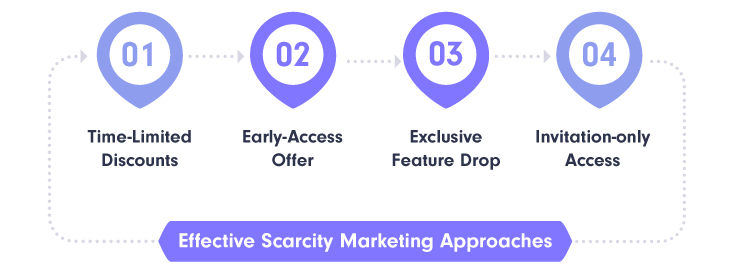
1. Time-Limited Discounts
This is the most used example of scarcity marketing. SaaS companies create an offer and monetize the user’s fear of missing out.
However, customers may want to buy your product even more if they are well aware that the discounted price is time-limited. So make sure you emphasize this idea through email marketing or website banners on your pricing base. Paid ads should be part of your scarcity strategy, as they can bring substantial social media engagement. [example]
2. Early-Access Offer
This scarcity marketing tactic helps SaaS businesses generate more sales by leveraging the user’s desire to be part of a group.
When customers are given the option to sign up for software products and services that promise great value before they are officially launched, it makes them feel special and important. And that is definitely worth monetizing. [example]
3. Exclusive Feature Drop
You don’t need to launch a completely new product to harness the power of exclusivity. For example, when dropping a new feature, you can offer exclusive access over a limited period of time to create a sense of urgency and increase demand as well as sales.
Also, to really enhance the feeling of urgency, you could add a countdown timer that shows the target audience how much time is left before the big product or feature drop. [example]
4. Invitation-only Access
This tactic has been known to cause quite a controversy among SaaS users. Using exclusivity as a viral accelerator in the context of either launching a product or a feature generates expected results as long as there is buzz created around the brand itself.
It’s like telling everyone you have a secret that will change their life, but there is no way you are spilling the tea.
There have been plenty of brands that have used this strategy up to the point they were able to build a strong user base and refine the product as much as possible. Yes, you can think of this tactic as a Beta program. [example]
