Selling Alohando — a Uruguay-based travel marketplace I built solo over 2 years
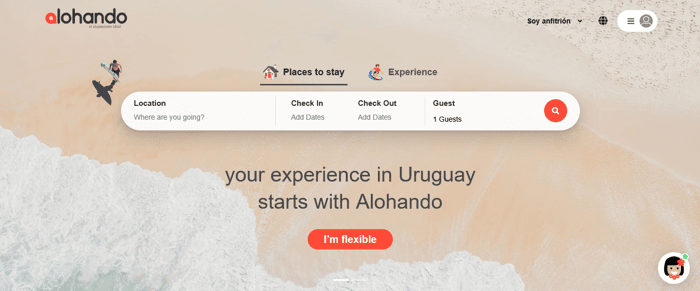
Quick background: I'm a solo dev/webmaster, built this from scratch in Laravel/PHP over the past two years. It's a two-sided travel marketplace (think mini Airbnb) with several monetization layers stacked on top of the core commission model — host subscriptions, a commission-free direct booking tool, a guest loyalty program, gift cards, and a few other products I built along the way (booking transfers, home swaps, airport transfers, physical welcome boxes).
Numbers: ~96% profit margin, very low fixed costs (~$20/month total infra). Low time commitment to run day-to-day (30-40 min/day). Currently focused on Uruguay but fully multi-language/multi-currency and built to run in any country from day one.
Selling because I'm shifting focus to other projects, not because it's underperforming — traction has been growing steadily since launch.
Site: https://alohando.com
Happy to answer questions here or share more details if there's real interest.

Interesting that you’ve built several monetization options around the marketplace. Curious which one has ended up being the most meaningful commercially.
Honestly, the core marketplace commission is still the main driver today — it's the most mature piece, so it makes sense it carries most of the revenue right now.
The newer layers (direct booking subscriptions, tiered host plans, the loyalty program) are still early in adoption, since most of them shipped in just the past few months. What's interesting to me is that none of them cannibalize the core commission — they're additive, sitting on top of the same host/guest base rather than competing for the same dollar.
So the mix should shift over time as those mature, rather than staying commission-only forever.
The metrics you've shared (96% margin, $20/mo infra, 30-40 min/day) are what made the shift decision possible. Most solo builders measure revenue or user count and stay trapped in growth theater. You measured the actual constraints - what it costs to run, how much time it takes, what profit really looks like. That clarity meant you could see "this is sustainably solving a real problem" separate from "this needs all my attention." Teams that measure different things fight about priorities. Solo builders who measure the right boundaries get to make moves other people call impossible.
That's a really sharp way to put it — "growth theater" nails exactly what I was avoiding. Revenue and user count are easy to chase and feel good on a dashboard, but they don't tell you whether the thing is actually sustainable without you glued to it.
The 30-40 min/day number ended up being the real signal for me, more than revenue. Once I saw the business kept running smoothly with that little daily input, it reframed the whole decision — not "how do I grow this more" but "this is solid enough that someone else could take it further than I have bandwidth to right now."
Appreciate you putting words to something I'd mostly just felt intuitively.