SEO for Medical Practices: How to Improve Your Online Visibility and Attract More Patients
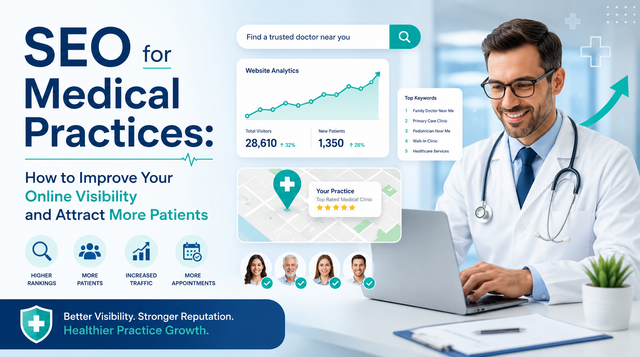
Why Online Visibility Matters for Medical Practices
Patients no longer choose a clinic only by passing a signboard or asking a neighbor. Today, they usually open their phone, search for symptoms, compare nearby doctors, read reviews, and then decide where to book an appointment. This makes online visibility one of the most important growth factors for any modern medical practice.
For clinics, hospitals, specialists, and private healthcare providers, being easy to find online builds trust before the patient even visits. A strong digital presence helps patients understand your services, location, timings, expertise, and patient care approach. When your practice appears in local search results, map listings, and helpful health-related content, you increase the chances of turning online visitors into real appointments.
From my experience as a digital visibility specialist, medical practices that invest in consistent online improvement often see better patient inquiries, stronger reputation, and more stable long-term growth. This is where seo for medical practices becomes important, along with digital marketing for medical practices, when done with planning, accuracy, and patient-focused content.
Build a Patient-Friendly Medical Website
Your website is often the first impression of your practice. A patient may visit your site before calling your clinic, so it should feel clear, professional, and trustworthy. A confusing or outdated website can make visitors leave quickly, even if your medical services are excellent.
A strong medical website should include:
• Clear service pages for each treatment or specialty
• Easy appointment booking options
• Clinic address, phone number, and working hours
• Doctor profiles with qualifications and experience
• Patient education content
• Mobile-friendly design
• Fast loading speed
• Secure browsing with HTTPS
Patients want answers quickly. They may be anxious, busy, or comparing several options. Your website should guide them smoothly from question to action. For example, if someone lands on a page about skin allergy treatment, they should immediately understand what you treat, when to seek help, what to expect during consultation, and how to book an appointment.
Focus on Local Search Presence
Most medical practices depend heavily on local patients. People usually search for healthcare providers near their home, workplace, or school. That is why local visibility should be a major part of your growth plan.
Start by optimizing your Google Business Profile. Make sure your practice name, address, phone number, website link, appointment link, and working hours are accurate. Add high-quality images of your clinic, reception area, consultation rooms, and exterior signage. These details help patients recognize your practice and feel more confident before visiting.
You should also select the correct categories for your clinic. A dental clinic, pediatric practice, physiotherapy center, dermatology clinic, or general medical practice should be listed under the most accurate category. This helps search platforms understand what your business offers.
Regular updates also matter. Post announcements, health tips, clinic updates, seasonal care reminders, or new service information. These small actions show that your practice is active and reliable.
Create Helpful Content Patients Are Searching For
Patients search online for health information every day. They may ask questions like why they have a certain symptom, when to see a doctor, what treatment options exist, or how to prepare for a medical appointment. Your website can answer these questions in a responsible and helpful way.
Content should never replace medical advice, but it can educate patients and encourage them to seek professional care. Blog posts, service pages, FAQs, and guides can all support your visibility.
Useful content ideas include:
• Common symptoms and when to consult a doctor
• Treatment options explained in simple language
• Preventive care tips
• Seasonal health advice
• Patient preparation guides
• Myths and facts about common conditions
• Aftercare instructions for treatments
The key is to write for real patients, not just algorithms. Use simple wording, clear explanations, and a caring tone. Medical topics can feel overwhelming, so your content should make people feel informed rather than confused.
Optimize Each Service Page Carefully
Every major service your practice offers should have its own dedicated page. A single page listing all treatments is usually not enough. Separate pages help patients find exactly what they need and allow your website to appear for more specific searches.
For example, a family clinic may need individual pages for diabetes management, blood pressure care, vaccination, women’s health, child health, and routine checkups. A dermatology clinic may need pages for acne treatment, eczema care, mole checks, pigmentation treatment, and hair loss consultation.
Each service page should explain:
• What the service is
• Who may need it
• Symptoms or concerns related to it
• What happens during the appointment
• Benefits of early care
• Why patients should choose your practice
• How to book a visit
Avoid copying the same text across multiple pages. Each page should feel unique and useful. This improves both patient experience and search visibility.
Use Reviews to Build Trust
Reviews play a powerful role in patient decisions. Before booking, many people read what other patients say about your clinic. Positive reviews can increase trust, while unanswered negative reviews can create doubt.
Encourage satisfied patients to leave honest feedback. You can do this through follow-up messages, appointment reminders, or a simple request after a successful visit. Never pressure patients or offer rewards for reviews. The goal is to build genuine trust.
Respond to reviews professionally. Thank patients for positive comments and handle concerns politely. Avoid sharing private medical details in replies. A respectful response shows that your practice cares about patient experience.
Review signals can also support local search performance. A clinic with consistent, authentic feedback often appears more reliable to both patients and search platforms.
Make Your Website Mobile-Friendly
Most patients search for medical services on mobile phones. If your website is hard to read on a small screen, loads slowly, or has buttons that are difficult to tap, patients may leave and choose another provider.
A mobile-friendly site should have clean spacing, readable text, simple menus, and quick access to appointment booking. Phone numbers should be clickable so patients can call directly. Forms should be short and easy to complete.
Speed is also important. Large images, heavy scripts, and poor hosting can slow down your website. A delay of only a few seconds can reduce patient engagement. Compress images, remove unnecessary elements, and keep your design clean.
Strengthen Your Medical Authority
Healthcare content must be trustworthy. Patients are looking for accurate guidance, and search platforms also prefer reliable medical information. Your website should show that your practice has real expertise.
Add detailed doctor profiles with education, certifications, experience, and specialties. Include clinic credentials, professional memberships, awards, or hospital affiliations where relevant. If content is written or reviewed by a medical professional, mention that clearly.
You can also improve trust by adding:
• Clear privacy policies
• Patient consent information
• Transparent service details
• Emergency guidance where appropriate
• Contact information on every important page
• Accurate medical disclaimers
Trust is especially important in healthcare because patients are making decisions about their wellbeing. A professional website should feel safe, honest, and credible.
Combine Search Visibility With Wider Digital Promotion
A complete online growth strategy should not depend on one method only. Search visibility is powerful, but it works even better when combined with broader online promotion.
Digital marketing for medical practices may include social media, paid campaigns, email updates, reputation management, content writing, video education, and local advertising. Each channel can support the others.
For example, a blog post about flu prevention can be shared on Facebook, included in an email newsletter, and linked from a Google Business Profile update. A video explaining back pain treatment can support a service page and help patients feel more comfortable before booking.
The best strategy is connected and consistent. Your website, social pages, listings, and patient communication should all carry the same professional message.
Track Results and Improve Regularly
Online visibility is not a one-time task. It requires monitoring, testing, and regular improvement. You need to understand what is working and where patients are dropping off.
Track important numbers such as:
• Website visits
• Appointment form submissions
• Phone call clicks
• Most visited service pages
• Local listing views
• Review growth
• Search terms bringing visitors
• Patient inquiries from online sources
These insights help you make smarter decisions. If a service page gets traffic but few bookings, the page may need clearer calls to action. If patients often search for a treatment you offer but you do not have a dedicated page, that is an opportunity to create one.
Regular updates also keep your website fresh. Medical services, clinic timings, staff, and patient needs can change over time. Your online presence should reflect those changes.
Common Mistakes Medical Practices Should Avoid
Many practices lose online opportunities because of simple mistakes. These issues can make a clinic harder to find or less appealing to patients.
Avoid these common problems:
• Using outdated contact information
• Having thin or duplicate service pages
• Ignoring patient reviews
• Publishing unclear medical content
• Not updating clinic hours
• Using a slow website
• Forgetting mobile users
• Overloading pages with repeated keywords
• Not adding appointment calls to action
One of the biggest mistakes is writing only for rankings and forgetting the patient. Your content should sound natural, helpful, and professional. When patients feel understood, they are more likely to trust your practice.
A Smarter Path to More Patient Appointments
Improving online visibility for a medical practice is about more than appearing higher in search results. It is about building a complete digital presence that helps patients find you, trust you, and take action. A clear website, strong local listing, helpful content, accurate service pages, positive reviews, and ongoing improvement all work together.
The most successful medical practices treat their online presence as part of patient care. They make information easy to access, reduce confusion, and guide people toward the right appointment. When your digital strategy is built around real patient needs, growth becomes more natural and sustainable.
By investing in search optimization for medical practices, digital marketing for medical practices, your clinic can become more visible, more trusted, and more competitive in today’s healthcare market.

This guide is useful for beginners but it misses a few practical details that I learned the hard way. I took over SEO for a dermatology clinic that had been online for two years. The website had decent traffic, around 800 visits a month, but we were getting maybe one or two calls from organic search. Patients would read a page about acne treatment and then just leave. No calls. No contact form submissions.
I spent weeks trying to figure out why. I bought SEO Book mostly out of frustration. The chapter on conversion optimization for local service businesses opened my eyes. My problem was not traffic, it was trust and timing. The clinic had no doctor photos on the service pages, no visible credentials, and the phone number was buried at the bottom of the page. I moved the booking button above the fold, added a photo of the lead doctor next to the call to action, and put a short patient review right there. Bookings from organic search doubled in two months. SEO Book also helped me clean up duplicate title tags across our location pages. Not a glamorous resource but it solved real problems. For a medical practice, getting the fundamentals right matters more than chasing the latest SEO trends.