SERP Insight Guest Post: A Practical Guide to Building Authority and Long-Term SEO Success
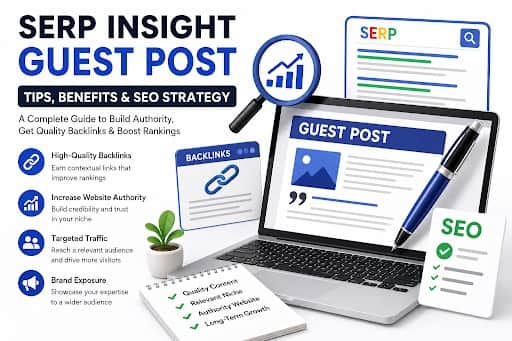
Search engine optimization continues to evolve every year, but one strategy has consistently remained valuable when done correctly—guest posting. Businesses, bloggers, SaaS companies, agencies, and digital marketers still rely on high-quality guest articles to expand their reach, improve website authority, and build meaningful relationships within their industries.
If you've been searching for information about a SERP Insight guest post, you're probably looking for more than just another backlink. You're interested in understanding how publishing valuable content on reputable platforms can increase trust, generate targeted traffic, and strengthen long-term organic growth.
Unlike outdated SEO techniques that focused only on acquiring links, modern guest posting revolves around creating content that genuinely helps readers. Search engines now reward expertise, relevance, and user value rather than manipulative optimization.
Whether you're publishing your first guest article or refining an established content marketing strategy, this guide explains how to maximize every opportunity while staying aligned with current SEO best practices.
Why Guest Posting Still Matters in Modern SEO
Every major search engine update has pushed websites toward higher-quality content and genuine authority. As a result, guest posting has shifted from being a simple link-building tactic to becoming an effective branding and content marketing strategy.
Publishing useful articles on trusted websites offers several advantages:
Reach readers already interested in your niche
Earn contextual editorial backlinks
Improve topical authority
Increase brand recognition
Generate referral traffic
Build relationships with publishers
Instead of publishing dozens of low-value articles across unrelated websites, successful marketers now focus on fewer but more authoritative placements that provide lasting value.
Understanding a SERP Insight Guest Post
A SERP Insight guest post refers to an article contributed by an external author and published on a website that focuses on SEO, digital marketing, search visibility, and online growth.
Rather than using promotional language, these articles are designed to educate readers by sharing practical knowledge, proven strategies, and actionable insights.
A quality guest post generally includes:
Original research
Helpful tutorials
Industry case studies
Step-by-step guides
Practical recommendations
Real examples
When readers benefit from the content, they naturally develop trust in the author and are more likely to explore additional resources.
The Growing Importance of Topical Authority
Modern SEO isn't only about individual keywords.
Search engines increasingly evaluate how much expertise a website demonstrates across an entire subject.
Guest posting contributes to this by allowing you to publish high-quality educational content across respected industry platforms.
For example, consistently publishing articles about:
Technical SEO
Keyword research
Content marketing
Digital PR
Link building
Website optimization
helps establish your reputation within those specific topics.
Over time, search engines begin associating your brand with expertise in those areas.
How Editorial Backlinks Improve Organic Rankings
Not every backlink provides equal value.
Editorial backlinks are among the strongest because they're placed naturally within useful content rather than appearing in advertisements or low-quality directories.
These contextual links tell search engines that another reputable website considers your content valuable enough to recommend.
High-quality editorial links may contribute to improvements in:
Organic visibility
Keyword rankings
Domain authority
Crawl efficiency
Brand trust
Referral traffic
Quality always outweighs quantity.
One relevant backlink from a respected website often provides greater long-term SEO value than dozens of unrelated links.
Guest Posting Builds More Than Backlinks
Many beginners assume guest posting exists only for SEO.
In reality, the biggest advantage often comes from audience exposure.
Publishing useful content introduces your expertise to readers who may never have discovered your website through search alone.
Those readers can become:
Newsletter subscribers
Returning visitors
Social followers
Potential clients
Business partners
Brand advocates
This broader visibility creates long-term marketing opportunities that extend well beyond search rankings.
Referral Traffic That Actually Converts
Visitors arriving from relevant guest posts typically have stronger intent because they're already reading about your niche.
Instead of attracting random traffic, guest posting brings users who are genuinely interested in your expertise.
These visitors often:
Spend more time on your website
Read multiple articles
Share useful resources
Return later
Convert more frequently
This makes referral traffic one of the hidden benefits of strategic guest posting.
Creating a Sustainable SEO Growth Cycle
A single guest post rarely transforms a website overnight.
Its real value comes from creating momentum.
The process usually looks like this:
Publish a useful guest article.
Readers engage with the content.
Referral traffic increases.
Editorial backlinks strengthen authority.
Brand awareness grows.
More websites notice your expertise.
Additional publishing opportunities appear.
Organic visibility improves over time.
This ongoing cycle gradually strengthens your online presence without relying on aggressive SEO tactics.
Who Benefits Most From Guest Posting?
Guest posting isn't limited to SEO agencies.
It can support growth across many industries.
Bloggers
Bloggers use guest articles to expand readership while improving search visibility.
Freelancers
Writers, consultants, and designers build credibility by sharing practical expertise.
SaaS Companies
Software businesses educate potential customers while naturally introducing useful solutions.
Marketing Agencies
Agencies publish case studies, strategy guides, and industry insights to demonstrate experience.
Small Businesses
Even businesses with limited marketing budgets can compete by consistently producing valuable educational content.
Choosing Topics That Perform Well
One common mistake is selecting broad subjects that have already been covered hundreds of times.
Instead, successful guest posts solve specific problems.
Strong examples include:
Advanced keyword clustering
Content optimization workflows
Local SEO improvements
AI-assisted content editing
Technical SEO checklists
Website migration planning
Internal linking strategies
Specific topics often attract readers with stronger search intent.
Research Before You Start Writing
The best guest posts begin long before the first paragraph.
Research should include:
Audience Analysis
Understand who reads the publication.
Ask yourself:
Beginner or advanced?
Agency owners?
Business founders?
Bloggers?
Developers?
Writing at the appropriate skill level significantly improves engagement.
Competitor Content Review
Study existing articles to identify:
Missing information
Outdated advice
Weak explanations
Opportunities for fresh examples
Your goal isn't to duplicate existing content but to improve upon it.
Search Intent Analysis
Always determine why users search your target keyword.
Common search intent includes:
Learning a concept
Solving a problem
Comparing solutions
Finding practical advice
Articles aligned with search intent generally perform better in organic search.
Structuring Content for Better Engagement
Well-structured articles keep readers engaged longer.
An effective structure typically includes:
Clear introduction
Logical sections
Practical examples
Bullet lists
Short paragraphs
Helpful summaries
Frequently asked questions
Good formatting improves both readability and user experience.
Advanced SEO Best Practices for Guest Posting
Publishing a guest article is only the first step. The real results come from optimizing every section so it benefits readers while also meeting modern search engine expectations.
Today's SEO is centered on relevance, expertise, and user experience rather than keyword stuffing or excessive backlink placement.
Focus on Search Intent
Before writing, ask yourself why someone is searching for your topic.
Most readers looking for information about SERP Insight guest posting want to:
Learn whether guest posting still works
Understand its SEO benefits
Discover best practices
Avoid common mistakes
Find opportunities to improve rankings
When your content answers these questions thoroughly, search engines are more likely to reward it.
Demonstrate Experience, Expertise, Authority and Trust (E-E-A-T)
Google increasingly values content written by people who understand their subject.
You can strengthen your guest post by including:
Practical recommendations
Real-world examples
Current SEO practices
Original opinions
Helpful resources
Clear explanations
Readers trust articles that solve problems instead of repeating generic advice.
Use Keywords Naturally
Many writers still believe repeating the same keyword dozens of times improves rankings.
It doesn't.
Instead, use related phrases naturally throughout the article.
Examples include:
Guest blogging
Editorial backlinks
Content outreach
Organic traffic
Website authority
Link building
SEO strategy
Referral traffic
Digital PR
Content marketing
Search visibility
High-quality backlinks
Topical authority
Domain authority
This helps search engines understand the overall topic while keeping the article pleasant to read.
Write for Readers First
Even the best SEO optimization cannot compensate for poor content.
Keep paragraphs short.
Use descriptive headings.
Explain complex ideas simply.
Include examples wherever possible.
Good readability encourages visitors to stay longer, which often improves engagement metrics.
Choosing the Right Guest Posting Opportunities
Not every website deserves your effort.
Before submitting an article, evaluate the website carefully.
Content Quality
Read several recently published articles.
Ask yourself:
Is the information accurate?
Are articles well structured?
Does the site publish consistently?
Are contributors knowledgeable?
Quality publications provide stronger long-term value.
Audience Relevance
Publishing on a website closely related to your niche usually delivers better results than posting on a general-interest blog.
For example, SEO content performs best on websites focused on:
Search engine optimization
Digital marketing
Technology
SaaS
Business growth
Entrepreneurship
Relevance is often more valuable than authority metrics alone.
Editorial Standards
Look for websites that maintain high standards.
Signs include:
Original articles
Clear formatting
Proper grammar
Helpful visuals
Active readership
Regular updates
These characteristics indicate a trustworthy publication.
Common Guest Posting Mistakes
Many submissions fail because writers repeat the same avoidable mistakes.
Writing Promotional Articles
Readers visit blogs to learn—not to read advertisements.
Instead of constantly mentioning your products or services, focus on solving problems.
Helpful content naturally builds trust.
Ignoring Existing Content
Always review previously published articles before pitching.
Submitting duplicate topics reduces your chances of acceptance.
Instead, identify information gaps that haven't been covered in depth.
Weak Headlines
Your title determines whether people click.
Strong headlines are:
Specific
Benefit-driven
Clear
Relevant
Search-friendly
Avoid vague titles that fail to communicate value.
Poor Formatting
Large walls of text discourage readers.
Improve readability with:
Lists
Headings
Short paragraphs
Tables
Examples
Pull quotes
Good formatting increases engagement.
Low-Quality Backlinks
Avoid linking to unrelated websites simply to gain backlinks.
Every link should genuinely help readers.
Editorial relevance always wins.
Building Relationships Instead of Links
Successful guest posting isn't just about SEO.
Editors appreciate contributors who consistently deliver valuable content.
Strong relationships often lead to:
Repeat publishing opportunities
Podcast invitations
Expert roundups
Interviews
Partnerships
Collaborative projects
Think long-term rather than focusing on a single backlink.
Promoting Your Guest Post
Publishing isn't the finish line.
Share your article across multiple channels.
Examples include:
LinkedIn
X (Twitter)
Facebook
Industry communities
Newsletters
Email outreach
Greater visibility often leads to additional backlinks and referral traffic.
Measuring Guest Posting Success
Track performance using measurable data.
Important metrics include:
Organic traffic
Referral traffic
Keyword rankings
Backlink growth
Time on page
Bounce rate
Brand mentions
Conversion rate
Review results regularly to determine which publications provide the greatest return.
Future Trends in Guest Posting
SEO continues evolving rapidly.
Several trends are shaping the future of guest posting.
AI-Assisted Writing
Artificial intelligence can accelerate research and editing.
However, successful articles still require human experience, judgment, and originality.
Greater Emphasis on Expertise
Search engines increasingly reward articles demonstrating first-hand knowledge.
Real examples often outperform generic advice.
User Experience Matters More
Fast-loading pages, clear formatting, and engaging content contribute to stronger rankings.
Guest posts should be enjoyable to read on both desktop and mobile devices.
Quality Over Quantity
Publishing ten outstanding articles generally provides more value than publishing one hundred average ones.
Modern SEO rewards consistency and quality.
Final Thoughts
Guest posting continues to be one of the most reliable ways to build authority, strengthen your backlink profile, and reach audiences beyond your own website. The biggest advantage isn't simply earning a link—it's creating genuinely valuable content that readers appreciate and publishers are proud to feature.
Instead of chasing hundreds of backlinks, invest your time in producing original, well-researched articles that solve real problems. A single high-quality publication on a respected website can deliver referral traffic, improve brand recognition, and support sustainable SEO growth for months or even years.
If you're planning your own outreach campaign, reviewing successful examples can help you understand what editors look for in a quality submission. This detailed resource on SERP Insight guest posting provides additional insights into content strategy and outreach best practices:
Likewise, when discussing examples of websites with well-organized informational content, readers may find the hungry jacks menu prices guide useful for understanding how clear navigation and structured content improve the overall user experience:
By consistently publishing valuable guest posts and focusing on quality rather than shortcuts, you'll build stronger authority, earn better backlinks, and create a long-term SEO strategy that continues delivering results well into the future.
Frequently Asked Questions
Is guest posting still worth it in 2026?
Yes. High-quality guest posting remains one of the most effective white-hat SEO strategies when focused on helpful content rather than manipulative link building.
How long should a guest post be?
Comprehensive articles between 1,500 and 3,000 words usually perform well because they answer readers' questions thoroughly.
How many backlinks should a guest article contain?
Most publishers recommend one or two relevant contextual links along with an author bio link if permitted.
Can beginners submit guest posts?
Absolutely.
Editors care more about valuable information than years of experience.
Does guest posting improve Google rankings?
While no strategy guarantees rankings, earning relevant editorial backlinks and demonstrating expertise can positively support long-term SEO.
Should every guest post target keywords?
Yes, but naturally.
Write for readers first and integrate keywords only where they fit naturally.
What industries benefit from guest posting?
Nearly every industry can benefit, including:
Technology
SaaS
Finance
Healthcare
Marketing
Education
E-commerce
Local businesses
How often should businesses publish guest posts?
Consistency matters more than frequency.
One exceptional article every month can outperform several low-quality submissions.
Can guest posts generate leads?
Yes.
Helpful educational content often introduces potential customers to your expertise, increasing trust and future conversions.
What makes a guest post successful?
Successful guest posts combine:
Original insights
Clear structure
Actionable advice
Strong readability
Helpful examples
Natural optimization

