Building a $15k+ MRR services company to fund SaaS
development

Günter Richter quit his job at 50 and started a consultancy. A few months in, his consultancy is bringing in $15k MRR, and he's using the revenue to build a SaaS product called Data Maturity Lab.
Here's Günter on how he's doing it. 👇
Going solo at 50
I started my career implementing ERP software. Then, I moved into business intelligence and data warehousing as a business analyst. From there, I did some freelancing and joined a management consultancy before returning to data and analytics, focusing on strategy and organizational change.
Finally, I established a business consulting practice and capability within two multinational consulting firms.
I had always wanted to go solo, but never found the "right moment." A few years ago, I turned 50 and realized it was time to act while I still had the energy and desire. In 2025, the timing worked out, and I took the opportunity.
I now run a small consultancy that helps organizations with their data challenges (and opportunities), focusing on data and AI strategy, data governance, and organizational change. We're currently over $15k MRR.
Starting with services
It's a services business. I chose this approach because I have done it for my whole career. I have 30 years of knowledge and experience and I know the industry really well. So, while I didn't build a product initially, per se, I did do some setup, including branding, a website, legal and commercial document templates, and systems like accounting and timekeeping.
My services stack is:
Sage (for accounting)
Clockify (for timekeeping)
Google Workspace
Microsoft Office (for Teams - ugh!)
Todoist (for task management)
Claude.
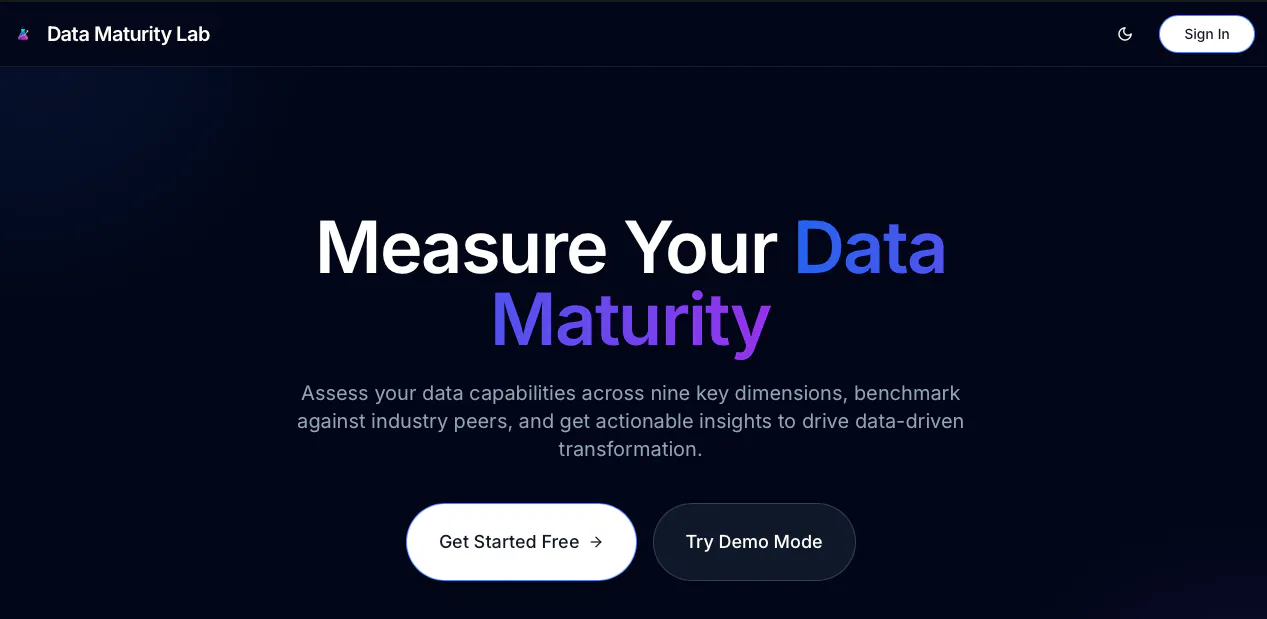
Starting with servcies gives me the funding and bandwidth to build what will become a B2B subscription-based SaaS product called Data Maturity Lab that helps organizations build their data maturity. I am taking on some alpha users to get initial feedback and help shape the product roadmap. Building it was quite easy, as the application is web-only and essentially a CRUD application with no advanced business logic, payment integration, AI, etc.
It probably took about 15-20 hours to build over a few weeks. I still need to invest more time in updating the web copy and onboarding process. Here's the stack:
Built and hosted it with Replit
Supabase for authentication and the database
The roadmap includes migrating the hosting to somewhere like Railway or Render and continuing development using Claude Code or Google Antigravity.
It's important that I build a profitable product, because I can only sell so many consulting hours in a day.
A service model
Currently, my business model is pure professional services. I do not offer fixed-price projects; I offer time and materials (with a budget agreed with the client, of course), where I charge per day (or part thereof).
This model is not scalable unless I take on staff. For now, this complicates things, so I use associates — I already have an offshore technical delivery partner, doing a data platform build for a client.
Challenges of going solo
Transitioning into solo work has had its challenges. Cash flow is hard, for example. While my operating expenses are very low, 30-day payment terms with customers mean I cannot immediately take money out of the company. Having some savings really helped.
Securing and delivering multiple smaller projects instead of one larger one has been hard too. It requires a lot of context switching, and I cannot neglect marketing and business development activities. If I could start over, I'd be more structured and focused on these activities.
The good news is that everything I've been building over the years is paying dividends now. My business network has been invaluable in growing the business. And my IP — including engagement approaches, frameworks, and templates — has been hugely helpful.
Growth via network and LinkedIn
As I mentioned, my network has been invaluable for growing the business. Posting on LinkedIn also helped.
For the Data Maturity Lab product, I still need to focus on growth. I anticipate a combination of my network, cold outreach (on LinkedIn and elsewhere), and social media will be needed.
My advice: Invest in and leverage your network!
Finding your killer idea
Before quitting your job or dropping your income, try many projects to grow your skills, especially transferable ones. For example, setting up an email sequence or building a landing page.
These are skills you can use again and again, whatever your product or service is. You never know, you might find your killer idea.
What's next?
I’m not planning to grow a consultancy to sell it, but I want to scale my revenue (and of course profit). I plan to do this through an associate network (rather than taking on full-time people) and the SaaS product I am building.
I am looking for Alpha testers who get free access for life. If any readers are interested, please reach out to me. Here's the website (warning, it is still a little rough!).
You can also check out Umlaut Consulting or my personal website. Here are my Substacks, The Data Coach and Ivory Basement. And I hang out on LinkedIn.

Leave a Comment
The trap with services-first is that consulting revenue tells you your expertise is valuable, not that your product is. Consulting is personalized, software is repeatable — those are very different value propositions. Worth tracking early whether Data Maturity Lab is pulling users in because of the platform, or because they trust Günter personally.
That is a great question. I think there are a few things. Certain parts of the consulting process can be productised, such as performing a maturity assessment. Once an organisation understands the areas of improvement they can take a specialised approach e.g. we need some help to increase data literacy and also improve our GDPR compliance. The other things is that this platform provides a lower price point to gain specialise insight, i.e. smaller organisations can't necessarily afford consulting engagements, but can get access to assistance via a platform like this.
This is a really solid approach — using services revenue to fund SaaS takes a lot of pressure off early on.
What I’ve noticed though is that once you’re juggling both services + SaaS, keeping track of revenue signals becomes harder.
Especially things like:
• failed payments
• churn on the SaaS side
• inconsistent revenue patterns
Out of curiosity, how do you monitor all of this day-to-day?
Is it mostly manual checking, or do you have some kind of alerting setup?
I've not implemented monetisation yet, and when I do it will be on a B2B basis, so volumes will be lower. I will however need to monitor these things and I think that retention will need to be a big focus, given that the value of the platform is the data points it holds, i.e. better benchmarks for users.
The pre-due-date note is underrated. Calling it "proactive" rather than chasing changes how it lands for the client too. Most late payments aren't people avoiding you — they're invoices that got buried. A pre-due nudge catches that before the awkward "this is now overdue" conversation has to happen. The mental shift of treating reminder timing as a system rather than a series of judgment calls makes it a lot easier to actually do consistently.
The services-to-SaaS path is underrated. Most people try to build the product first and starve waiting for revenue. Using consulting income to fund development removes so much pressure and lets you actually talk to real clients every day, which is basically free market research for the product.
Curious about Data Maturity Lab, are the pain points you are solving with the SaaS coming directly from what you see in your consulting work?
Did something similar. Consulting work to pay the bills while building my own product on the side. It works great until you realize you're doing two jobs and your brain never fully switches off. The context switching is real. At some point I had to cut the consulting to actually ship. Good luck with Data Maturity Lab, the alpha tester approach is smart to shape the roadmap early
Interesting content about a late career shift that many of us are contemplating. Thanks for the share and look forward to hearing about how you scale ! dk
HIRE BEST AI HACKER RECOVERY CRYPTOCURRENCY / BANK ACCT RECOVERY EXPERT OPTIMUM HACKER RECOVERY
I'm so delighted to be able to share this story with you all
I put 880k USDT in an online cryptocurrency investment platform and I was scammed out of everything! I lost hope and all my efforts have been given up! I had obligations to my family, and I was worried that I wouldn't keep them. I spoke with a few of my colleagues, but they were all unfavorable in their opinions. When I went online, I found a piece advertising "OPTIMUM HACKERS RECOVERY," a hacking collective with a reputation for recovering cryptocurrency / Bank account recovery, that had received a lot of favorable feedback. I decided to get in touch with them, and within a short period of time OPTIMUM HACKERS RECOVERY was able to retrieve all of my stolen USDT through AI Machine . Being able to recover my misplaced money was incredible. This piece of writing is for everyone who has also lost money investing in cryptocurrencies. please reach out to them on
Em ail: support @ optimum hackers recovery . com
Wha tsApp: + 1-256-256-8636
Web site: https :// optimum hackers recovery. com
Take your spam somewhere else.
Use services to fund product development. Don't starve while building.
What I respect about this approach:
— You're not guessing if there's demand. Your consulting clients validate the problem daily.
— You have cash flow. No pressure to launch a half-baked product.
— You can build slowly and deliberately.
Quick questions:
1. How do you balance client work vs product development? Do you block specific days?
2. What's one feature of Data Maturity Lab that came directly from a consulting client's pain point?
3. Any advice for someone starting a consultancy at an older age (like 50)?
The 'build a CRUD app in 15-20 hours' part is encouraging. Not every SaaS needs AI or complex tech.
Thanks for sharing this — it's a realistic path.
Thanks for your feedback. On your questions: 1. I work on the product on weekends, in bursts. 2. It would be the content of the assessment, i.e. the questions, which I have evolved, modernised, and grown them. 3. I would say: understand exactly what your proposition is and make sure you have signed your first bits of client work before giving up any income.
'Understand exactly what your proposition is and make sure you have signed your first bits of client work before giving up any income.'
That's the difference between a dream and a business.
What I love:
— You're building in bursts on weekends (realistic, sustainable)
— Your differentiation is clear (the assessment content, modernised)
— You're not advising people to quit their jobs prematurely
Quick follow-up: how did you find those first clients? Referrals? Cold outreach? Something else?
Thanks for sharing — this is gold.
Really inspiring journey—going solo at 50 takes courage, but you clearly turned experience into a strong advantage. I like how you used services as a foundation to generate income while gradually building a SaaS product. Also, the emphasis on network and transferable skills is spot on—those seem to be the real long-term assets here.
Thanks for the feedback!
Love the approach of funding a SaaS with consulting revenue. I did something similar where the real world experience working on a problem every day gives you so much clarity on what to actually build. Way better than guessing what people need from a desk. The 15 20 hour build time for the MVP is refreshing to hear too, not everything needs to be a massive engineering project
Thanks for the feedback. Post the initial build I have also been spending time on testing. Although the app is straightforward, it contains some aggregated analytics and I'm making sure the numbers work correctly.
I really loved this one. Going solo at 50 is curiosity in itself.
You’re not experimenting anymore, you’re working with years of real experience and pattern recognition. At that stage, it’s less about chasing scale and more about building something meaningful in a focused way.
You already know what works, what doesn’t, and where to spend your energy.
To me, honestly, going solo at that point doesn’t feel like a step down at all. It feels like a very intentional shift toward doing your best work on your own terms.
It definitely wasn't a step down, and almost a year in now I have no regrets!
Building a service business to fund SaaS is a classic move, but the real risk is getting stuck in the "Manual Service Trap" where your energy is drained before you even touch the code. In 2026, the bridge between services and SaaS is "Systemic Authority". Are you building your service workflows as automated assets that can eventually become features of your SaaS, or is it still a high-touch manual loop?
Great question. A lot of the service work is bespoke so it really needs hands on attention. However, I am looking for opportunities to automate as I deliver projects.
Alpha Key continues to be the only authorized cryptocurrency recovery hacker.
I'd like to extend a special greeting to everyone here and around the world. When it comes to cryptocurrency investing, you should be cautious about who you deal with. I thought things were going well at first, but after investing over $96,670 worth of bitcoins, things went south, and I was on the verge of suicide until I learned about Alpha Key Recovery Expert. Knowing them is one of the best things that has happened to me this year. Contact them right away if you have fallen victim to a bitcoin scam.
Email:[email protected]
WhatsApp:+15714122170
Signal:+15403249396
Website: www.alphakeyrecovery.com
Take your spam somewhere else.
A Heartfelt Thank You to CYBERBERSPY for Recovering My Stolen Bitcoin
I am incredibly grateful to CYBERBERSPY for helping me recover my stolen Bitcoin and ensuring that I didn’t fall victim to another scam. Their professionalism and unwavering support throughout the entire recovery process were invaluable to me. In such a stressful and uncertain time, they provided the guidance and expertise I desperately needed.
I can’t thank them enough for their dedication and the peace of mind they gave me. If you’re ever in a similar situation, I highly recommend reaching out to CYBERBERSPY for assistance. They truly make a difference.
You can contact them at. (support (@) cyberberspy (.) c o m
Take your spam somewhere else.
Love this approach — services funding SaaS is underrated.
I’m currently exploring a similar path, helping businesses automate workflows using AI before turning those solutions into products.
It feels like working closely with clients gives much better insight than building in isolation.
Would you say most of your SaaS ideas came directly from consulting work?
I would say so. All the B2B ones for larger organisations anyway. There have also been some ideas for smaller organisations like tradespeople, but the challenge here is that it solves problems for their customers, and they are often unaware (or just don't care) of these problems their customers face.
I appreciate your decision to begin with services. ~
Instead of holding off to create the "perfect" SaaS, you leveraged services to create some cash flow and validate the market simultaneously.
Thanks for the feedback.
15k MRR on the service side is a great cushion to have while building. Was it hard to find those first few service clients, or did the SaaS idea actually help you sell the service? Sometimes being 'the guy building X' actually makes people trust your service expertise more
It felt easy, but thinking about it some more, the opportunities came via relationships that I had maintained for many years - some as long ago as 12 years.
How is it long-term?
Can you elaborate on your question?
Smartly leveraging a $15k+ MRR services business to bootstrap SaaS development is a practical and sustainable path to long-term product success.
Thanks for the feedback.
Curious whether the Data Maturity Lab alpha users are coming from your consulting network or finding it independently. That distinction matters a lot for where the product goes next.
This really resonates. The "fund the product with services" path doesn't get talked about enough because it's not as sexy as raising a round, but it's how you keep full ownership and build on your own terms.
I went a different route but ended up in a similar place mentally. Instead of services revenue I funded my SaaS with savings and 3,000+ hours of my own time as a solo founder. No team, no funding. The tradeoff is you move faster on product but you have zero financial cushion, which is its own kind of pressure.
Gunter's approach is honestly smarter. Having $15k/mo coming in while you build means you can make product decisions based on what's right instead of what's desperate. I've definitely made choices under pressure that I wouldn't have made with a services buffer.
The part about going solo at 50 is also inspiring. I think the best founders are the ones who've actually lived in the problem space for years before building. You can't fake that domain expertise.
Curious how he balances client work time vs product development time. That's always the tension with the services-funded model. The thing paying the bills is also the thing stealing hours from the product.
The cash flow point is real and nobody talks about it enough. 30-day payment terms sound fine until you're three months in and realize you've delivered work you won't get paid for until next month.
I'm doing something similar — using consulting experience to build Stratiic, which came directly out of watching proposal writing eat into actual delivery time repeatedly.
The hardest part I've found isn't building the product. It's resisting the urge to take on more consulting work when it's right there in front of you. Services revenue is addictive when the alternative is uncertainty.How are you protecting product time from client work creeping in?
The cash flow observation is the one most people gloss over when they romanticise going solo. 30-day payment terms on a services business means you can be genuinely busy and genuinely broke at the same time. Having runway before you make the leap isn't optional, it's the thing that lets you say no to bad clients and yes to the right ones.
The point about securing multiple smaller projects being harder than one large one also resonates. Context switching is expensive in a way that doesn't show up in any spreadsheet. You pay for it in mental energy rather than money, which makes it easy to underestimate.
The services-to-product path is smart though. You're essentially getting paid to do customer research while you build. Every consulting engagement tells you something about what the product needs to do. Most people building SaaS in isolation would kill for that feedback loop.
The cash flow honesty here is refreshing. I'm running a niche directory on one-time payments ($59 to $199) and the math is completely different from MRR. Every month starts at zero. Got my first paid customer last week and it felt huge, but it also reminded me that next month I need another one. The Supabase plus Next.js stack is the same thing I'm building on. Fast to ship, free tier covers everything at low volume, and you can run the whole thing solo without ops overhead.
Thanks for sharing your journey. It is the same story with the pro services - every month is a new one and you need a pipeline of projects!
This is really inspiring — especially the transition from ERP → BI → consulting → solo.
The “waiting for the right moment” part hit hard. I feel like a lot of us stay in that loop longer than we should.
Curious — when you went solo, what was the hardest shift:
getting clients, defining your niche, or building repeatable offerings?
Also, $15k MRR is solid — seems like your positioning around data + AI strategy is resonating well.
Great question. Just prior to going solo, I think it was making the choice between going all in on a product or sticking with the familiar. Post going solo, I think it is missing the team that I built and some of the other working relationships.
That’s really interesting 👏
What made you start this?
It was always something that I wanted to do but never got around to it. Then one day, you're into your 50s!
Respect for making the jump at 50. Most people talk about going solo for decades and never actually do it. The services first approach is smart because you're not burning savings trying to validate a product, you're getting paid to learn what customers actually need and then building the product based on that. Way less risky than the "quit and build for 6 months in silence" approach.
Curious about the Data Maturity Lab pricing though. You mentioned B2B subscription SaaS but the market for data maturity assessments skews toward larger orgs who already have consultants like you advising them. How are you thinking about positioning it for companies that aren't big enough to hire a consultant but still need the framework? That middle market seems like where the real SaaS opportunity lives.
Also the 15-20 hours to build the MVP is a good reminder for everyone here that most B2B tools don't need to be technically complex to be valuable. A well scoped CRUD app that solves a real problem beats an overengineered product every time.
Thanks for the feedback. The app isn't monetised yet. I think there are two use cases/customer personas. The first is using the platform to compliment my services, the customer can then use it on an ongoing basis. The second is as you suggest - organisations that can't afford a consultant but still have the same problems to solve.
I should also mention that in addition to the build time was some time developing the maturity assessment itself, which has evolved over the years of me using it.
Really respect the move to go solo at 50 — most people talk about wanting to do it but never pull the trigger. The strategy of using consulting revenue to fund a SaaS product is smart. I took the opposite approach and went straight to building a product first, and the lack of revenue while trying to grow has been the hardest part. Your point about only being able to sell so many consulting hours in a day is exactly why SaaS is so appealing — the leverage is completely different. How are you finding your alpha users for Data Maturity Lab? Cold outreach, existing consulting clients, or something else?
Thanks for the feedback. I am currently working on the acquisition strategy for the alpha users. But broadly, starting with my existing network, then cold outreach on LinkedIn.
As a 44 year old first of all thank you for sharing your story friend. It is tough as we get older to feel like we missed our chance or are too old because nothing huge has happened for us. Great inspirational story. We are never too old! For thing, I'm using my LinkedIn connections too. What do you recommend on how to format and to say in your cold outreach on LinkedIn?
Thanks for the feedback. The cold outreach hasn't started yet. But when it does, I'll let you know!
This resonates a lot — I'm currently running an affiliate content site (CoachAutomate(dot)com) as the "services layer" before building any SaaS. The idea is to validate the audience first and let affiliate revenue fund product development. Did you find that the services work gave you real insight into what your SaaS customers actually needed, or did you still have to do separate discovery?
Ah, nice strategy on the affiliate side! The insight has come over several years of providing maturity assessments as a service.
That's a really clean model — years of delivery work giving you the insight before building the product. I'm trying to compress that timeline by using affiliate content to understand what coaches actually search for and click on, rather than what they say they need. Still early days but the search data is starting to show patterns.
That is a good point. Often clients say that they want but it isn't always what they need.
Exactly — that gap between stated want and actual need is where most of the insight lives. The coaching automation angle came from watching coaches say they want more clients, but actually losing time to admin that automation could handle in seconds.
Great approach. Using services to fund a SaaS product makes a lot of sense.
Thanks for the feedback.
Thank you for this post. I also quite my job as a lawyer to start a career in software development. I am at the beginning of launching my consultancy business and found your post to be inspirational. My biggest challenge at this point is that I still have to grow my network so I am also posting on LinkedIn. Do you have any other suggestions to grow my network?
Yup, that is exactly most founder facing at the first stage. I am facing the same now.
Congrats on shipping! As a solo founder from Belarus, I'm facing similar challenges with payment processing (Stripe/PayPal don't work here). We ended up using NOWPayments for crypto invoices. Have you considered alternative payment providers for restricted regions?
I really admire your story. You often hear about many successful entrepreneurs making the pivot to start and run their own companies beyond their forties. I admire that because beyond thirty, stability in life takes on a new meaning in being able to predictability afford a mortgage, maybe kids, etc, with the variable concerns of a potentially non-existing check if your customers all bail on you.
You leaned into your existing skills to already escape the rat race, which is impressive in its own right. Good luck on turning the next page and building out your SaaS product.
Inspiring story! Love how you’re turning years of experience into something scalable. 👏
Great read! Your journey resonates deeply with me. I also took the leap into solopreneurship at 52, after 30+ years in Logistics and IT. Now, at 60, I can confirm that experience is indeed the best capital we have.
Like you, I’ve pivoted from services to building a SaaS product to solve real-world 'noise.' I’ve recently launched OmniWatchGuard, an intelligent web monitoring tool built on Cloudflare Workers that uses DOM-structure analysis to filter out the fluff.
The challenge of 'context switching' between consulting and product dev you mentioned is very real, but as you said, the IP and frameworks we've built over decades are what give us an edge.
I'd love to exchange notes on the Alpha testing phase, as I'm currently in a similar validation stage with OmniWatchGuard. Best of luck with the Data Maturity Lab—scaling through associates while building a subscription model is definitely the way to go!
The cash flow challenge you mention - 30-day payment terms - is so common in services businesses, especially in the early years.
Shorter payment terms on invoices than clients expect helps. Net 14 instead of Net 30 is accepted surprisingly often, especially by smaller clients. Larger corporates push back but SMEs usually just pay to the date you put on the invoice.
Pre-due-date check-ins also make a real difference. A quick "just checking this has landed safely" note 5 days before the due date catches admin issues before they become overdue invoices. Feels proactive rather than chasing.
The network-driven growth you describe is the most reliable path for consultants at this stage. Congratulations on hitting $15k+ MRR as a solo in less than a year - that is genuinely impressive and faster than most manage.
For any UK-based services founders dealing with late payment specifically, landolio.com has some useful tools for that problem.
The 'I cannot neglect marketing and business development activities' lesson is the one most solo consultants learn too late. You're billing clients all day and suddenly realize the pipeline is empty because you stopped doing outreach three months ago. Smart move going with associates instead of employees. Keeps things lean while you figure out the product side. Curious how you're thinking about pricing Data Maturity Lab. The jump from services billing (day rates) to SaaS pricing (monthly subscription/credits usage) is a mindset shift that trips up a lot of consultants
The distribution atrophy point above is exactly right — and it's particularly acute in data governance specifically, because the buyer journey is long (6-12 month sales cycles) and almost entirely relationship-driven.
What tends to work for converting consulting credibility into product distribution in this space: building in public in the channels where CDOs and data leaders complain about their actual problems, not where they talk about best practices. LinkedIn has an enormous amount of aspirational data governance content and almost no candid discussion about why initiatives fail. The latter is what builds trust with senior buyers.
Günter already has the credibility and the war stories. The early-product phase is the right time to start converting that into written content — not product features, but honest takes on where data governance programmes go wrong. That content compounds even if the consulting is what pays the bills for another year or two.
One practical note on Data Maturity Lab specifically: "data maturity" as a search term is heavily competed by Gartner/Forrester frameworks. The positioning that cuts through tends to be more specific — "data maturity for [specific industry/size]" or "data maturity that actually drives decisions" — something that signals you understand the gap between frameworks and implementation reality.
Turning 50 into a launchpad instead of a slow-down—Günter proves services first can fund your SaaS dreams. $15k MRR and building the next product while most are retiring. Respect the hustle.
Thanks for the feedback. But definitely trying to avoid the hustle!
The services-to-SaaS trap nobody mentions: distribution atrophy.
When all your early SaaS users come from consulting relationships, you never build a cold acquisition engine. Warm leads feel like traction, but they're not — they're an extension of your personal brand, not your product's.
When the time comes to scale beyond your network, you have zero distribution muscle.
The fix is to start building distribution during the consulting phase, not after. For a B2B data tool, niche newsletter sponsorships (data engineering, analytics, AI strategy) are underrated — tight audiences, often <10K subscribers but very senior decision-makers, $300-800 per placement.
I've been cataloging these while building started for Beehiiv newsletters but the data/AI niche has some surprisingly targeted ones. Worth keeping in the back of your mind for when you're ready to accelerate.
Thanks for this, it is some solid advice. I think the benefit of initial users via consulting relationships builds a bit of a flywheel effect, specifically the data points that make the product valuable to a larger audience. But yes, it then needs to move to cold acquisition.
My pleasure!
The services-as-runway strategy is genuinely underrated, and Günter's path here is a clean execution of it — but there's a specific failure mode worth naming: consulting work tends to fill available cognitive capacity completely, so the SaaS product ends up built in the margins and never catches enough momentum to displace the consulting income it was supposed to replace.
The founders who navigate this successfully usually do two things: (1) create deliberate "product hours" in their week that are ringfenced from client work, and (2) set an explicit tripwire — a revenue or user milestone on the SaaS side — that triggers a hard reduction in consulting hours, regardless of whether it feels comfortable financially. Without the tripwire, consulting income becomes a ceiling, not a runway.
The data maturity assessment market is interesting for a different reason: the natural product form is a recurring subscription, but the natural consulting form is a one-time engagement. The business model question for Data Maturity Lab is whether organizations will pay monthly to track maturity progress over time, or whether they'll want the assessment once and move on. If it's the latter, the monetization model needs to look more like "assessment as a service" (per-seat, per-cycle) than traditional SaaS. Worth testing both framings with alpha users before committing to pricing architecture.
Thanks for this feedback, there is some solid advice here. My initial plan is to add features and tools that make a recurring subscription attractive. But you are right, a per seat, per cycle approach could be a good alternative or addition.
so impressive!!!
Thank you.
Nice article!
The pitfall of a service-first approach is that consulting revenue only demonstrates the value of your expertise, not the value of your product. Consulting is a personalized service.
Agreed. There is a shift to be made.
Data Maturity Lab is such a beautiful project and idea, something i would have wanted to think by myself. We struggle every day thinking on the next incredible AI workflow, or the best integration with tools and software and the reality (especially in Italy) is that most of the companies have 0 data literacy and take business choice in the darkness. Disclosing data knowledge with forms, insights, benchmarks, easy and practical templates and advice is such a beautiful mission and journey. Congratulation!
Thank you for the feedback.
such an inspirement
Thank you.
Running 4 ventures solo since 2024, no salary. The thing nobody tells you: the hardest part isn't the work, it's the decision fatigue. Every morning you have to choose which business gets your best hours. I now use a simple rule: whatever is closest to revenue gets my first 2 hours. Everything else queues.
The services-to-SaaS path is real, but the trap is treating the services business as temporary. If you build it right, productized services compound the same way SaaS does, repeatable delivery, predictable revenue, no VC dependency. The constraint is always distribution, not production.
Thank you for sharing - that is a tough journey. You make an excellent point about decision fatigue! And the cost of context switching.
Very inspiring...especially at that age.
Also, the
consultancylink doesn't work - fyi.Thanks for the feedback. I see that the link is not properly formed - I'll let Indie Hackers know. It should read www.umlautconsulting.co.uk
Really inspiring to see someone start a new chapter at 50 and turn decades of experience into a profitable solo business. Starting with services to fund the SaaS also seems like a very practical approach. Curious how you’re deciding which consulting insights should turn into features in Data Maturity Lab.
Thanks for the feedback. Another good question too. I would say it is essentially the findings from almost every engagement. What are the common symptoms and causes of their data issues. Plus some industry best practice.
I understand this guy, I’ve done the same thing.
I started a business less than a year ago with my brother, without having a clear idea of what we actually needed to do to scale, and we decided to build an AI agency (typical...), but when we tried to hire our first employee, we realized that hiring someone who’s well-paid, who other companies won’t poach in a few months, and who has extensive knowledge of the industry in my country is really tough...
At that point, we pivoted and decided to do the same as this guy, dedicate a large part of our time to our clients’ projects, and try to build resources like courses and other SaaS offerings while continuing to do consulting (we’re still working on it…), without rushing, since we’re in a sector we enjoy and we’re profitable anyway.
Doing it completely on your own takes a lot of courage
Thanks fro the feedback and also sharing your story.
There’s something very solid about this story. Starting solo at 50, leaning into what you already know deeply, and using services revenue to fund a product feels a lot more grounded than the usual “quit and hope the SaaS works” path. Also liked the honesty around timing sometimes the right moment is less about perfect conditions and more about deciding you’re not going to keep waiting. Curious whether the consultancy is shaping the SaaS idea in ways you couldn’t have planned upfront.
Thanks for the feedback and an interesting question. Before going solo, I was thinking about building something like this, but more as a lead magnet. Now, I think it can be an actual product!
The services-first path is underrated. You're essentially getting paid to learn your customer's problems deeply while the SaaS gets built beats the "build it and hope" approach. The mental shift that matters: treat the services revenue as a runway budget, not a distraction. Did you set a hard revenue threshold where you'll cut client hours and go all-in on the product?
Not consciously, but that will be part of this quarter's planning for H2 this year.
Honestly, it took me a while to find a site that completely satisfied me. Usually, it ends with either an inconvenient interface, the games being repetitive, or simply quickly losing interest. I love being able to log in in the evening, relax, and not worry about technical issues. I finally stumbled upon https://wageon-h.click/73516/8357?l=3990&utm_source=wl , initially with no expectations. But after a few visits, I realized it was truly enjoyable to play here. Everything works quickly, without any lag, and the interface is simple and intuitive. I really liked that there's a selection of games to suit different moods. Sometimes you want something calmer, sometimes more dynamic with bonuses, and here you have it all. And not just "a lot of games," but truly diverse mechanics. Now I visit regularly, simply because it's comfortable. If anyone is looking for a site without unnecessary headaches, I recommend giving it a try.
The handoff problem you touched on here is something I have been thinking about a lot.
You close a consulting engagement, scope gets agreed, expectations are set, then the delivery phase starts and half that context has evaporated. The client ends up re-explaining things. The team starts from scratch. Everyone is frustrated but nobody talks about it because it feels like an organization problem, not a tool problem.
What you are doing with Data Maturity Lab is interesting because you are productizing something you have already done manually hundreds of times. That is the strongest possible starting point. You are not guessing at the problem, you lived it for 30 years.
Curious, as you start onboarding alpha users, how are you handling that initial context transfer from the consulting conversation into the product? Do clients arrive already understanding the value or do you have to re-educate them from scratch?
Thanks for your feedback and the question. In terms of onboarding the customers to the platform, I think it will be a slightly different discussion, because the discussion will be specifically around a data maturity assessment. Whereas in the broader consulting engagements, the discussion is generally about an outcome like a data strategy or a data governance framework, and the maturity assessment is just a tool within that larger discussion or engagement.
That is a really useful distinction. So the assessment almost acts as a shared starting point that both sides already understand, which means the onboarding conversation is more focused from the beginning rather than having to re-establish context from scratch.
That actually makes the handoff problem easier to solve in your case than in a typical sales to delivery transition, because the product itself is the artifact that carries the context forward.
Curious whether you see the maturity assessment evolving into something clients can self-serve over time, or do you think the consulting conversation will always need to come first to frame it properly?
I think it can be both. At the entry level, it could work as a self-serve "engine" making recommendations for improvement. At a higher price point, it could include pro services to tackle more challenging problems or environments.
That tiered approach makes a lot of sense. The self-serve layer builds trust and surfaces the problems, then the pro services layer steps in when the complexity justifies it. You are essentially using the product as a qualification tool for the higher value engagements rather than replacing them.
That is actually a really smart moat too. The more organizations use the self-serve assessment, the better your benchmarks get, which makes both the product and your consulting recommendations more valuable over time. Data compounds in a way that a pure services business never could.
This is such an underrated path.
A lot of founders jump straight into SaaS and spend months or years building before seeing any revenue, whereas services force you to stay close to the customer and get paid early.
What stands out here is using services not just for cash flow, but as a way to de-risk the SaaS idea itself — you’re essentially getting paid to validate the problem.
I’m currently building in the B2B compliance space and debating a similar approach vs going pure SaaS from day one.
Curious — at what point did you feel confident enough in the problem to start productizing it into SaaS, rather than continuing to scale the service?
Thanks for the feedback. Good question - essentially the SaaS doesn't replace the entirety of my services, but only a part (for now). It is essentially an assessment I perform on most data strategy and data governance engagements. I have been doing the assessments for years, and as the data points grew, I thought "Hey, there is some valuable insight here". That's when I decided.
嘿,Günter! 很高兴看到又一位“晚熟”(或者说经验丰富的职业选手)单飞起步。 我出生于1978年,比你晚一年,最近也开始了我的独唱之旅!
你通过服务积累了30年的行业经验,而我走的是硬核开发路线。 我刚刚发布了我的小堆60天内推出5款SaaS产品,可以自动化你提到的那些“商业/法律/系统”难题。
我很喜欢你的栈——尤其是用Claude。 如果你以后需要“StatusPulse”来提升服务运行时间,或者需要“LicenseKit”来管理未来的数字产品,欢迎聊聊。 祝你这次事业顺利!
Thanks for your feedback and kind offer! Five SaaS products in 60 days; that is a massive achievement! Good luck with your venture.
Honestly? Because fighting with passport reflections and SMS codes at 2 AM is the ultimate stress test for a founder!
But seriously, I believe the "Value-to-Payment" bridge is the most fragile part of a SaaS. If I can't bridge that gap, the product is just a ghost town. I'd rather have a ugly MVP that can accept $1 than a beautiful dashboard that can't pay for its own server.
At what MRR milestone did you decide to stop taking on new service projects to go 100% all-in on the SaaS?
That is still a point in the future. I don't think I'll entirely stop service projects but will dial them down at some stage (still to be determined!)
The "services to fund SaaS" model gets praised a lot but nobody talks about the opposite path: what happens when you skip services entirely and go straight to product with zero revenue.
That is exactly where I am right now. Seven months into building an AI powered SOP tool, completely self funded from freelance savings, sitting at $0 MRR. Reading this post made me genuinely question whether I chose the harder path unnecessarily.
Günter has something most first time SaaS founders do not have: 30 years of conversations with the exact people who will buy his product. He knows their language, their objections, their budget cycles, their internal politics. That is not just domain expertise. That is distribution disguised as experience. The product almost does not matter at that point because the trust is already built.
Compare that to my situation. I built the product first, then realized I have no direct relationships with Operations Managers or Training Directors at US companies. The product works. The Chrome extension is published. The AI generates solid SOPs. But I am essentially cold starting distribution from Egypt while targeting American teams. Every conversation has to be earned from scratch.
The part about cash flow being hard even with $15k MRR coming in was a reality check. If someone generating that kind of revenue still feels the pressure of 30 day payment terms, it puts my $0 MRR anxiety into perspective. At least I do not have the overhead.
One thing I would push back on though. Günter mentions building the MVP in 15 to 20 hours with Replit and Supabase. That speed is possible because Data Maturity Lab is essentially a CRUD app with no advanced logic. For products that involve browser extensions, AI processing pipelines, real time workers, and screenshot capture, the build time is measured in months not hours. The "just ship it fast" advice works differently depending on the technical complexity of what you are building.
The real takeaway for me is not "start with services." It is "start with relationships." Whether those come from consulting, community building, or manual outreach, the founders who have warm conversations before they have a product always seem to move faster than the ones who build in isolation and then wonder why nobody signs up.
Currently recalibrating my pre launch strategy around this exact insight.
Thanks for your feedback. I really love your quote "That is distribution disguised as experience". Your insight about starting with relationships is a fantastic takeaway. Good luck for your launch!
Thanks Günter, that means a lot coming from someone who has actually walked the path. Your post gave me a lot to think about honestly. Wishing you continued success with Data Maturity Lab.
Thank you, that is very kind. Just reach out if you ever want to talk through anything.
This is the exact path I'm on right now. Running a marketing agency (photography + Shopify background) and using the service revenue to fund product development on the side. The context switching between client work and building is real.
One thing that helped me: I started treating my own agency problems as product ideas. The tools I built to automate my prospecting and client audits turned out to be the product opportunity. Instead of building something separate, the SaaS basically emerged from solving my own daily pain points.
Your point about investing in your network paying dividends is spot on. Every client I've gotten so far came from a personal connection or referral, not cold outreach.
Thanks for sharing your journey and some great insight on using our own agency challenges as product ideas.
Interesting, congrats on getting to $15k MRR.
How are you handling billing and subscription state consistency? Have you ever run into cases where things get out of sync with Stripe or payment system like it?
There is no monetisation on the SaaS yet, it is still services revenue. So I think these are all challenges to come.
Got it, thanks for the context!
congrats on taking initiative
Thank you!
i feel that the network growth is actually harder than building the product itself that tip you gave will be used!!!!!
It is a strange thing because it is organic and takes time to build networks. A lot of it is sub-conscious e.g. "I'm going to stay in touch with this person because I really like them".
It often feels like there’s an unspoken rule about when you’re “supposed” to start your own business, but this shows there really isn’t one. Congrats on taking the leap.
Thank you. Yes, I would say that there is no magic formula and one must take the path that works best for that situation.
HACKED BY Ertan
HACKED BY Ertan
Smart sequencing>>monetizing expertise via services first reduces risk, validates demand, and generates both cash flow and real user insights. That foundation makes the eventual SaaS far more likely to solve a proven problem and scale beyond billable hours.
Thanks for the feedback.
This is one of the smartest approaches I've seen. Using services revenue to self-fund SaaS development means you keep 100% equity and never run out of runway.
The key is tracking your numbers religiously — services MRR, SaaS development costs, and how much runway you're actually building each month. Too many founders in this position lose track and end up subsidizing one business with the other without realizing it.
I actually built a set of Excel templates for exactly this kind of situation — a SaaS metrics dashboard, a runway planner, and a fundraising CRM. Might be useful for anyone here juggling services + product: https://tobiasboscob.gumroad.com
Thanks for the feedback. My accountability partner and I were having this exact conversation on the weekend! I'll also check out your Excel templates.
I would follow the same path. It was of course tempting to build some totally unrelated to my experience but I thought there would be too much friction.
Congrats on taking the leap at 50! That takes real guts.
Your services-to-SaaS path makes total sense—using consulting revenue to fund product development is way smarter than burning savings or chasing investors early.
One thing that caught my eye in your stack: Sage + Clockify for accounting/timekeeping. I'm curious—how do you handle expense categorization for taxes? When I was consulting, I found the biggest time sink wasn't invoicing or time tracking, it was categorizing receipts and expenses at tax time (especially Schedule C if you're US-based, or equivalent).
I ended up building something to automate that part—snap receipt photos → AI extracts details → auto-categorizes to tax codes. Saved me hours during tax season.
Are you finding expense tracking manageable with Sage, or is that eating into your SaaS dev time? Always curious how other solo founders solve this.
Best of luck with Data Maturity Lab! The "data strategy for non-technical orgs" angle is super needed right now.
Thank you! Sage does most of the heavy lifting. I try and push all my expenses through my company credit card or bank account. Sage integrates to the banks and auto categorises the expenses. I spend 15 minutes at the end of the month scanning through to check for accuracy. Where I have physical receipts, I scan these with my phone and they are saved as supporting documentation.
Really inspiring story. The services-to-SaaS path is smart — you fund the build with real revenue instead of burning through savings or raising prematurely.
One thing that jumped out: tracking MRR and financial health is critical when you're juggling both a services business and SaaS development. You need to know exactly when you have enough runway to go full-time on the product.
I actually built a set of Excel templates for exactly this — a SaaS metrics dashboard (MRR, churn, CAC, LTV), a runway & budget planner, and a fundraising CRM. All designed for founders who want to track the numbers without paying for expensive analytics tools.
If anyone here is in a similar boat: https://tobiasboscob.gumroad.com
Interesting story and it's 100% true that being more mature with tons of experience is as good a starting point as any when launching a new venture.
Thanks for the feedback.
Nice progress! I had a similar experience my first 3 months were completely flat at €225 MRR. What changed things for me was switching from building features I liked to features users asked for. Keep going!
Thanks for the encouragement!
i would like do the same. working on it
Great news - shout out if you need any help.
I am also working on building something for my new project to start soloprenuership. This post really helped me to think optimistic and go for it. Thanks a lot.
Thanks for the feedback and good luck. Shout if any more learning will help.
This is really helpful and motivated me and i am founder of waply it omni channel
Thanks for the feedback.
Do you set a hard hour limit for consulting? Ensuring x hours of product development?
Have a clear boundary there and discipline to use those extra on product will guarantee momentum.
And momentum should be faster than you think if you're leveraging Claude and Codex properly. I built my MVP in just 3 months - RoleSage - just 1-2 years ago, to get to where I'm at today would have taken 1-2 years! To avoid running out of tokens I'm regularly jumping from one model to another.
I'm also > 50 :-P
Good question. I set a minimum number of hours to ensure financial stability. The remainder of the time is spent on developing IP, business development, and the product. My plan is to be more intentional in setting targets for hours spent on these non-consulting activities.
This is really inspiring, especially the part about using services to fund the SaaS. I think a lot of us in the indie hacker space underestimate how powerful that model is.
I'm doing something similar but from the opposite end — I was already freelancing (from Argentina), and I built an invoicing tool because I was frustrated with the existing options. Now I'm trying to turn that tool into a proper SaaS product while still doing freelance work to keep the lights on.
The tricky part for me is the split attention. When you're consulting, clients need you NOW. When you're building product, you need uninterrupted focus time. How do you manage that split? Do you have specific days for consulting vs. product work, or is it more fluid?
Also curious about your LinkedIn strategy — as someone bootstrapping from a non-US market, LinkedIn feels like it could be a great channel but I haven't cracked it yet for product distribution (only for finding freelance clients).
Some great thoughts and questions here. I am pretty fluid with my time although I do set minimum targets for consulting hours. And clients do take precedence overall. On the LinkedIn question, business has come via LinkedIn, but from my existing network. So the strategy is generally just visibility. I will change this when I start doing cold outreach to onboard early users to the platform.
The "services to fund SaaS" model is underused and underrated — especially when the consultancy work is in the same domain as the SaaS you're building. Günter isn't just getting runway, he's getting paid to deeply understand his customers before writing a line of product code.
Quitting at 50 to do this is the real story. Most people that age are playing it safe. There's also something powerful about deep domain expertise meeting genuine builder motivation — data maturity is a real enterprise pain that most consultants identify but don't try to productize.
The risk everyone worries about with this model: getting stuck in services and never shipping the product. Curious how Günter is protecting his product-building time against client demands. That's usually where this model breaks down.
We're also bootstrapping AnveVoice with this philosophy — keep the product focused, serve the customers who actually need it, don't raise until the problem is deeply understood.
What's the SaaS product roadmap looking like, and how far is $15K/month taking you in terms of runway?
Thanks for the feedback. As I have mentioned in other replies, I am more strict about by consulting time so I can definitely make improvements on my product time. There is a danger, as you say, that the product never truly ships. For me, a second best outcome would be that the product is complementary to my services, but doesn't replace them. If the product itself becomes financially viable, I think I would still provide a limit about of high-end consulting services.
Hi Indie Hackers! I run Remnix, a sleep-focused platform helping people fall asleep faster with practical, science-backed tips. Recently published a guide: How to Fall Asleep in 5 Minutes. Would love feedback on growth and SEO!
Really enjoyed this perspective. Starting with consulting instead of jumping straight into building a SaaS feels like a very grounded approach. A lot of people talk about scalability first, but cash flow, credibility, and real customer insight matter just as much. Turning years of experience into service income first, then using that to shape a product, seems like a smart and sustainable path.
Thanks very much for the feedback. I really appreciate it.
The services-to-product path is one of the most sustainable bootstrapping routes and I think it is underrated.
You get paid to understand your customer deeply, you build cashflow that funds the product without investors, and you ship something people actually want because you solved their problems manually first.
The risk I see: getting comfortable with services revenue and losing urgency on the product. The services income becomes a lifestyle rather than a launchpad.
How do you keep the product side moving when client work fills the calendar?
Thanks for the question. This is a good one indeed. It can be a challenge because the client work or consulting work is a known quantity and it's money in the bank. I have mentioned in other responses that I do need to become more intentional in terms of how I split my time and whether it's product development or things like content creation, IP development, marketing, et cetera, but it's a really strong observation.
Super inspiring story!
Thank you for the feedback. I'm glad you enjoyed it.
Really great story
Thank you so much for the feedback.
great!!
Thank you.
Really inspiring story — especially the part about using services to fund SaaS. That’s something I’m starting to understand only now.
I’ve actually tried multiple businesses over the past few years, but none of them worked out. Reading this made me realize that maybe the problem wasn’t effort, but direction — I kept jumping from idea to idea instead of sticking long enough or focusing on something that actually brings in revenue first.
The idea of building a service business first feels much more practical. It reminds me that even getting a few clients can already turn into meaningful MRR if done right .
Curious — if you were starting from scratch again today with no traction, what would be the first step you’d take to land your first client?
That is a really good question. Actually, it's hard to imagine starting from scratch, i.e., not having a network, because I've always had one in some shape or form, whether it was at the start of my career or now.
So I think it would be network building, but that doesn't come quickly, so I think that would be a medium to long-term strategy if I would start from scratch. Then, probably cold outreach, and to kind of get going as quickly as possible.
This is a great example of building from where you are, not where you think you should be.
There’s something really honest about starting with services—using what you already know, what you’ve already lived—and then letting the product grow out of that reality instead of trying to force it from day one. It feels a lot more grounded, and honestly, more sustainable.
What stood out to me most is how this wasn’t about chasing a “perfect idea,” but recognizing a moment and acting on it. That part resonates.
I’ve been exploring something in a completely different space, but the same pattern keeps showing up—start with real-world friction, not theory. I’m still in the early stages, but it’s one of those ideas that keeps pulling at me because it solves something I’ve run into over and over again.
Appreciate you sharing this. It’s a reminder that clarity usually comes after you start, not before.
Thank you so much for the feedback, and I'm really glad this resonated with you. Good luck with your ideas!
The honesty about cash flow challenges is refreshing. Most services-to-SaaS posts make it sound like a smooth ride but the reality of 30-day payment terms eating into your runway while you're trying to ship product is brutal.
One thing I'd push back on slightly: the associate model is great for scaling services without headcount risk, but it can also become a management tax that quietly steals from product time. Every associate relationship needs onboarding, quality control, and client communication overhead. Worth tracking how many hours per week that actually costs vs what you estimate.
The 15-20 hour MVP build is the right instinct though. I build mobile apps solo and the ones that got traction fastest were always the ones where I shipped something embarrassingly simple first and let real users tell me what actually mattered. Sounds like that's exactly what the alpha tester approach is doing here.
The overhead of managing associates is a good observation and I imagine could be a challenge. I think it's early days for me. At the moment, I guess it's more like the existing one is an existing project is a strategic partnership which I hope to develop across several engagements, which should bring that down. I think the other thing to factor in about managing an associate network is factoring in your time in terms of things like the margins that you're looking at, marking up for services, deliverables, etc.
Günter, great work so far. I am following a similar model of leveraging consulting to prop up and give exposure to our SaaS product.
Passing along some feedback that I have gotten that may be applicable to you:
Ensure your problem statement and customer pain points are called out clearly on the website. I am experiencing X, and Data Maturity Labs solved it through Y.
Give potential users a taste of the experience before they download. An embedded background video can go a long way to building trust and converting initial interest into leads.
Wishing you the best and I am around if you want to connect further!
Thank you so much for the feedback and for the advice. I think those are really both good points.
I definitely do need to work a little on my copy on the landing page; it's pretty stock at the moment or boilerplate stuff. And I think also to point number two is the way I want to onboard users, and I think that's via some kind of grandfathering free plan or low-cost plan for life. So yeah, something I'm still kind of shaping up.
So thank you for sharing that and for your offer of help. It is much appreciated.
It’s refreshing to see someone leverage 30 years of domain expertise into a high-margin service model to de-risk the SaaS journey. Using services to fund the "boring" CRUD foundation of a product is a brilliant way to ensure you're building on solid financial ground rather than just speculation.
Thank you so much for the feedback. I must be honest, I never thought data governance would become so topical. I guess part of it's being driven by AI, but it really does seem like the place to be at the moment.
Hi Gunter, so is the 15k MRR then from your consulting service ? From the app I noticed you are missing security headers (these will create vulnerabilities to XSS, clickjacking, and other common web attacks), I would recommend prompting your AI to fix that. Oh and also there was no X-Content-Type-Options header present which would allow potential MIME-type sniffing attacks. Other than those fromm a quick check, the app works nicely - no broken links, JavaScript errors, or functionality issues. Good luck and enjoy the ride!
Thank you for the feedback. That's really appreciated and something that I do need to focus on in terms of both ironing out some of the onboarding processes and especially hardening the security.
In terms of the revenue at the moment, it is solely consulting-based, and there is a bit of work to do on the app before I think it's monetized, both in terms of the quality of it and then in terms of feedback from early users.
One thing that helped others in this model — set a hard cap on the services side early. It's easy for client work to creep up and quietly kill your SaaS focus. Decide upfront: "once services hit $X, I stop taking new clients."
Thanks for your feedback. Yes, this definitely seems to be a common theme in the comments. So definitely something to keep an eye on. Thank you.
The services-to-SaaS path is underrated honestly. The real tension is that once you hit $15k MRR in services, the work expands to fill your time and the SaaS keeps getting pushed. You have to be ruthless about ring-fencing dev time before the services machine swallows your roadmap whole.
Thanks for the feedback, and yes, it does seem like this could become a real challenge. So many people voice this sort of concern as well with the client-facing or consulting work just taking over and really cannibalising your time.
Love this model — services first gives real customer signal and cash without fundraising.
One thing that helped me avoid the “services eats all product time” trap:
1) Keep one productized entry offer with fixed scope + 48h turnaround.
2) Tag every inbound lead by source + pain point before sales calls.
3) Ship one SaaS onboarding improvement/week tied to the top pain tag.
That creates a clean bridge from consulting conversations into repeatable product demand.
If useful, I made a quick teardown flow for early-stage funnels here:
https://roastmysite.io/go.php?src=external_manual_ih_services_to_saas_cashflow_usd_presell_hv
Thank you so much for the feedback and for these tips. I'll definitely take a look at the link that you shared. I think, as I've said in other comments, this is a sort of common theme and definitely something to be aware of.
this was a nice read man
starting with services makes a lot of sense tbh, way easier to get cash flowing first
also the cash flow part hit, dealing with kinda the same thing right now
respect for going solo at 50, that’s not easy
how are you managing doing client work and building the product at the same time?
Thank you so much for the feedback; it's really appreciated.
A good question on splitting my time. I've been a bit fluid at the moment, obviously the main focus is on services. I thought a lot about being more strict and definitely am going to be in terms of splitting my time on both products and things like marketing and content generation. So really now top of mind moving forward.
It hasn't been too bad balancing things as I am not always doing client work, and I sometimes build on the weekends. Plus it has been a fairly easy build so far . I do think however, that the effort will ramp up as I am onboarding early users.
From someone who's currently working in the consulting space and has a desire to launch a SaaS.. this post definitely caught my attention. Thanks for sharing. Using the funds from your consulting agency is a great move to fund this project.
I am glad it resonated!
This comment was deleted 5 months ago