Smart IPTV Explained: A Complete 2026 Beginner's Guide {KwQ4}
Discover what Smart IPTV is, how it works, legal ways to use it, top tools, pricing, and 2026 trends — a full guide for beginners and businesses.
{📺 Explore Smart IPTV Now}
{📺 Explore Smart IPTV Now}
Introduction
"Smart IPTV" is one of the most searched terms among people trying to understand modern TV streaming — and it's also one of the most misunderstood. Some people think it's a single app, others think it's a general term for any internet TV service, and many aren't sure if using it is even legal.

This guide clears up the confusion. Whether you're a student researching how internet television works, a freelancer building streaming-related tools, or a small business owner exploring digital signage or training-content delivery, this article gives you a clear, honest, and up-to-date breakdown of Smart IPTV in plain language — no jargon overload, no fluff.
By the end, you'll understand exactly what Smart IPTV is, how it works, which tools are legitimate, and how to use it safely and legally in 2026.
What Is Smart IPTV?
best iptv player 2026 (often abbreviated as SIPTV) refers to two related things:
A specific application called "Smart IPTV" (commonly seen as the SIPTV app), originally designed for Samsung and LG smart TVs, used to load and organize IPTV playlists (usually in M3U/M3U8 format).
A broader category of smart-TV-compatible IPTV apps that let users stream internet-delivered television directly on their TV's operating system without extra hardware.
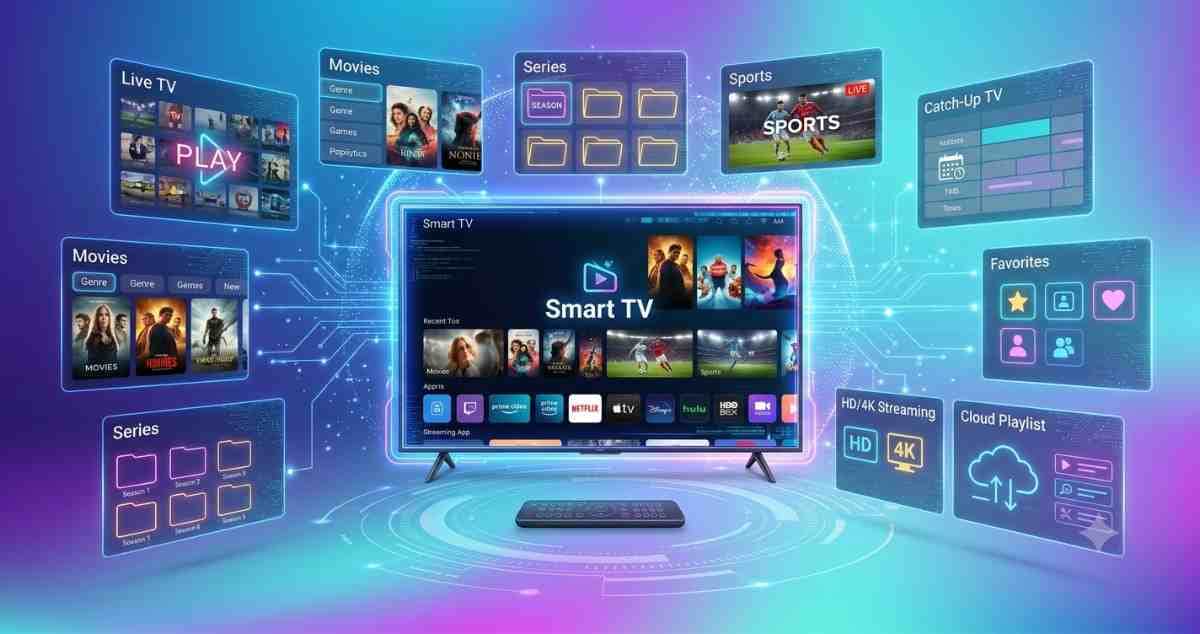
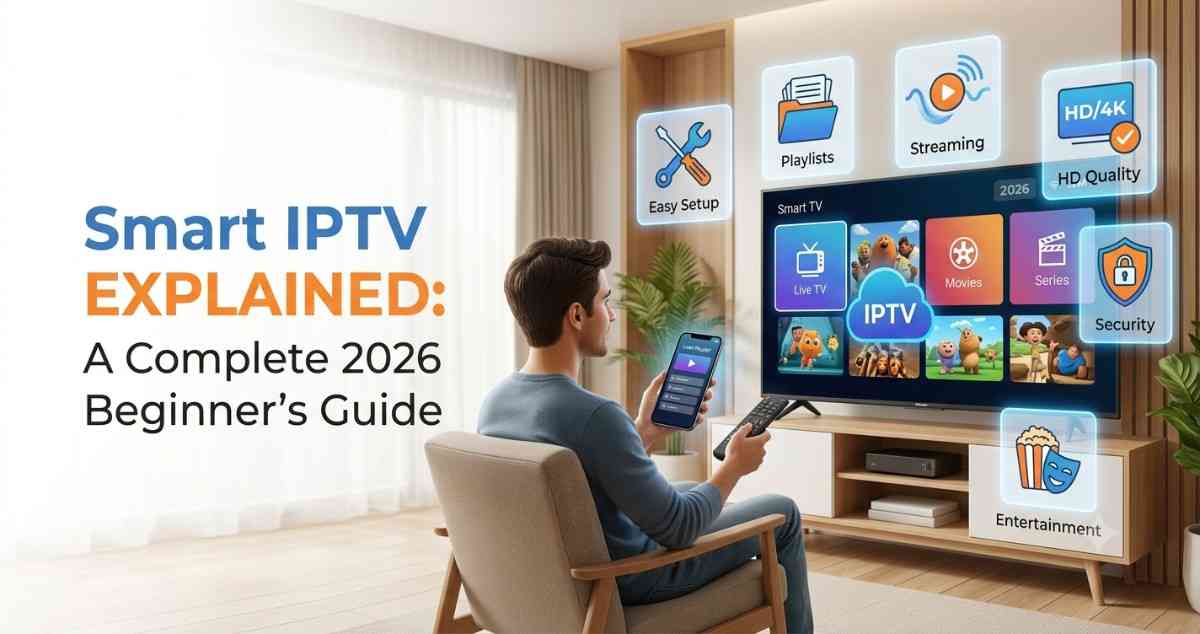
In simple terms, Smart IPTV is software that turns your smart TV into a flexible media hub — capable of playing organized channel lists, electronic program guides (EPG), and video-on-demand content, all delivered over the internet instead of cable or satellite.
{📺 Explore Smart IPTV Now}
How It Works (Simplified)
A content provider or open-source project hosts video streams online.
Those streams are organized inside a playlist file (usually
.m3uor.m3u8).You load this playlist into a Smart IPTV app on your TV, phone, or streaming box.
The app displays the content as organized, browsable "channels," often with a program guide.
Think of Smart IPTV as the "TV app layer" that reads a playlist and turns it into a familiar channel-surfing experience.
Core Components
The App — the software installed on your smart TV or device (e.g., Smart IPTV, TiviMate, IPTV Smarters).
The Playlist — the M3U/M3U8 file containing stream links.
The EPG — an optional program guide showing schedules and show details.
The Content Source — where the actual video streams come from (must be legal/licensed).
Why It Matters in 2026

Smart TVs are now the default. Most new televisions sold worldwide run Samsung Tizen, LG webOS, Android TV, or Google TV — all of which support IPTV-style apps natively.
Cord-cutting continues to grow. More households and businesses are replacing traditional cable subscriptions with flexible, app-based streaming.
Open-source and legal free-to-air projects are expanding, giving developers, learners, and businesses real, legitimate playlists to work with.
Remote and hybrid work has increased demand for internet-delivered content in offices, co-working spaces, and client-facing displays.
Search demand stays high for "Smart IPTV," "IPTV app," and related terms, showing consistent global interest from everyday users, freelancers, and businesses.
For learners and entrepreneurs, understanding Smart IPTV also opens doors to legitimate opportunities — from building custom apps to setting up compliant digital signage systems for clients.
Key Benefits
No extra hardware required — works directly on most modern smart TVs.
Highly customizable — organize channels, categories, and playlists your way.
Cross-device flexibility — usable on TVs, phones, tablets, and computers.
Developer-friendly — built on simple, well-documented formats like M3U/M3U8.
Business-ready — ideal for digital signage, internal training, and information displays.
Cost-effective — many legal, free-to-air playlists and apps are available at no cost.
Scalable — works for a single freelancer's project or a company-wide media setup.
{📺 Explore Smart IPTV Now}
Top Providers, Tools & Services (Legitimate & Legal)
Because "IPTV USA" is sometimes misused to describe unauthorized rebroadcasting of paid content, this section focuses only on legal, reputable apps and legitimate content sources.
Popular Smart IPTV Apps
Smart IPTV (SIPTV) — the original app for Samsung and LG smart TVs; requires a paid or free activation and a legal playlist source.
TiviMate — a polished playlist manager and player for Android TV devices.
IPTV Smarters Player — cross-platform app supporting M3U/Xtream Codes playlist formats.
Kodi — open-source home theater software with legal add-on support.
VLC Media Player — free, open-source, supports direct M3U/M3U8 playback on most devices.
Legal Free-to-Air & Public Playlist Sources
iptv-org — an open-source project aggregating publicly available, free-to-air channel playlists from broadcasters worldwide.
Public broadcaster apps — many national broadcasters offer free, legal streams compatible with IPTV apps.
Licensed ad-supported platforms — services like Pluto TV and Samsung TV Plus provide fully licensed live channels.
Comparison Table: Popular Smart IPTV Apps
Smart IPTV (SIPTV)
Platform: Samsung Tizen, LG webOS
Best For: Simple, TV-native playlist playback
Free Version: Limited free trial
Legal Content Support: Yes
TiviMate
Platform: Android TV, Fire TV
Best For: Organized, premium-style interface
Free Version: Free trial
Legal Content Support: Yes (with licensed playlists)
IPTV Smarters Player
Platform: Android, iOS, Windows, TV
Best For: Cross-platform flexibility
Free Version: Yes
Legal Content Support: Yes
{📺 Explore Smart IPTV Now}
Kodi
Platform: Cross-platform
Best For: Advanced customization
Free Version: Yes
Legal Content Support: Yes (via legal add-ons)
VLC Media Player
Platform: Windows, Mac, Linux, Mobile
Best For: Beginners, quick playback
Free Version: Yes
Legal Content Support: Yes
Features to Look For in a Smart IPTV App
EPG (Electronic Program Guide) support — displays schedules and program details.
Multi-screen/multi-device sync — continue watching across devices.
Playlist import/export — simple M3U/M3U8 file handling.
Custom categories and favorites — organize channels by topic or use.
Parental controls — useful for families and shared business screens.
Catch-up/VOD support — access to on-demand content where legally available.
Low resource usage — important for older smart TVs and budget devices.
Security support — HTTPS/HLS-compatible streaming for safer playback.
Pricing Table (Legal Tools & Platforms)
Smart IPTV (SIPTV) App
Pricing Model: Freemium
Approx. Cost: Free trial, ~$8–$10/year activation
Notes: Requires MAC address activation
TiviMate
Pricing Model: Freemium
Approx. Cost: $0 (trial) – ~$5.99 one-time (Lifetime Premium)
Notes: Player interface only
IPTV Smarters Player
Pricing Model: Free
Approx. Cost: $0
Notes: Optional premium features vary by build
Kodi
Pricing Model: Free
Approx. Cost: $0
Notes: Free, donation-supported
VLC Media Player
Pricing Model: Free
Approx. Cost: $0
Notes: Fully free, open-source
Pricing may vary by region and update over time — always check the official source before purchasing.
Use Cases
Students & Learners — Studying how smart TV apps, playlists, and streaming protocols work together.
Freelancers & Developers — Building custom IPTV-style apps or dashboards using M3U/M3U8 standards.
Small Businesses — Setting up legal digital signage in offices, retail stores, or waiting areas.
Startups — Prototyping media-tech products using open, well-documented playlist formats.
Educational Institutions — Streaming legal public broadcaster content for classrooms or training.
Content Creators — Testing multi-device video delivery and app compatibility.
{📺 Explore Smart IPTV Now}
Best For
Beginners who want an easy, TV-native way to explore internet streaming.
Freelance developers building apps or tools around smart TV streaming standards.
Small business owners needing simple, legal digital signage solutions.
Tech enthusiasts who enjoy customizing their smart TV experience.
Startups exploring media-tech or streaming-adjacent products.
Pros and Cons

Pros
Native, TV-friendly interface — no extra set-top box needed on supported TVs.
Wide app choice, including free and open-source options.
Highly customizable channel organization and EPG support.
Great learning resource for understanding smart TV streaming technology.
Legal, free-to-air content options are readily available.
{📺 Explore Smart IPTV Now}
Cons
The term "IPTV" is often associated with illegal streaming services, creating confusion for new users.
Unauthorized IPTV subscriptions can expose users to legal, security, and privacy risks.
Some apps (like SIPTV) require device-specific activation, which can be confusing for beginners.
Stream reliability depends heavily on the source quality, not just the app.
No single "official" IPTV standard — experience varies by app and provider.
Best Alternatives
If you prefer fully licensed streaming without managing playlists and apps yourself, consider these alternatives:
YouTube TV (region-dependent) — licensed live TV streaming bundle.
Pluto TV — free, ad-supported, fully licensed live channels.
Samsung TV Plus — free built-in streaming on Samsung smart TVs.
LG Channels — free, licensed live content built into LG smart TVs.
Tubi — free, licensed on-demand streaming.
Local broadcaster apps — official, free streaming apps from national TV networks.
Future Trends for Smart IPTV in 2026 and Beyond
Stricter regulation — governments worldwide are increasing enforcement against illegal IPTV subscription services.
Deeper smart TV integration — manufacturers building more native playlist and EPG support directly into TV operating systems.
AI-powered recommendations — smarter, personalized program guides based on viewing habits.
Growth of legal aggregator projects — open-source, free-to-air playlist projects continuing to expand.
Increased demand for developer tools — freelancers and startups building custom, compliant streaming apps.
Stronger security standards — HTTPS/HLS encrypted streaming becoming the norm across apps.
{📺 Explore Smart IPTV Now}
Conclusion
Smart IPTV isn't a mysterious or inherently risky technology — it's simply a category of apps (and one popular app by that name) designed to organize and play internet-delivered television on smart TVs. The confusion and risk come from unauthorized services misusing IPTV technology to distribute pirated content.
For learners, freelancers, and small business owners in 2026, the smartest approach is to understand how the technology works, use trusted apps like Smart IPTV, TiviMate, Kodi, or VLC, and always pair them with legal, licensed content sources. This keeps you safe, compliant, and well-positioned to build real skills or business solutions around smart TV streaming.
If you're just getting started, install a free, reputable app, connect it to a legal public playlist source like iptv-org, and explore safely before building anything more advanced.
FAQ's
1. Is Smart IPTV legal?
The Smart IPTV app and IPTV technology in general are legal. What matters is the content source — streaming licensed or free-to-air content is legal, while unauthorized rebroadcasting of paid cable/satellite channels is not.
2. Is "Smart IPTV" the same as "IPTV"?
Smart IPTV usually refers to apps designed for smart TVs (like the SIPTV app), while "IPTV" is the broader term for any internet-delivered television technology. Smart IPTV is essentially IPTV optimized for smart TV platforms.
3. Do I need a subscription to use Smart IPTV apps?
The apps themselves may have a small one-time or annual activation fee, but the content is separate. You must connect the app to a legal, licensed playlist or streaming source.
4. Can small businesses use Smart IPTV legally?
Yes, as long as the content source is licensed or free-to-air. Businesses commonly use Smart IPTV apps for digital signage, internal training content, or public information displays.
5. Are free IPTV subscriptions safe to use?
Free or cheap "IPTV subscription" services offering premium cable/satellite channels are often illegal and risky, exposing users to malware, data theft, or legal consequences. Stick to verified, licensed platforms instead.
6. What is the best free app to start learning about Smart IPTV?
VLC Media Player is the easiest starting point — it's free, open-source, and supports M3U/M3U8 playlists on almost any device.
7. Can I build my own Smart IPTV app as a freelancer?
Yes. Many freelancers and startups build custom IPTV-style apps or dashboards using the M3U/M3U8 format paired with legally licensed or public content sources.

