Smart Ways to Reduce Cloud Costs with the Right Tools
Introduction
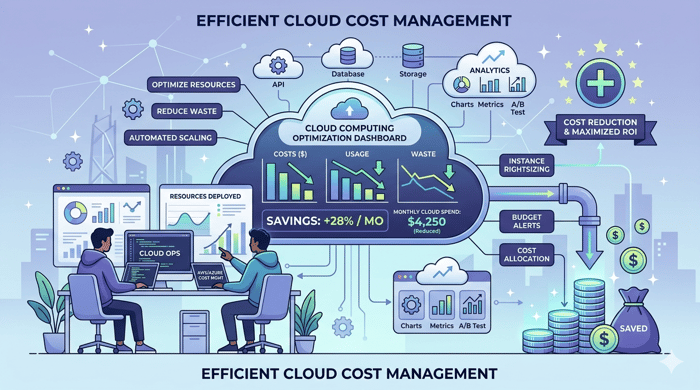
Everyone dreams about limitless scaling, no two ways about it! And I am pretty sure you will be blown off when I say who makes a good profit out of these dreams? It's the cloud providers. Yes, unfortunately, nobody talks about limitless bills, and that’s where the issue lies. There are lots and lots of companies that end up wasting large percentages of their cloud spending on overprovisioned resources, instances which are no longer in use and idle storage. Fret not, every problem has a solutionl. Have you ever come across cloud cost optimisation? The following post focuses on what cloud cost optimisation is, how it is beneficial, and what the sure-shot ways are to reduce cloud costs, or, should I say, what are the best practices to optimise cloud costs.
Over the years, cloud computing has revolutionized things to a great extent especially in regards to how different organisations tend to manage and deploy applications. In addition, the cloud computing model ensures on-demand scalability and a pay-as-you-go model. Now, what usually happens is that companies, as soon as they grow, they often face ballooning cloud costs, which usually eat up pretty much of their budgets. So, as a key solution, one is supposed to control cloud expenditures in a proactive manner.
Before we delve into what cloud cost optimisation is, every business is found adopting cloud computing practices. The model is basically about businesses being able to successfully pay for what they use and successfully get rid of the need for significant upfront investments, especially regarding hardware and software. Now, one of the common questions found is, " Why is there such an increase in cloud prices?“ Here are a few key factors which affect cloud pricing.
1. Compute costs
Compute costs are highly associated with processing power, and this is the most important aspect considered to run applications within the cloud. The price mainly depends on what is the instance and where exactly it is running, and of course, which operating system is being used. Cloud providers have data centres worldwide; the price of instances might vary, leading to different operating costs.
2. Storage costs
Another significant factor is storage costs. Again, everything depends on the amount and what kind of storge you are planning to choose, also, the impact is even based on the region where the data is stored. With so many storage options available in the cloud, picking the right one can be tricky, especially if the wrong one involves storing unstructured data, such as images, videos, and documents.
3. Database pricing
Database pricing is considered for managing tons of databases in the most accurate manner. The price usually depends on the type of database services, relational, NoSQL, and in-memory.
However, despite this, you are bound to receive automatic backups, as well as automatic scaling. The only concern is that these services come at a price.
4. Data Transfer Fees
Unfortunately, these types of fees are often overlooked, but one needs to understand that they can definitely impact the cloud pricing. The price mainly depends on the amount of data transferred and the region where the data is being stored.
The cost of data transfers can be extremely high; fortunately, there are relevant strategies to consider to minimise the impact.
5. Cloud pricing and discounting models
Your choice of pricing model can even make or break the scenario. The on-demand pricing model is most of the time flexible, where businesses are supposed to pay for the resources they use, and they don’t have to do any upfront payments. The model is ideal for unpredictable workloads to scale up resources.
Another model is reserved instances which is suitable for applications especially with predictable usage patterns and can result in substantial cost savings especially over a period of time. And lastly we have spot instance where businesses can successfully bid unused cloud capacities at a hugely discounted prices.
Now you exactly know how cloud costs can quickly spiral. What is cloud cost optimisation? There are times when cloud spending does get out of control, especially if the management isn’t effective enough. So cloud cost optimisation is a well-thought-out strategy where businesses are supposed to keep tabs on their existing infrastructure, predictability and absolute alignment with the current business goals. Here are some tips where cloud cost optimisation can generate real business value.
- Stop paying for what you don’t use
- Get clear visibility and control
- Maximise your ROI
- Forecast with confidence
- Boosts productivity
- Fuel innovation and competitive edge
- Reduce environmental impact
Now, many of you have a misconception that cloud cost optimisation and cloud cost management are the same. Well, that’s not! Cloud cost management is mainly about tracking relevant expenses, allocating budgets and generating reports to see where the money goes. Cloud cost optimization uses the report and analytics and puts it to work.
Key Benefits of Cloud Cost Optimization
1. Enhanced visibility
One of the biggest benefits of cloud cost optimisation is that it allows you to get rid of unnecessary spending, which is great! Organisations usually are compelled to pay for all kinds of resources, one which they use and one which they don’t use at all, yet active. Some of the common aspects include Idle virtual machines, unused storage volumes, and oversized compute instances, unfortunately, these resources don’t deliver any kind of value but are active all the time.
When businesses analyse their cloud storage on a regular basis, it is possible to spot certain inefficiencies and remove them in time. The process features resizing workloads, deleting unused instances, and optimising storage tiers.
More and more companies can reduce costs dramatically while lessening operational costs at the same time, maintaining the same level of performance.
2. Cost Savings
Now this is one of the biggest benefits of considering cloud cost optimisation. Yes, ample of money can be saved, especially when businesses no longer have to worry about paying for resources which they no longer use, for example, Idle virtual machines, unused storage volumes, and oversized compute instances. It is advisable to keep tabs on the cloud storage on a regular basis, spot all the inefficiencies and definitely get rid of them. In addition, what else can you think of is resizing workloads, deleting unused instances and optimising storage tiers.
3. Improved Cloud Performance
In addition to reducing the cloud costs, cloud cost optimisation even assists in enhancing the overall performance of the developed application. As a result, the app is supposed to run efficiently, and overall risks of performance issues can be well taken care of.
4. Improved Resource Efficiency
Another significant advantage is enhanced resource efficiency. Organisations end up allocating way more computing power than needed, and it is done to avoid any performance issues. This is a total waste of time, energy and everything else. By monitoring tools and performance analytics, companies have a better idea of how the resources are being used in the proper manner.
This surely assists in allocating whatever is needed, whether it is the CPU, memory, storage, or everything is located in the right amount. Using resources efficiently won’t just lessen costs but also assist in improving the developed system as well. It is a win-win situation for everyone, including employees and customers.
5. Better Financial Visibility and Budget Control
It is very important for businesses to have full visibility into their spending patterns. Detailed reports can be developed using relevant cloud platforms so organisations can successfully track costs regarding departments, services, as well as applications.
Moreover, it is possible to create accurate budgets and even stick to it, set spending alerts and even forecast future expenses. As a result, it becomes easy for decision makers to plan infrastructure investments more effectively.
So now you exactly know why businesses need to conduct cloud cost optimisation. Now it’s time to consider some of the best practices which actually can assist in generating real business value.
Cloud Cost Optimisation Best Practices
Understand Cloud Cost Drivers
It is very important to understand relevant cloud cost drivers. Well, one of the obvious reasons why companies fail in restraining cloud expenses is that they lack vision and, even worse, they are unable to figure out where spending actually occurs. So, it's time to figure out cloud cost drivers.
- Time to break down cloud services
Keep track of each service as well as the resources you are paying for. Compute instances, container services, unnecessary storage, and databases are common reasons.
Fortunately, there are numerous tools such as AWS Cost Explorer, Azure Cost Management or Google Cloud’s Billing reports to consider. These do assist in pin-pointing high-cost areas.
**- Tag as well as Label resources **
It is advisable to implement tagging and labelling policies especially for all types of resources. What are tags? Well, department, environment, project are proper examples here. By tagging it is possible to spot the owners, purposes or cost centres of any given resources.
Do you have a governance policy especially for tagging? If you do, all your new resources will be labelled to maintain constant visibility.
- Regular cost audits
-
This is very important, one should keep on scheduling periodic cost reviews, and it can vary in regards to monthly, quarterly so that professionals can successfully catch spikes as well as anomalies at a pretty early stage.
-
Another way is to try cross-reference spending, which can assist with traffic and usage data to find out what aspects are responsible for the increase in cost, and whether it is possible to justify by revenue or user growth.
2.Keep a Hawk Eye
The next thing to do is keep a close eye on what exactly is happening around, especially in regard to monitoring and governance. The big question is how?
Track usage continuously - Here you can make the most of tools such as AWS CloudWatch, Azure Monitor, or Google Cloud Monitoring so that you can keep a hawk eye on usage within real time. In case of sudden spikes, alerts or notifications can be used. In addition, try reviewing detailed monthly reports. What these reports do is highlight overprovisioned as well as idle resources, which need utmost attention.
Set relevant metrics and budgets - It is required to monitor CPU, memory, storage, request volume, and latency. And whatever numbers are gained are supposed to be shared with the finance and engineering departments so that everyone is on the same page and there are no chances for any misconceptions.
Tag your resources - Another thing to consider is applying consistent tags to every resource. Think of different project names, environments, and team ownership as tags. So it is possible to keep tabs on the cost, assign proper accountability and even automate cleanup rules.
Keep unauthorised cloud use in check - Did you know that shadow IT is quite killer, it simultaneously drives costs and increases risks involved.
Create cost awareness in Dev workflows - Make sure you add cost considerations to every stage of software development, which must range from planning to coding, testing, deploying, and, of course, monitoring.
3. Make sure to use only what is needed
The next best practice to consider is to use resources, especially the ones which are needed. So how is that possible? Well, take a look at usage data, and make sure to adjust instant sizes, database configurations, as well as containers in the proper manner. Now this step is extremely important especially before adding any new resources, make sure you consolidate what you already have. Try enabling auto-scaling, which ensures easy handling of spikes efficiently.
Unused load balancers, unattached volumes, and underutilised VMs should be taken into account all the time. For better outcomes, try running regular reviews or using automated scripts.
There is no debate about the fact that snapshots pile up extremely fast and eat your storage budget. So do not forget to set a retention policy and delete backups that you no longer need for recovery or compliance.
4. Choose serverless and managed services
Earlier, it was always about reinventing the wheel; now, all it takes is to pay to maintain it. You will come across several services which are highly considered for scaling, patching and even assist in creating proper backups automatically so that engineers don’t have to spend their time on doing such monotonous activities.
5. Lastly, create a cost-conscious culture
You need a team which successfully treats cloud resources, and this is supposed to happen in such a manner that it seems they are spending from their own paycheck. It is about adopting a cross-functional approach where teams work to keep tabs on KPIs and successfully reduce waste. Not to mention, ongoing training ensures everyone is on par since they know what they are doing, proving them to be a cloud wizard instead of some wannabe who would leave the space due to some challenge.
Conclusion
And we are done for now! I hope you did find the following post worth considering, and in case you still have any doubts or queries regarding what cloud cost optimisation is, how it is beneficial, or why it is needed or the best practices to consider, feel free to mention them in the comment section below. Since everyone is tackling the low-hanging fruit of cloud cost savings, where are you?
