Software Release Management in Modern Development Teams
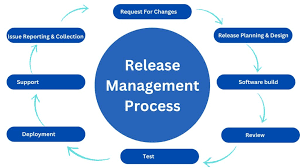
Software release management has become a strategic capability for organizations that need to deliver updates faster without compromising stability. As systems grow more complex and teams become more distributed, managing releases without a structured approach often leads to delays, rework, and operational risk.
A mature release management practice creates predictability, transparency, and confidence across the entire delivery lifecycle.
The Strategic Role of Release Management
Release management goes far beyond scheduling deployments. It coordinates the flow of changes from planning to production while aligning technical execution with business priorities. By acting as a bridge between development, operations, and stakeholders, release management ensures that every change is delivered with purpose. When releases are planned strategically, organizations reduce surprises and improve stakeholder trust.
Challenges Faced by Growing Teams
As organizations scale, releases often span multiple teams, systems, and environments. Dependencies become harder to track, and communication gaps increase. Lack of visibility is one of the most common causes of failed or delayed releases. Without a centralized view, teams may discover conflicts only when it is too late to address them efficiently.
To overcome these challenges, many teams adopt structured frameworks and tooling focused on release software, allowing them to coordinate complex delivery pipelines with greater clarity and control.
Benefits of Structured Release Management
Increased Visibility and Control
A unified release process provides real-time insight into readiness, risks, and progress. Clear visibility enables faster decision-making and better prioritization across teams.
Reduced Risk and Fewer Incidents
By validating changes before deployment and enforcing approval checkpoints, release management minimizes production issues. Controlled releases significantly reduce rollback scenarios and service disruptions.
Improved Collaboration Across Teams
Release management aligns development, QA, and operations around shared milestones. Cross-team collaboration becomes proactive instead of reactive, reducing friction during critical delivery phases.
Best Practices for Effective Release Management
Establish Clear Ownership
Every release should have a defined owner responsible for coordination and communication. Clear ownership eliminates ambiguity and accelerates issue resolution.
Standardize Release Processes
Using consistent workflows, naming conventions, and approval criteria simplifies scaling. Standardization improves efficiency and makes releases easier to audit and optimize.
Automate Where Possible
Automation supports repeatability and accuracy across release activities. Automated pipelines reduce manual errors and free teams to focus on higher-value tasks.
Enabling Continuous Improvement
Release management should evolve alongside the organization. Regular retrospectives help teams identify bottlenecks and refine processes. Continuous improvement transforms release management from a control mechanism into a strategic advantage.
In fast-paced digital environments, software release management is essential for sustainable growth. By improving visibility, reducing risk, and strengthening collaboration, organizations can deliver value more consistently. With the right practices in place, release management becomes a foundation for reliable and scalable software delivery.

