Solo → Pre-Seed: The Tool Stack Decision That Will Either Save or Sink Your First 18 Months
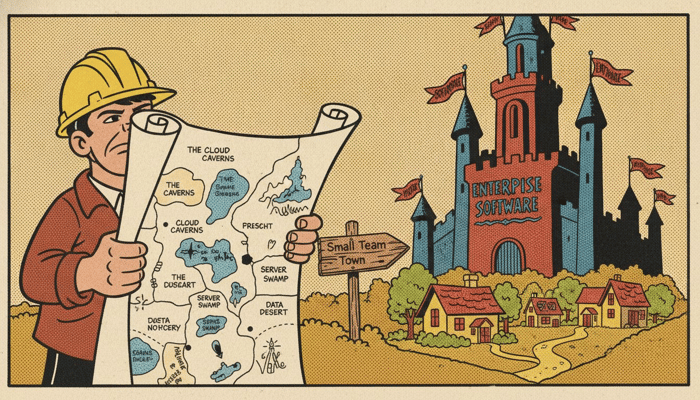
Most solo founders waste their first year on tools built for 30-person teams. Here is the stage-fit stack that actually works.
Every few months, a founder posts something like this on Indie Hackers:
"I finally signed up for HubSpot. Set it up over a weekend. Six weeks later, I haven't touched it. Now I'm paying $50/month for something I use less than my Notes app."
The replies are always the same. Someone says "have you tried Notion?" Someone else drops a 40-tool list. Nobody asks the question that actually matters:
What stage are you actually at?
The tool advice the internet gives founders is almost entirely wrong. Not because the tools are bad, but because the advice ignores stage. Asana is a great tool. For a 15-person team. Pipedrive is excellent. If you have a sales team running 200 deals. HubSpot's free tier is generous. Until you hit the ceiling and discover the next tier is $800 per month.
Solo and pre-seed founders are consistently handed enterprise-grade tool recommendations wrapped in "for startups" branding. The tools are built for a version of your company that does not exist yet.
This article fixes that.
What Actually Changes Between Solo and Pre-Seed
Before getting to tools, the stage gap needs to be named clearly. Most guides skip this and go straight to the list. That is why founders keep picking the wrong tools.
Solo or Indie Stage
- Team: just you
- Revenue: zero to early MRR
- Customers: zero to 50
- Biggest risk: building the wrong thing entirely
- Tool failure mode: overcomplication (setting up tools you have no workflows to fill)
Pre-Seed Stage
- Team: 2 to 5 people, usually remote and async
- Revenue: trying to prove a repeatable model
- Customers: 50 to 500
- Biggest risk: building the right thing too slowly
- Tool failure mode: under-systematization (waiting too long to build systems, then rebuilding them under pressure)
The tools that sink solo founders are the ones that require a team to make sense. The tools that sink pre-seed teams are the ones that still let you operate like it is just you.
A good pre-seed stack is not enterprise software made smaller. It is the minimum structure that lets a small team move fast without losing context as it grows.
The 5 Software Categories That Matter for Solo to Pre-Seed Founders
1. Best Design Tools for Solo Founders and Pre-Seed Startups
Design is not one job. It is at least four: product prototyping, marketing assets, social mockups, and design research before you build anything. Most tool guides recommend one or two tools across all four jobs. That is why founders end up either under-tooled or running four subscriptions that overlap.
Here is a stage-fit breakdown, sourced from SoftRankings:
Open Design is an open-source, AI-powered UI/UX prototyping tool built for local-first workflows. It integrates with Figma exports and code repos and comes with 155 composable design skills. Free tier available. SSIE stage-fit score: 71 for solo, 65 for pre-seed. Best for founders who want AI-assisted prototyping without cloud lock-in or upfront cost.
MotionSites delivers AI-driven graphic design for small teams and solo builders. It comes with 30-plus templates and a one-time lifetime deal that includes a commercial license. No recurring subscription. SSIE stage-fit score: 56 to 59 across solo and pre-seed. Best for founders who need high-quality visual output without committing to a monthly design platform.
Shots generates product mockups, animations, and social videos in seconds. Free, with a growing one-click mockup library. SSIE stage-fit score: 63 for solo, 57 for pre-seed. The tool that makes your product screenshots look like a real product for launch posts and landing pages.
Superstash is an iPad-native design workspace combining freeform sketching, a built-in browser, and a reusable asset library. Free tier with daily backups. SSIE stage-fit score: 79 for solo, 67 for pre-seed. Best for the thinking-before-designing phase, sketching product ideas before opening any pixel-level software.
Watobu is a product research and moodboarding platform with a library of over 2,000 features across thousands of apps. Freemium. SSIE stage-fit score: 79 for solo, 67 for pre-seed. Before designing anything, founders should know what already exists. Watobu is the tool built for that research step most skip entirely.
Design Arena lets teams benchmark AI-generated designs using crowdsourced votes from UI/UX professionals worldwide. Free. If your team uses AI to generate UI and wants to know which model produces better output before committing to a workflow, this is the evaluation tool for that decision.
Stage-fit verdict by job:
- Product prototyping: Open Design
- Marketing mockups and social content: Shots
- Early-stage idea sketching: Superstash
- Feature and competitor research before designing: Watobu
- Evaluating AI design output quality: Design Arena
- One-time visual production without a subscription: MotionSites
2. Communication and Async Collaboration for Pre-Seed Teams
The biggest productivity killer at pre-seed is not bad tools. It is synchronous dependency: people waiting on answers before they can move. One person blocked because approval is sitting in someone's inbox. A five-minute decision stretched into two days because nothing was written down.
Standard advice here is just "use Slack." Slack works. But Slack Pro at $7.25 per user adds up for a three-person team, and Slack's real-time design trains everyone to expect instant responses. That is the opposite of what a small, focused pre-seed team needs to protect deep work.
Mantle Chat is an AI-powered team collaboration platform that integrates Claude, GPT, Gemini, Grok, and DeepSeek into dedicated team channels. Freemium. SSIE stage-fit score: 52 for solo, 59 for pre-seed, rising to 64 to 65 at seed and Series A as SSO and audit logging become relevant. The right choice when your team is already using AI models constantly and wants a shared workspace where AI is a genuine collaborator, not a separate tab everyone has open individually.
Flock is a team messaging and collaboration platform with video conferencing, file sharing, and built-in to-dos. The free plan covers unlimited one-to-one messages and ten public channels. Freemium. The right choice when you want clean team communication without Slack's pricing trajectory. Genuinely usable at three people without hitting a paywall.
Verdict: Mantle Chat for AI-heavy workflows. Flock for lightweight team comms. Either way, layer async video on top. A three-minute screen recording replaces more meetings than most teams expect.
3. Best CRM Software for Solo Founders and Pre-Seed Startups
Here is what most CRM advice gets wrong for this stage: you do not need a pipeline. You need memory.
You need to remember every conversation you have had with a potential customer. When you last spoke. What they told you. The pattern across all of them. That is a fundamentally different job from managing a sales team running 200 simultaneous deals.
HubSpot's free CRM is built as a loss leader. The moment you need sequences, email tracking, or deal stages past the most basic setup, you are looking at $450 to $800 per month. Pipedrive assumes a dedicated sales team. Neither tool is designed for a founder doing three to five customer calls a week.
Comp AI CRM is an agentic CRM that reads your team's inbox, enriches company and contact data automatically, and books follow-ups via AI research agents without manual data entry. Open source. SSIE stage-fit score: 68 for solo and pre-seed, 84 at idea-stage. The core advantage for founder-led sales: the thing that kills CRM adoption at this stage is the friction of logging everything manually. Comp AI removes that friction entirely.
Bonsai is a unified platform for CRM, project management, invoicing, and time tracking. Used by over 500,000 small businesses. Paid. SSIE stage-fit score: 58 for solo, 63 for pre-seed. The right choice for service-based or consulting-adjacent businesses that need CRM, contracts, client portals, and invoicing in one place rather than stitched across separate tools.
Verdict: Comp AI CRM for product founders doing founder-led sales. Bonsai for service or consulting businesses that need CRM and billing unified from day one.
4. Finance and Operations Tools for Early-Stage Startups
Every investor at pre-seed will ask about your numbers. Not because they expect sophisticated financial modelling, but because they want to confirm you understand your own business. The founders who fumble that question are almost always the ones treating finance as something to figure out later.
You do not need a full-time accountant at this stage. You need to know your burn, runway, and revenue at a glance. And you need a system that does not cost you an afternoon every month to maintain.
Most standard recommendations here, QuickBooks and Xero, are solid tools built for established businesses with bookkeepers. They are heavier than what pre-seed teams need and priced accordingly.
Ramp is an AI-powered spend management platform with corporate cards, expense tracking, AP automation, and accounting integrations. Freemium. SSIE stage-fit score: 72 for solo, 68 for pre-seed. The right tool when team members are making purchases and you need real-time spend visibility without a monthly reconciliation session eating your time.
LeapCount is an all-in-one business management platform covering accounting, project management, inventory, and cloud file storage. Free for up to five users. Specifically recommended on SoftRankings for pre-seed through Series A. The right choice for teams that want a zero-cost operational backbone covering accounting and projects without stitching five separate subscriptions together.
Bonsai also covers finance for service businesses: invoicing, time tracking, and financial reporting alongside CRM. The right choice for founders billing clients who want finance and project management in one system.
Quick reference:
- Spend control and corporate cards: Ramp
- Full business ops at zero cost: LeapCount
- Service billing combined with CRM: Bonsai
5. Cloud Telephony for Pre-Seed Startups
This is the category almost every "best tools for startups" list skips. The assumption is that founders use their personal phone. At zero to ten customer calls a week, that is probably true.
At pre-seed, doing more than ten customer calls a week and needing call recordings for product research, transcripts for your CRM, and the ability to hand calls off to a co-founder without giving out a personal number, a proper telephony setup stops being optional.
KrispCall is an AI-powered cloud telephony platform with local and toll-free numbers, IVR, call monitoring, SMS marketing, and CRM integrations. Available in multiple languages with 24/7 support. Paid. SSIE stage-fit score: 61 for solo and idea-stage, 65 for pre-seed. Best for pre-seed teams doing outbound sales calls who need call routing, recordings, and CRM sync without enterprise telephony pricing.
Dialaxy is a cloud telephony platform for businesses with international number support. Paid. Best for founders who want a straightforward VoIP setup without the AI layer.
Clerk Chat integrates AI-powered telephony and SMS marketing directly into Microsoft Teams. Free trial available. Best for teams already operating in the Microsoft ecosystem who want telephony without adding another standalone app.
Verdict: KrispCall for most pre-seed teams doing founder-led sales. Clerk Chat if Microsoft Teams is already your communication layer. Both cost significantly less than enterprise telephony stacks and give you the call recording and CRM sync that turns customer calls into product research.
Your Stage-Fit Stack at a Glance
Solo or Indie
- Design: Shots and Superstash
- CRM: A spreadsheet, or Comp AI CRM once you hit 10-plus active conversations
- Comms: Flock free tier
- Finance: LeapCount or Bonsai
- Telephony: Personal phone is fine here
Pre-Seed
- Design: Open Design for prototyping, MotionSites for assets, Watobu for research
- CRM: Comp AI CRM for product founders, Bonsai for service businesses
- Comms: Mantle Chat for AI-heavy teams, Flock plus async video for everyone else
- Finance: Ramp for spend control, LeapCount for zero-cost ops backbone
- Telephony: KrispCall or Dialaxy
6 Expert Moves That Separate Pre-Seed Teams That Scale From Those That Stall
Systematize before the first hire, not after
The single most expensive mistake at this stage: bringing on a first hire and handing them chaos. They spend their first month reverse-engineering how you work instead of adding value. Before hiring anyone, document where decisions live, how work gets tracked, and what done looks like for recurring tasks. One week of documentation saves two months of onboarding drag per person.
Replace meetings with written artifacts
Every hour in a meeting at pre-seed is an hour not building. An artifact-before-meeting rule changes this: if something needs to be discussed, it gets written down first. Writing almost always resolves half the agenda before the meeting ever starts. The meetings that remain are sharper and shorter.
Let your tool stack signal operational maturity to investors
Early investors read operational signals. A founder who can pull up a CRM with six months of real customer conversation history, a spend dashboard with clean actuals, and a design system with version history is communicating something important without saying it directly: this is a real operation. Your tools are part of your pitch whether you treat them that way or not.
Upgrade tools on inflection points, not calendar dates
Adding tools on a schedule is how you end up with abandoned setups and wasted subscriptions. Add tools when something breaks without them. Add a proper CRM when active customer conversations exceed 20 and you can no longer hold them in your head. Add telephony when customer calls exceed five per week. Add payroll tooling the day before a first employee starts. Stage-matching tool adoption to actual scale saves thousands of dollars and hundreds of hours.
Name your single source of truth before you need it
At solo stage, the founder is the source of truth. At pre-seed, that becomes a bottleneck fast. Pick one place where every important decision and document lives. Tell everyone on the team where it is. Most founding teams never make this choice explicitly and pay for it every time someone acts on outdated information stored only in someone else's head.
Audit your stack every month
A ten-minute monthly audit: which tools did you actually open this week? Anything that stayed closed gets a two-week re-adoption trial. If it stays closed again, cancel it. Tool sprawl at pre-seed is not just a budget problem. It is a mental overhead problem. Every tool in your stack is something every person on your team has to know about, maintain access to, and work around.
Why Stage-Fit Matters More Than Feature Count
The reason mainstream tool directories keep recommending the wrong stack is that they sort by popularity and feature count. The most popular CRM is HubSpot. The most popular project management tool is Asana. The most popular comms tool is Slack. None of those rankings have anything to do with whether the tool fits a two-person pre-seed team.
SoftRankings was built to solve exactly this. Tools are organized by company stage, not just category, so when you are looking for a CRM as a pre-seed founder, you see what is actually built for that stage, with SSIE fit scores calculated per stage rather than generic feature comparisons.
If you are somewhere in the solo-to-pre-seed window right now, it is worth a look before you set up another tool you will abandon in six weeks.
What is the worst tool decision you made at this stage? Drop it in the comments. There is a clear pattern in the mistakes founders make here and it is worth naming.

I am thoughtful about the "6 Expert moves" you have mentioned esp "Replace meetings with written artifacts" and "Name your single source of truth". the. And, thank you @shakya30 for mentioning Dialaxy.
It's interesting to see how different tools shape the early journey of a startup. As someone who has navigated the transition from being solo to securing pre-seed funding, I can share that the right tool stack can indeed define your outcomes in those critical first months.
For me, the key was finding tools that integrated seamlessly with my workflow and truly addressed the specific pain points. While prototyping tools like Open Design focus on UI/UX, they can pave the way for better content and engagement strategies if you can align them with your broader goals, especially if you're aiming for a product that has a strong focus on user experience.
During my own pre-seed phase, I invested heavily in tools that automated repetitive tasks think project management and communication—as it freed up time to focus on the actual product. This saved us countless hours in our early months. For our team, prioritizing tools that provided a comprehensive understanding of user behaviour was also essential. This meant both qualitative and quantitative insights, which have been gamechangers for iterating on our content and user strategy.
It’s also critical to keep in mind the scalability of the tools you choose. We started with platforms that worked well for a small team but hit limits as we grew. Ensure the tools can adapt or scale with your needs, or else you might find yourself pivoting back to the drawing board down the line.
Keep an eye on your workflow too; ensuring that tools work well together can be as crucial as the individual capabilities of the tools themselves. Look for options that allow for easy exports, like Figma's integration mentioned, which can save you time as you iterate.
While the initial setup might be time-consuming, having a streamlined tool stack will ultimately pay off. It’s all about maximizing efficiency so you can dedicate more time to learning from your users and refining your offering. Good luck!
@Sky_Joy. This is quite insightful. Curious to know how you automate project management and communications. Are there any tools you confidently rely on? did you use any open source tools?
Good question. I use RoleTrail as an all-in-one workspace for task management, progress tracking, email, and team chat. Having these functions in one place reduces switching between tools and makes it easier to keep communication connected to the work. I haven’t used open-source tools extensively yet, but I’d be interested to know which ones you think work well for a small pre-seed team.
Stage fit explains the $50/month CRM, though the sharper cut is maintenance: solo founders abandon anything that asks them to record work they already remember. Nine deals live in your head fine. The paid tools that stuck for us were the ones that produced something a draft, a fix, a report instead of storing what we'd already done.
Good idea
The tool stack decision gets treated as a technical choice, but it’s really a financial one — what you pick now determines what your cost structure looks like at 10x scale, and re-platforming later is never as painless as it sounds in year one. What tipped your decision — cost, flexibility, or something else?
I think the bigger issue might be workflow maturity rather than tool choice.
A solo founder can use Notion, HubSpot, or ClickUp perfectly well if the workflow is simple enough. And a badly designed workflow will still be painful even with a “stage-fit” tool.
I’d be curious to see one thing added to this framework: what operational trigger tells you that it’s time to introduce each tool?
For example, instead of “use a CRM at pre-seed,” maybe:
That feels more actionable than company stage alone, because two pre-seed companies can have completely different operational problems.
Both frames are load-bearing. Stage is anticipatory. It tells you which triggers to expect before they fire. Your triggers are confirmatory, they tell you the moment has actually arrived. The founders who get this wrong usually have one without the other: either they upgrade on a schedule (stage without triggers) or they wait until something breaks (triggers without stage context). The combination is the actual answer.
Worst tool decision for me wasn't a SaaS pick, it was choosing to trust an instruction instead of a rule. Early on building Alisio, I told the AI I direct how to handle a specific money edge case in a prompt, plain language, seemed clear enough. It held for weeks, then quietly stopped holding under a slightly different case, because a prompt is guidance, not a constraint, and long sessions erode guidance. I didn't have a CRM migration problem, I had the equivalent: a decision I thought was locked in turned out to be advisory. What fixed it maps to your single-source-of-truth point, but for a non-technical founder it's not a doc, it's moving anything touching money out of a prompt and into a hard rule the app checks before it acts. One layer earlier than the export-lock-in point above: the real risk isn't the tool you picked, it's mistaking a preference you can override for a constraint you can't.
The “digital layer needs a job” point is probably the biggest one. It’s easy to make the NFC part sound interesting, but if the tap doesn’t lead to something genuinely useful for the owner, it’s mostly just another feature. Proving that use case before expanding the ecosystem seems sensible.
Finally, someone gets it. This article nails why most tool recommendations are useless for early-stage founders. The stage-based approach actually makes sense, and the advice to systematize before your first hire is worth the read alone. Practical, no-fluff, and genuinely helpful.
Nice breakdown of cloud telephony as its own category. Most startup tool lists just assume a personal phone is fine until much later, so it's good to see this called out. Recordings and CRM sync matter sooner than people expect.
Really solid point on the "upgrade on inflection points" rule. My biggest mistake early on wasn't just burning money on unused seats, it was picking tools with awful export options.
We had to move our CRM and customer notes three times in one year because we went with flashy, niche tools that made it hard to pull raw data out. By the time we hit pre-seed, half our user research was stuck in old apps.
Now my main rule is simple: if a tool doesn't give you clean API access or easy CSV/JSON exports, skip it.
Mine was signing up for a full CRM way before I actually needed one. Ended up with empty pipelines and stages I never touched, just because it felt like the "professional" thing to do. Took me a while to realize a simple spreadsheet was doing the job fine until conversations actually got hard to track in my head
Could you name the CRM tool you choose and later shifted to? That'd be a Case we could explore in depth
Honestly, I ended up building my own following that experience, named LogicFrame. Initially intended just to help me keep track of conversation with clients, it eventually turned into something much more. I would be happy to share more if you're interested, it might just serve as a good case study for what you are writing about.
Sure. Would like to see LogicFrame!
Here you go: https://logicframe.dev/. Still very much in beta, so if anything looks off or missing don’t hesitate to let me know; I am trying to improve it gradually. Curious what you'd think of it for the case study angle too.
"You don't need a pipeline, you need memory" is a great way to put it. I think this is why so many early-stage founders churn through 3-4 CRMs before finding one that fits .most tools assume you already have a sales process, when really you're still discovering what your process even is.
Stage is a helpful proxy, but the better trigger for upgrading a tool is an operational failure that now costs more than migration. Examples are leads getting lost, two people overwriting decisions, or customer requests lacking an owner. A stack should earn complexity by removing a repeated failure. Without that trigger, even a stage-appropriate recommendation can become shelfware.
The segment that piqued my curiosity is that the stack should probably change with the stage, not just with the product. ~
Something that may make sense when you’re by yourself might create friction when it’s time to involve consumers, investors, and many more. It’s easy to stick with existing tools because a switch feels like work, even when the setup is starting to drag you down.
I’ve discovered that judging tools by which bottlenecks they remove rather than by how popular or powerful they are is useful. In the beginning, simple usually wins. Reliability and collaboration become more important later.
If you want to build a good stack, you must try to make the next level easier and not just make this level easier.
Keeping the tech stack lean as a solo dev is critical for survival. Over-engineering early on kills more projects than bad marketing. What are your absolute non-negotiables in your stack for launching an MVP quickly?
The "stage-fit" frame is what's been missing from every tool recommendation thread I've seen on IH. The question is never "is this a good tool" but "is this the right tool for right now."
The CRM section is where most solo founders get it wrong. A spreadsheet at 10 conversations is the right call. HubSpot's free tier feels generous until you hit the ceiling and realize you've already built workflows around it — and the next tier is $450+/month. The discipline is staying in tools that require the minimum maintenance overhead you can't yet afford.
The "systematize before first hire" point is the most expensive lesson to learn the hard way. I brought someone on before documenting properly and spent the first month becoming their bottleneck instead of multiplying my capacity. One week of documentation would have saved 6 weeks of confusion.
The hardest part of all of this: it requires restraint during the phase where restraint feels the least natural. When things are moving, every new tool looks like it could be the edge you're missing.
What's the one tool you'd tell every solo founder to add at the exact 20-customer mark?
At 20 customers the missing tool isn't actually a new app, it's a forcing function. That number is the exact moment where "I remember all my conversations" stops being true, and the damage is invisible until a follow-up falls through three weeks later.
The tool I'd add at that mark: Bitrix24. Free plan, no credit card, CRM + pipeline in one and it scales with you past pre-seed so you're not migrating again at 100 customers. On SoftRankings it's rated across solo through enterprise stages for exactly that reason. Start free, graduate without switching.
One caveat on the "tool stack signals maturity to investors" point: in hundreds of pitches I have never once asked a founder what CRM they use. What signals maturity is knowing your numbers cold when asked, whatever system produced them. The worst tool decision I see founders make is buying the stack a Series B company runs before they have ten customers.
Completely agree on the investor side. Knowing your numbers cold matters far more than what produced them. The stack argument is narrower than I framed it: it's not investor signaling, it's internal legibility. A clean CRM and spend dashboard means your first hire doesn't spend their first month reverse-engineering how you work. The audience for the stack isn't the investor. It's the next person you bring in.
Pre-seed is such a critical point. This is a great breakdown on which tools to use at key inflection points. Nice job!
The "upgrade on inflection points, not calendar dates" rule is the one I'd tattoo on a solo founder's wrist - most of the waste I've seen came from buying the tool for the team we planned to hire. One thing I'd add on the finance side: even at solo stage, pick your chart of accounts and keep the books current monthly, because the cleanup when you actually raise costs more than any subscription on this list. And the monthly stack audit works far better if you tie it to actual seat/usage data instead of vibes - I run it off the billing export, and half the "essential" tools have one login from three weeks ago.
In todays, AI era, I am seeing many people bypassing the stack and building their own products and integrations suited for them. I even recently saw a custom CRM which according to the customer was working very well for them.
That's great. Could you mention their website?
The “you need memory, not a pipeline” distinction is the part I’d keep. At the solo stage, a CRM only earns its place if it reduces the cost of remembering what a real person told you; dashboards and deal stages can wait. I’ve found the same boundary with product feedback: the smallest useful system is a dated record of the conversation, the problem in the user’s words, and what changed afterward. Once that loop repeats, a tool can automate the memory. Before that, the tool becomes another workflow to maintain. I’d add one stage-fit test to your stack: what decision gets faster after two weeks of use? If the answer is only “I can see more fields,” the tool is probably early. If it changes who you contact, what you build, or what you stop doing, it has earned its place.