Stash Patrick Market Security: Key Risks and Safety Considerations
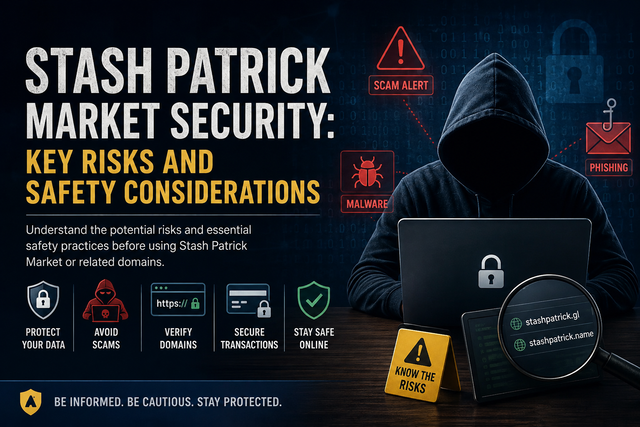
Online marketplaces have transformed how people discover services, communicate with sellers, and complete digital transactions. At the same time, unfamiliar platforms can expose visitors to privacy, security, and financial risks. When a website has limited public information, frequently changes domains, or operates under several similar names, users should approach it carefully rather than relying on appearance alone.
Searches involving Stash Patrick Market, Stashpatrick Shop Security, and related domain names often raise questions about website legitimacy and online safety. A professional-looking interface does not automatically indicate that a platform is trustworthy. Security requires examining technical protections, domain history, reputation, privacy practices, and the type of information a website requests.
This guide examines the major risks users should consider before interacting with unfamiliar marketplaces and explains practical ways to reduce exposure to scams, phishing, malware, and data theft.
Why Marketplace Security Deserves Attention
Digital marketplaces can collect substantial amounts of information. Depending on the platform, visitors may be asked for email addresses, usernames, passwords, payment details, or other personal data. Once information is submitted, users may have limited control over how it is stored or used.
This makes website verification particularly important. Someone searching for Stashpatrick Shop Security should consider more than whether a page loads correctly or displays a security padlock. A secure connection only means information transmitted between the browser and website is encrypted. It does not prove that the organization behind the website is legitimate.
Users should therefore evaluate several factors together, including domain consistency, transparency, reputation, account security, and payment practices.
Understanding the Risks Behind Changing Domains
Frequent domain changes deserve additional scrutiny because they can create confusion about which website is authentic. There can be legitimate reasons for changing a domain, such as rebranding, technical migration, or business restructuring. However, repeated unexplained changes can also make verification more difficult.
A search for Patrickstash New Domain, for example, may produce different addresses, discussions, or claims about the platform's current location. Users should never assume that the first result they encounter represents an official website.
Cybercriminals frequently register domains that closely resemble known names. A fake website may differ from another address by only one character, punctuation mark, or domain extension.
Before opening a newly discovered domain, users should consider:
- Whether the address was obtained from a reliable source
- Whether independent security services flag the domain
- How recently the domain appears to have been registered
- Whether the website clearly identifies its operator
- Whether unexpected redirects occur after opening the page
These checks cannot guarantee safety, but they can reveal warning signs before sensitive information is exposed.
Look Beyond the Padlock Symbol
One common misconception is that HTTPS automatically means a website is trustworthy. HTTPS is important because it encrypts communication between a browser and a server, but fraudulent websites can also obtain valid certificates.
Therefore, a website such as stashpatrick.gl or any similarly named domain should not be considered legitimate solely because a padlock appears beside its address.
Users should inspect the complete domain carefully. Misspelled names, strange subdomains, excessive redirects, and unusual extensions can indicate impersonation attempts.
Browser warnings should also be taken seriously. If a browser reports an invalid certificate, suspicious download, deceptive page, or unsafe connection, continuing to the website can create unnecessary risk.
Privacy Is an Important Part of Website Safety
Security is not limited to malware or stolen passwords. Privacy practices also matter.
Before creating an account on an unfamiliar platform, visitors should understand what information is being collected. Legitimate services generally explain how user information is handled through accessible privacy documentation.
A Stashpatrick CC Review or similar security-focused assessment should therefore consider questions such as whether the platform explains data collection, whether users can understand how their information is stored, and whether unnecessary personal details are requested.
Be particularly cautious if a website requests information that does not appear necessary for the service being offered. Excessive requests for identity documents, financial credentials, account passwords, or unrelated personal details should immediately increase scrutiny.
Account Security and Password Protection
Password reuse remains one of the easiest ways for a compromise on one website to affect other accounts.
If someone creates an account on an unfamiliar marketplace and uses the same password as their primary email account, a data breach could expose both accounts. Attackers often test leaked username and password combinations across multiple websites.
For this reason, users evaluating Patrick Stash Market or any lesser-known platform should use unique credentials.
A strong account security routine includes using a unique password, storing passwords in a reputable password manager, enabling multi-factor authentication where available, and avoiding security questions with easily discovered answers.
Users should also avoid saving sensitive payment credentials in browsers or websites they have not thoroughly verified.
Phishing and Impersonation Risks
Phishing is especially relevant when multiple similar domain names circulate online.
Attackers may create websites, emails, advertisements, or social media accounts designed to imitate another service. Their objective is usually to persuade users to enter login information, download malicious files, or transfer money.
Search terms such as Stash Patrick Market may lead to discussions containing several competing links. Following links from anonymous comments, unsolicited messages, or unknown forums increases exposure to impersonation.
Instead of trusting a link because someone labels it "official," users should independently examine its source. Unexpected messages announcing an urgent domain migration should receive particular scrutiny.
Urgency is a common manipulation technique. Messages claiming that an account will disappear unless the user immediately logs into a new domain are designed to discourage careful verification.
Evaluating Domains Such as stashpatrick.gl and stashpatrick.name
Domain names alone provide very little evidence about trustworthiness. Both stashpatrick.gl and stashpatrick.name should be assessed using the same security principles applied to any unfamiliar website.
Users can investigate domain age, registration information when publicly available, security reputation, certificate details, and reports from independent sources. A newly created domain is not automatically malicious, but limited history makes long-term reputation more difficult to establish.
It is also useful to compare claims across several independent sources. Reviews copied word for word across unrelated websites may be promotional or artificially generated.
Likewise, extremely positive ratings without meaningful details should not be treated as strong evidence. Reliable assessments usually discuss specific advantages, limitations, security observations, and verifiable facts.
Financial Transactions Require Extra Caution
Any platform involving payments deserves a higher level of scrutiny. Financial losses can be difficult or impossible to reverse, particularly when a platform uses payment methods with limited consumer protection.
Before making a payment, users should understand exactly who receives the funds, what protections exist, and whether a dispute or refund process is available.
Warning signs can include pressure to pay immediately, unclear pricing, requests to bypass normal payment systems, unexplained additional fees, and promises that sound unrealistic.
Never provide online banking passwords, complete authentication credentials, or one-time verification codes to another person. Legitimate payment processes should not require users to reveal credentials intended exclusively for account authentication.
Device Security Matters Too
Even careful website evaluation cannot replace basic device protection.
Browsers, operating systems, and security software should remain updated because older software may contain known vulnerabilities. Users should also avoid downloading unknown executables, browser extensions, mobile applications, or compressed files promoted by unfamiliar websites.
A marketplace may encourage visitors to install software to access additional features. Such downloads should be treated cautiously, especially when they come from outside recognized application distribution channels.
Files should be scanned before opening when appropriate. Browser notifications should also be limited because malicious sites can abuse notification permissions to display deceptive security alerts and advertisements later.
Reputation Should Be Verified Independently
Reviews are useful only when their sources can be evaluated. Searching for Stashpatrick CC Review or Stashpatrick Shop Security may produce opinions from different websites, but readers should distinguish independent analysis from promotional content.
Look for consistency across multiple reputable sources rather than relying on a single review.
Pay attention to patterns in user reports. Repeated complaints about inaccessible accounts, unexplained redirects, suspicious downloads, unauthorized transactions, or disappearing customer support may deserve attention.
At the same time, isolated anonymous accusations should not automatically be treated as proven facts. The strongest assessment combines technical checks with credible, independently verifiable information.
Warning Signs That Should Not Be Ignored
Certain patterns should encourage users to stop and investigate before proceeding. These include a domain that suddenly changes without a clear explanation, inconsistent branding across pages, missing contact information, unusual payment requests, aggressive countdown timers, and unexpected software downloads.
Another warning sign is a website asking visitors to disable browser security features or antivirus protection. Legitimate services generally should not require users to weaken basic security controls simply to access ordinary website functions.
Poor grammar or design alone does not prove malicious intent, but several suspicious characteristics appearing together can indicate elevated risk.
A Practical Safety Routine for Visitors
Users researching Patrickstash New Domain information or attempting to distinguish between similarly named sites can benefit from a consistent verification routine.
Start by checking the spelling of the domain. Investigate its reputation through independent sources before creating an account. Keep browsers and operating systems updated, and never reuse important passwords.
Before entering financial information, determine whether the payment process provides meaningful consumer protection. Avoid sharing unnecessary personal data, and leave immediately if the website generates browser security warnings or requests unusual permissions.
This approach is useful not only for Patrick Stash Market related searches but for virtually any unfamiliar digital marketplace.
Making Security the Priority
The internet makes it easy for new websites and marketplaces to appear quickly, but convenience should never replace careful verification. Names such as Stash Patrick Market, stashpatrick.gl, and stashpatrick.name may appear in searches, discussions, or online recommendations, yet a domain name alone cannot establish legitimacy or safety.
Users should evaluate technical security, domain history, independent reputation, privacy practices, payment protections, and account security before interacting with unfamiliar services. Claims about a Patrickstash New Domain should also be independently verified rather than accepted from unsolicited messages or anonymous posts.
The safest habit is simple: verify first and interact second. A few minutes spent checking a website can prevent much larger problems involving compromised passwords, exposed personal information, malware, or financial loss. Online security is strongest when users remain cautious, protect their credentials, and treat unfamiliar platforms according to evidence rather than appearance.
