Stop Getting Burned by Shady Domains: A Trust Signal Tool for Indie Hackers & SEOs
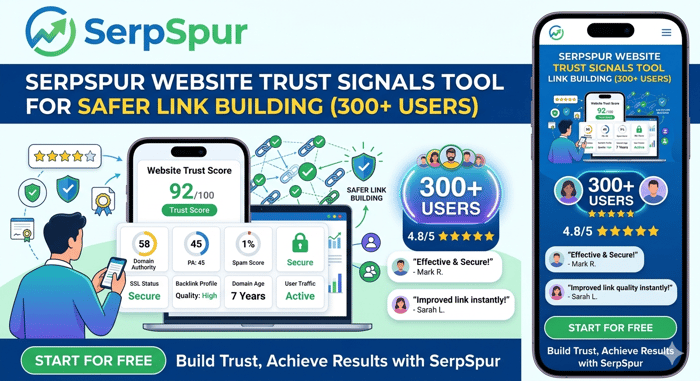
I crossed 300 users by solving one annoying SEO problem: shady domains in link building
I didn’t start building tools to become a “SaaS founder.”
I started because I kept getting burned.
Every time I did link building or outreach, I’d find domains that looked fine on the surface but were actually risky—poor security headers, weak reputation signals, or technically suspicious setups.
That meant wasted outreach effort, wasted time, and sometimes even SEO damage.
So I built something simple for myself.
🔍 Introducing SerpSpur Trust Rate Checker
It’s a lightweight tool that checks the real trust signals behind a website:
Security headers analysis
Domain reputation signals
Technical trust indicators
Risk patterns that often get ignored in outreach
Now before I contact any site, I run a quick check first.
It has quietly become part of my daily SEO workflow—and recently it crossed 300 users without any heavy marketing push.
👉 Try it here:
SerpSpur Trust Rate Checker
⚙️ Why I built it (the real reason)
In SEO, especially link building, most people focus on:
DR / DA metrics
traffic estimates
keyword rankings
But those don’t always tell the full story.
I realized the real risk often comes from things like:
missing or weak security headers
suspicious hosting patterns
inconsistent domain behavior
low-trust technical footprints
That’s what I wanted to surface in seconds.
📈 What changed after building it
Once I started using it myself:
My outreach quality improved
I stopped wasting time on low-trust domains
My acceptance rate for link placements increased
I reduced “bad backlink” risk in campaigns
And the funny part?
Other SEOs started asking me for access.
That’s how it grew to 300+ users.
No launch campaign. No ads. Just solving my own frustration.
🧠 Lesson for indie hackers
If there’s one takeaway from this:
Every repeated frustration in your workflow is a potential product.
I didn’t start with a business idea.
I started with a problem I personally hated dealing with.
That’s usually the best starting point.
🚀 Final thought
If you’re an indie hacker or SEO builder, take a look at your own daily workflow.
Ask yourself:
What do I repeatedly check manually?
What feels unnecessarily risky or slow?
What do I wish existed before I start a task?
There’s probably a product hiding there.

I feel your pain with shady domains in link building—I once wasted weeks on a site that turned out to be a PBN graveyard. Your tool sounds like a lifesaver for vetting. Have you considered adding a browser extension to check trust signals on the fly?
Smart idea. Trust signals are underrated in SEO tools. I've had outreach fail because of expired SSL or bad reputation—does yours flag email domain reputation too?
Great insight on turning a personal pain point into a product. I love how you focused on something specific like link building vetting—it's a niche that bigger players overlook. How do you plan to differentiate as more tools add similar features?