Stuck at $2.5K MRR with a B2C SaaS: what would you double down on next?
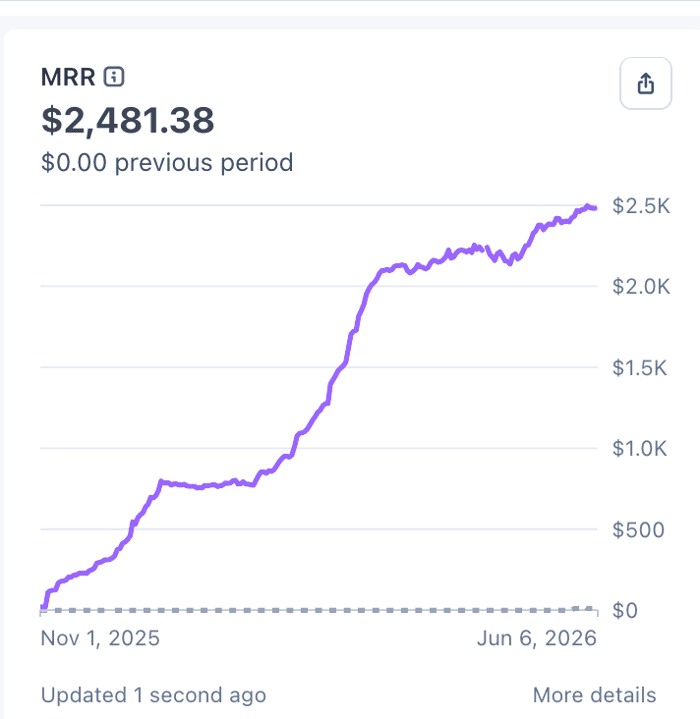
One B2C SaaS in my portfolio that reached roughly $2.5K MRR through a mix of UGC-led growth and SEO/AEO.
I do not want to rely on paid ads right now. I would rather build channels that can compound and have a solid asset that runs genuinely.
The question is: at this stage, should I double down aggressively on the two channels already working, or add one new organic channel with real upside?
The options I am considering:
More UGC creators and tighter repurposing across TikTok, Reels, and YouTube Shorts
SEO/AEO: programmatic pages, comparison pages, and content built around real buyer questions
Creator affiliates or ambassador accounts (Tried and Failed)
Partnerships with communities, newsletters, or adjacent products
Referral loops inside the product
Email lifecycle and reactivation
Reddit and community-led distribution
For founders who grew a B2C SaaS without paid acquisition: what channel became your next reliable growth lever after early SEO and creator traction?

At $2.5K I’d double down on what’s already compounding — but only after the SEO/AEO foundation is clean.
Before more programmatic/comparison pages: confirm Google (and AI crawlers) can actually read what you ship. Scaling thin or half-rendered pages usually slows indexing more than it helps.
Quick checklist: unique titles, real HTML on first fetch, sitemap submitted, no accidental noindex, internal links from pages that already rank.
Happy to compare notes — free scan if useful: https://www.uselaunchcheck.com
I would suggest doubling down is the best option!
Advertising is the way to go… I wish I was at that pain point with crud8.com
You've got two channels already compounding, so I'd stack them rather than add a third. In SEO/AEO, comparison and 'alternative to X' pages carry the highest intent - the reader is mid-decision. For me those converted far better than general buyer-question content.
I’d make this a retention and payback decision before adding another channel. Instrument each source through signup, activation, paid conversion, and month-2 retention, then give the best cohort a focused test with a clear stopping rule. That should reveal whether the plateau is acquisition volume or customer quality.
You didn't say where the $2.5K actually comes from — new signups, upgrades, or retention. Those three point at completely different moves. With B2C at that stage I'd check the churn curve first: if month-2 retention is under 40%, doubling acquisition just makes the leak bigger. If retention is decent, the faster lever is usually raising price on the 10% who open it daily. What's your month-1 to month-2 retention?
Honestly, I’d be scared of turning this into seven half-working channels 😅 UGC and SEO already got you to $2.5k. I’d stay there until one of them clearly stops compounding.
At $2.5K MRR the question isn't which channel to add — it's which of your two working channels produces an asset that compounds. UGC is rented attention: the moment creators drift or their style shifts, the channel decays with them. SEO/AEO pages are owned assets: a comparison page keeps paying as long as the query exists. So I'd put the next block of effort into comparison pages around real buyer questions, and keep UGC running to feed the top of funnel while the owned content compounds underneath. Two channels, one compounding core.
I’d probably double down on the two channels that are already producing customers before adding another acquisition channel.
But I’d look at the quality of the customers each one produces, not just the amount of traffic. For example, compare UGC vs SEO on:
qualified visitors → signup → activation → paid conversion → retention
If one channel is producing fewer visitors but substantially better customers, that’s probably the one with more room to scale.
I’d also test the existing winners at a deeper level before adding a third channel — different UGC angles/creators and different SEO/AEO intent clusters can behave almost like new channels without creating another distribution system to maintain.
Once you find a point where additional effort on those channels gives diminishing returns, then I’d test one new channel with a very specific hypothesis rather than spreading attention across several.
I’d make this a cohort and retention decision before a channel decision. Give each creator a tagged landing page or offer, then compare activation and week-4 retention—not just first-touch signups—over a fixed four-week window. If attribution is messy, start with a small set of creators and ask new users how they heard about you; that directional signal is enough to decide where to focus.
Before picking from the list of seven, there is a prior question: which of the two current channels is actually working? The post says "a mix", and a mix is usually one channel carrying the other.
UGC and SEO have opposite attribution profiles. SEO leaves a trail you can read in Search Console. UGC mostly does not: someone sees a TikTok, does not click, searches your brand two days later and lands as organic or direct. So SEO gets credited with demand that UGC created, and the numbers will tell you SEO is the winner whether or not it is.
The way to separate them costs nothing. Look at branded search volume and direct signups in the 48 hours after each video goes out. If branded search moves with your posting schedule, UGC is your engine and SEO is the collection mechanism. If it does not move at all, UGC is not the channel and you would be doubling down on the wrong one.
A list of seven options is usually a symptom of not yet knowing which of the two works.
At $2.5K MRR, I’d avoid adding a third acquisition channel until you know where the current two stop scaling. Double down for one fixed cycle, but instrument each creator or campaign with a cohort link and track activated users and paid conversion, not just clicks. In parallel, add a small referral loop inside the product. It can compound without creating a whole new content machine. Then use the data to choose the next channel.
Great point. We’re currently using UGC-led content and SEO/AEO, but we haven’t yet pushed either hard enough to see their true ceiling
I also like the referral-loop idea. For a B2C product, it could be a much more compounding third lever than constantly adding new acquisition channels.
Honestly, I’d be scared of turning this into seven half-working channels 😅 UGC and SEO already got you to $2.5k. I’d stay there until one of them clearly stops compounding.
The decision to add vs double-down usually hinges on something invisible in the post: your measurement precision on what makes each channel stick.
Before adding a third channel, you need to know specifically why UGC converts and why SEO converts. Not "both work" - what's the actual retention difference between a user acquired via TikTok creator versus a user from a comparison page?
The reason matters: if TikTok drives higher-intent users (maybe 40% week-4 retention) versus SEO (maybe 25% week-4 retention), then you're not really picking between channels - you're picking between high-intent and medium-intent distribution. Each decision cascades. A new channel that attracts low-intent users might look promising in launch week but crush your LTV math long-term.
My suggestion: spend two weeks instrumenting exactly that. Tag every creator and every SEO page source. Track cohort retention. Once you know which channel is actually moving retained MRR, not just volume, the third channel decision becomes much sharper - you'll know exactly what profile of user you need to find.
Its very hard to measure performance ..for UGC Views count (Not necessarily) equal revenue and there is no affiliate link or attribution and users end up doing brand search queries,meanwhile SEO/AEI i can observe better SEO metrics DR, AI citations, .. I dont have any methodology to measure revenue per channel
At $2.5K MRR, I’d be careful about adding another channel before figuring out exactly what’s making the current SEO/AEO traffic valuable. The interesting opportunity in your list, to me, is the comparison/buyer-question layer. If those pages are already attracting people who are evaluating alternatives, they could be a much stronger growth asset than simply publishing more SEO content.
I’d probably double down on the two channels that are already showing traction before adding another major channel. Once you understand what specifically makes the UGC and SEO traffic convert, you can scale those systems more aggressively. Then I’d test one new channel with a small amount of time rather than spreading the effort too thin.
The $2.5K MRR plateau makes this a real allocation decision. Before adding another channel, have you measured the marginal CAC and retained revenue from additional UGC/SEO at current scale versus the best new channel you've tested?
At this stage, I would not add another channel just because it is available. I would run a four-week test with a clear split: keep UGC focused on the formats and creators that drive activated users, while SEO/AEO gets a smaller queue of pages tied to specific buyer questions. I would treat partnerships and referrals as experiments, not a third operating lane.
The key is measuring the path to retained revenue. Tag creator and page cohorts, then compare activation, week-four retention, and payback. If traffic grows but retained MRR does not, fix onboarding or the promise before scaling distribution. In agency work, that cut usually makes the next channel choice much clearer.
I can't measure the revenue per channel it's difficult for UGC as users end up to google search for the brand name..no attirbution link which is intentionally done on purpose to avoid outreach limitation
At $2.5K MRR, I’d give the two proven channels a fixed 4-week 70/20/10 split before adding a full new channel: 70% UGC/repurposing, 20% SEO/AEO pages built from real buyer questions, 10% one small experiment. Instrument each source to activation and retained MRR—not just clicks or signups. For UGC, tag creators and compare first-week activation plus 30-day retention; for SEO pages, give each a clear CTA and internal links. If neither improves retention, the bottleneck is probably onboarding/product value rather than distribution.