Sunsetting two businesses, exiting another, and joining a 5-figure-MRR business as
cofounder
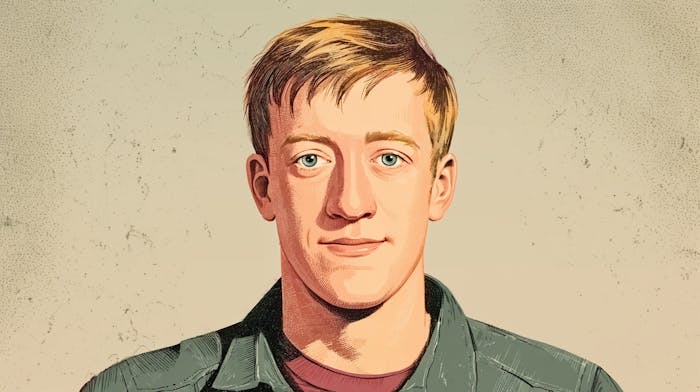
Igor Debatur, was running three successful businesses, but realized his attention was too fragmented. So he cut back and focused on Uploadcare.
This led to huge growth and an exit in 2024. Now, he's working on Outmap, which is bringing in a 5-figure MRR.
Here's Igor on how he did it. 👇
Writing code in the early days
I started as a full-stack developer back in 2003. The first piece of software that I was able to develop and sell was an automation for a character in Ultima Online. Walking around in stealth mode, looting treasure chests, waking me up if a Game Master is present. I also built a content management platform back in 2004. It powered a dozen websites.
Back then, developing products for the web was quite easy. Write some dirty PHP code, upload via FTP, and you're as good as everyone else. And I always loved the quick turnover: You develop something and people can use it right away. The feedback loop is very quick, and that always ignited my passion to build products. I love seeing how people use them.
Then, I cofounded a web development agency, Whitescape. We did a lot of outsourced engineering for startups and major brands. Launched more than 100 different products with a team of 20. It was cash positive from the start and eventually reached $100k/mo, but it never generated any notable profit. So we brought in other people to run the company and re-focused on Uploadcare, the content management and delivery platform we were building for ourselves.
Uploadcare has grown from a small team of 3 to a team of 34, with customers including Zapier, PandaDoc, Sequoia, Soundcloud, and thousands of other companies. We had multi-millions in ARR.
Uploadcare was acquired by Tiugo Technologies in 2024. The exit took longer than I wanted it to, but then again, not many founders are able to exit within two or three years. In many cases, it's five or seven or nine years — or even more.
Tiugo Technologies has proven to be a great partner. I learned a ton working with them 1.5 years past acquisition. Unlike many stories where companies are being squeezed or dissolved after PE acquisitions, ours was a happy story – the team and Uploadcare's DNA stayed intact, just becoming a part of a larger structure with more access to resources and major partnerships.
Too many businesses
In parallel with Uploadcare, my cofounder and I launched the RIDERS app. The RIDERS app helped hundreds of thousands of people to improve their skills and learn tricks in skiing, surfing, BMX, skateboarding, mountain biking, and many other disciplines. RIDERS became a huge community. We worked with all the big extreme sport brands. People were wearing our t-shirts and you could find our stickers all over ski resorts and skate parks. But we were always just below break-even.
But at some point, back in 2017, I realized that I was struggling to manage three companies at once. I couldn't focus and any success in one company led to a failure in another. So we let go of Whitescape. And then, unfortunately, we sunsetted RIDERS.
Uploadcare was getting significant traction and we knew that we had to choose one company. Having just one focus helped: Uploadcare continued to grow rapidly until it was acquired.
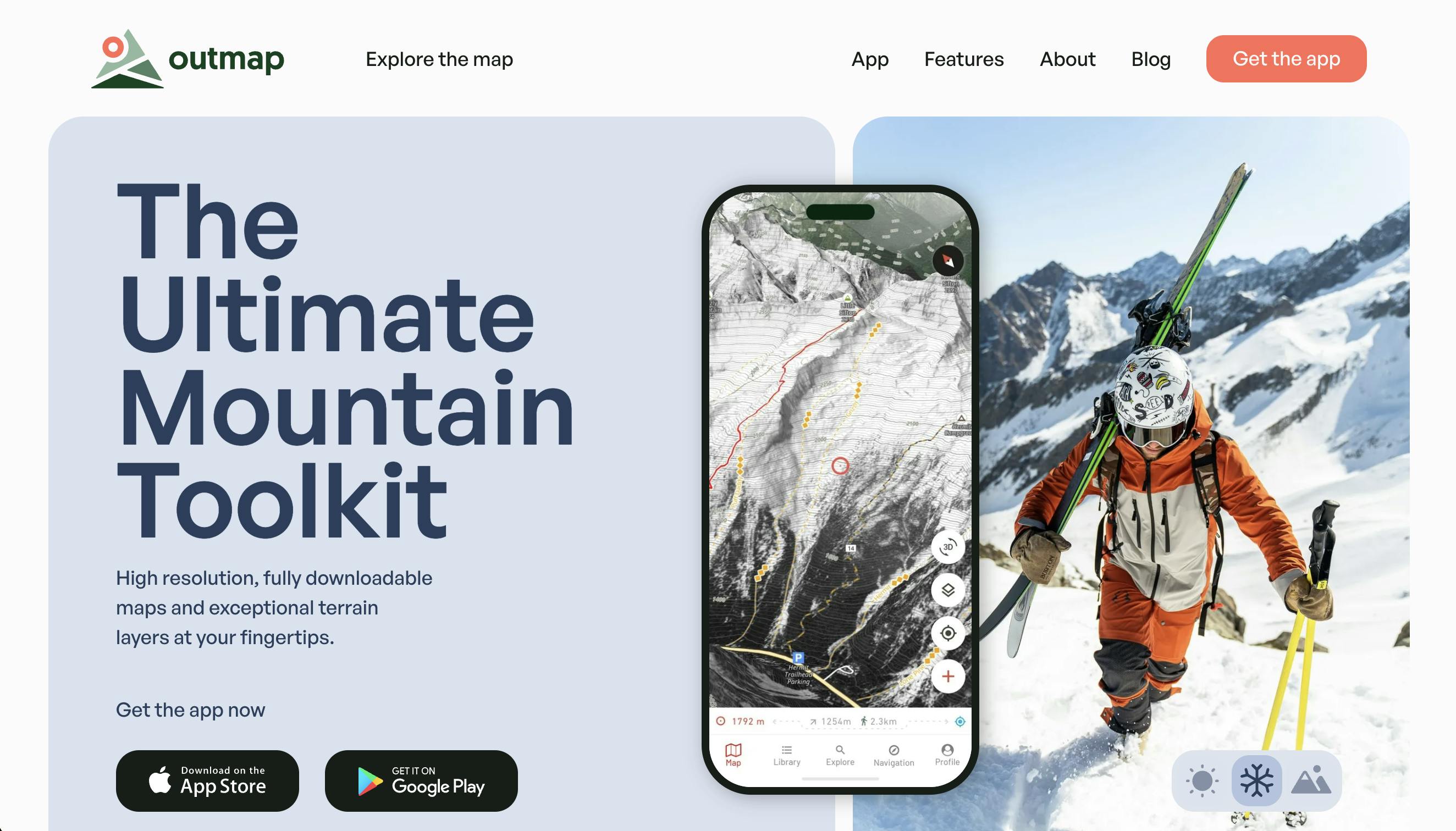
My passion for working with the outdoor and extreme-sports audience never went anywhere. I loved building RIDERS and was looking for something in a similar area. So, at the beginning of 2025, I started advising Outmap, an app that helps people to plan and navigate in backcountry terrain. In September, I joined Outmap as a CEO and cofounder.
There's a difference between a one-man shop and a business. My goal is to make Outmap a business, finding what's missing and finding ways to fill these gaps effectively and quickly, being very lean. We are very conscious about not bringing in venture funding; we invest our own money and expertise, working with tens of partners and volunteers who are interested in the same – building the best app to find and plan routes, to navigate in the backcountry, and to come home safe after having fun.
I see the huge opportunity that excites me, and many layers of complexity that will be interesting to tackle.
Building the initial products
As far as building them, Uploadcare was developed by our agency. We scratched our own itch and built something that we wanted to use. It took $30k of our own money and about a year of work before the alpha version. Then, we took angel investment and a full-on venture story until the acquisition.
RIDERS scratched my personal itch. I was struggling to learn several mountain biking tricks — very basic stuff like higher bunny hops. My cofounder and I collaborated with a few athletes and a cameraman to produce 15 videos. We instantly noticed that those videos generated a huge amount of views and positive feedback, so we tripled down.
And with Outmap, I joined when the product already existed. It was created by a solo developer, Felix Gourdeau, in Montreal. He has been working on it since 2021. When I joined, Outmap already generated 5 digits in MRR, and my goal is to scale it many times.
Brain puzzles and indie hacking
It's easy to start building a navigation app in 2025, which explains why there are so many of them. But why is there no clear winner, except FATMAP, which was killed by Strava? Making a successful app to guide people outdoors is tricky; it consists of many parts. Like how you work with elevation layers, how you generate contour lines, how you get and enrich data, how to work with user-generated content, how to work with sponsors and partners, where you get satellite imagery, how to make proper UX, how to work with separate platforms at once, how to drive adoption, and more.
And that's just the tip of the iceberg.
Last week's challenge was, "How to communicate with 150 people as one person". We underestimated the number of people willing to join our partnership program, and since I'm the main business development guy, I had to quickly figure out all the tools and workflows. Luckily, having an engineering background, it was easy enough to set up a combination of Tally+n8n+Gmail+Notion+Spreadsheets+RevenueCat.
We tackle challenges like this pretty much every day.
One of my favorite gaming genres is tactical strategies, like XCOM2, and brain puzzles like Baba is You. But I stopped playing them — I have enough tactical puzzles with Outmap, and frankly, I enjoy them more.
Outmap's tech stack
Outmap is freemium with monthly and annual subscriptions to use advanced features like the offline mode.
Here's our stack:
Next and React Native on the frontend
Supabase and Firebase on the backend
Amplitude to track numbers
Mapbox with a significant amount of "secret sauce"
React Native nowadays is a lifesaver, enabling us to build one app for iPhones, iPads, and Android phones. And Supabase is much more cost-effective than Firebase. We love it.
Word-of-mouth growth
Outmap has grown significantly in 2024-25, even before I joined: 5-digit user base, thousands of paying users. It was a good start!
Uploadcare solved a major pain for developers. We were eating our own dogfood and investing time (maybe too much time!) in creating the best-of-the-best solution. That led to a very notable amount of word-of-mouth — mostly via mentions in developer communities. So Uploadcare's growth was mostly organic for more than 5 years. After that, we experimented with paid ads and other channels.
Outmap started the same way — the product is solid and users love it. That's why I joined. My friends and I started using Outmap and it helped us to navigate in Japan, then Canada. The goal is to keep our organic growth but get to scalable channels much sooner.
And we have to do that while keeping a positive ROI because we don't have investor money to burn. We're very lean and mindful. Having limitations adds discipline, but also helps us to be much more creative.
Ego and focus
Two challenges have come up for me time and time again. Lucking both are in the past now. They are focus and ego.
Lacking focus led me to lead three companies at once and I've already mentioned how that went down. It was doable, but all of them were growing very slowly, and I felt miserable.
As far as ego, I wanted everything to be perfect: design, UX, workflows, and processes. The best-of-the-best tools, and so on. Now, I care about delivering value, being focused on one thing, and then another. I was able to let go of everything less important. I became ready to cut losses and agree that I made mistakes.
More results, less stress.
And everyone else in the Outmap team is the same. No large egos, we do what we must because we can.
Two books every indie hackers should read
Two books in particular have been a huge advantage for me. They're short, but multi-layered. If you follow their guidance, you won't be able to not build and ship a product.
The first is Disciplined Entrepreneurship. A step-by-step guide on how to build a startup, based on statistically proven methods, written by a person who guides tens of startup teams each year, leading them to build meaningful businesses.
The second is The Great CEO Within. A handbook for existing and future CEOs.
And as an honorable mention: The Hard Thing About Hard Things
If someone is able to blindly follow just the guidance from these two books and avoid mistakes mentioned there, I'd invest in them without much hesitation.
But, unfortunately, some mistakes just have to be made to learn from them, even if they've been explained in detail in historic and philosophical literature, and then summarized in business books.
What's your advice for indie hackers who are just starting out?
Choose an area you care about — where people you care about struggle with something you know how to solve.
Talk to them. Run 20 customer development interviews.
Then, find others who care about this particular area as much as you do, or more. Bring them on board: It won't be hard.
Make sure the people you bring on board are founder material: A rare kind of person who is ready to overcome struggles, seeing the big picture and a major goal ahead. Don't bring mercenaries, bring missionaries.
Worst case scenario, you'll spend time building something you love with like-minded people. And if you're persistent enough, you'll get where you want to be, no matter what.

Leave a Comment
That’s a big move — sounds like you’re leveling up fast! Closing a few chapters to focus on something with real traction makes total sense. It’s like in the spike game — sometimes you’ve got to reset the play to set up the perfect spike. Congrats on the new role and the fresh start!
so good how you did these
Loved this a real founder’s journey from scrappy PHP days to scalable SaaS. The focus and ego lessons hit hard, and that line “Don’t bring mercenaries, bring missionaries” says it all. Inspiring and grounded. 👏
Igor's journey is super inspiring! Sunsetting two businesses to focus on Uploadcare and then landing a 5-figure MRR with Outmap is crazy impressive. Definitely some lessons there for all of us indie hackers.
good
You have great point of view.
There is a lot of wisdom in this article: value over ego, missionaries over mercenaries, the temptation (and result) of overcommitting requires focus. A lot of founders > executives don't have the language or awareness until much later in their careers. Bravo.
That's very kind, thank you Marilyn! Some lessons learned the hard way, would've been so great to learn everything from someone else experience, but not always possible
Cool story! Several questions, though:
1) What exactly did you do to gain such impressive numbers?
2) How do you compete with existing players like alltrail, mapme, komoot, gaia gps, and others?
3) Where did you get maps, layers, and other data for your app?
Thanks and good luck!
Thx! Sure:
1000% persistence, trying stuff, fixing stuff, many many times. Works all the time, but requires patience
Focus on specific audience, learning from users, religiously running customer development interviews
Many different sources: most folks use Mapbox and OSM and it generates a decent map. Developing a good backcountry map like Outmap requires finding many more other sources and working with plenty of different vendors: sat imagery, digital elevation models, etc etc
wow, what dedication you've shown. It is remarkable. very inspiring to read. thanks for sharing.
Glad you liked it, wish you luck with launching what you're building!
Development outsourcing
Great question—I've been through this journey twice now. Here's what I learned:
The Good:
If you find the right partner, you can genuinely 3x your velocity. Being able to parallelize work is huge when you're scaling.
Your tech stack (Node/TS/React) is very outsourceable—lots of quality teams specialize in this exact combo.
It frees you up to focus on product strategy, customer conversations, and business logic rather than grinding through tickets.
The Painful Truths:
First 2-4 weeks are always rough. Onboarding costs more time than you'd expect, even with good documentation.
Code quality will initially dip unless you're incredibly strict about code review and have strong architectural docs. This often takes 1-2 sprints to normalize.
Communication overhead is real. Timezone differences, async reviews, clarification loops—it all adds up.
You need to be more intentional about architecture upfront. Things you'd "figure out as you go" solo don't work with a remote team.
My recommendations:
Start with one senior developer or small team (2-3 people) before scaling to 5+. Test fit first.
Look for agencies/studios that specialize in long-term partnerships, not project-based work. You want people who understand your codebase and vision over time.
Invest in documentation, CI/CD, and code standards before handing off work. This pays dividends immediately.
Keep some critical path work in-house—infrastructure, security, core architecture decisions.
On recommendations: I've had decent experiences with teams in Eastern Europe (Poland, Romania, Ukraine) and some in Asia, but I'm hesitant to name-drop specific agencies here since it varies so much by fit. What matters more is vetting: check their GitHub portfolios, ask for references from companies with similar stacks/maturity, and do a paid trial project (2-4 weeks) before committing long-term.
Your tech stack is honestly a huge advantage—finding TS/Node/React specialists is much easier than more niche stacks.
What stage are you at in terms of team size and revenue?
Yep – you're right, choosing this particular stack has a reason, to make it easier to find and onboard developers
We just need a tool to do the job, it doesn't need to have engraved diamonds
Wow — what a journey. Reading this feels like a masterclass in long-term product focus and creative endurance. I really love how you tied together the “scratch your own itch” philosophy across Uploadcare, RIDERS, and now Outmap — it’s the same spirit that keeps indie building exciting.
I’m currently working on something similar in the creator tools space — helping small teams and solo founders turn niche communities into sustainable, self-owned ecosystems. Seeing how you’ve grown products through word of mouth and real user love is incredibly inspiring.
Would love to exchange notes sometime on lean growth and organic distribution — feels like we’re exploring similar territory, just in different verticals.
Thx Tracy!
That’s a big move — sounds like you’re leveling up fast! Closing a few chapters to focus on something with real traction makes total sense. It’s like in the spike game— sometimes you’ve got to reset the play to set up the perfect spike. Congrats on the new role and the fresh start!
This journey is really inspiring — the decision to sunset other projects and focus deeply on what truly mattered clearly paid off. The transition from running multiple businesses to focusing on Uploadcare, and now scaling Outmap with a solid product and real users, has a lot of valuable lessons about focus, discipline, and customer-led growth. Thanks for sharing your insights and long-term perspective — especially the emphasis on fixing what matters most and letting go of ego and distractions. Definitely grounded and useful for any indie hacker trying to prioritize smartly.
That early builder mindset is something many gamers and developers still relate to today. The excitement of creating something, releasing it fast, and seeing how people interact with it is very similar to how mobile gaming communities evolve now. Players don’t just play games, they explore tweaks, features, and performance improvements to get more out of the experience. That’s why interest around options like download real racing 3 mod apk keeps growing, as users look for enhanced gameplay, unlocked features, and smoother progression. Just like early web products, the appeal lies in instant access, quick feedback, and seeing how small changes can dramatically improve the user experience.
HOW I RECOVERED MY LOST CRYPTO FROM FAKE BROKER ONLINE.
I had lost over $752,000 by someone I met online on a fake investment project. After the loss, I had a long research on how to recover the lost funds. I came across a lot of Testimonies about THE HACKANGEL RECOVERY TEAMS. I contacted them providing the necessary information and it took the experts about 48 hours to locate and help recover my stolen money. If anyone is looking for a Recovery firm to Recover your lost Crypto. You can contact THE HACKANGEL RECOVERY TEAMS . I hope this helps as many out there who are victims and have lost to these fake online investment scammers. You can contact them by using Email OR Phone
WhatsApp +1(520)200-2320
This was a valuable read. The shift from juggling multiple projects to committing to one direction highlights a pattern many founders go through. The focus, user-driven iteration, and disciplined approach to growth stood out. The part about knowing when to sunset something versus doubling down was especially useful. Thanks for sharing the full journey and the lessons behind those decisions.
What an incredible journey! I love how you emphasize focus and cutting ego—so many founders try to juggle too much or chase perfection instead of delivering value. Your story of growing Uploadcare organically while learning from parallel ventures really shows the power of persistence and iteration. Outmap’s approach—lean, community-driven, and data-informed—feels like a masterclass in building meaningful products sustainably. Also, the advice about finding like-minded, ‘missionary’ teammates is gold for any indie hacker.
Wow, what a long way but successful in the end! I'm starting my first own business, but can't image managing 3. Persistence and focus on one thing seems to be the key.
This was such a grounded and inspiring read , especially the part about narrowing focus and cutting distractions. It’s a move I’ve seen completely change outcomes for founders who were spread thin.
I actually help early-stage SaaS and tech teams like Outmap grow through community-led channels (Reddit, Indie Hackers, niche groups) , not ads, just structured conversations that convert to real traction.
If you’re ever exploring organic growth experiments for Outmap or similar projects, I’d be happy to share a few proven frameworks I’ve used to help founders go from first users to consistent sign-ups.
Really inspiring journey I could relate to so much of this. Having built and managed multiple products myself, I know how hard it is to balance focus, ego, and execution, especially when every project seems full of potential. Your transition from running multiple ventures to doubling down on one solid mission really resonates.
The part about being lean, staying close to users, and focusing on delivering value instead of chasing perfection that’s the mindset that actually sustains a business long-term. Uploadcare’s growth and the disciplined approach you’re now applying at Outmap show what real product maturity looks like.
Thanks for sharing such an honest and practical perspective. It’s refreshing to read insights from someone who’s not just talking theory but has actually lived through every phase from indie building to acquisition and now leading another vision-driven product.
Love the journey you’ve shared—sunsetting two ventures, exiting another, and then stepping into a new role to help build something meaningful. It’s a great reminder that every pivot counts and timing is everything. On a similar note, if you’re thinking ahead for big strategic moves (or big purchases) this season, this guide helped me get ready for some serious blackfridaydealsx
What an honest journey closing, pivoting and refocusing takes real courage.
At Simplita.ai we’re following that same playbook: building a visual AI-agentic builder so founders can design → automate → launch full SaaS apps, without spreading themselves too thin.
Curious: when did you know it was time to sunset something vs. push harder?
Really inspiring journey, Igor! Loved how you emphasized focus and discipline over chasing too many ideas at once. The lessons about cutting distractions and building something meaningful with limited resources truly hit home. Thanks for sharing such real insights for indie hackers.
Respect the honesty. Real insipiration. Trying to build for the first time.
Respect for the pivot honesty. I’ve sunset a few small AI tools too.. each one taught me something new. What helped you spot the difference between an idea that just needs time vs. one that’s done?
congratulations
Thx!
That’s a big move — sounds like you’re leveling up fast! Closing a few chapters to focus on something with real traction makes total sense. It’s like in the spike game — sometimes you’ve got to reset the play to set up the perfect spike. Congrats on the new role and the fresh start!
It’s rare to see someone deliberately sunset, exit, and then join a 5-figure MRR business with a clean thesis. The through-line I heard: pick the game where your edge compounds, cut the distractions, and bring leverage (ops, distribution, or product taste) to an existing flywheel instead of forcing a zero-to-one every time.
Two quick Qs:
What signal told you it was time to sunset vs. “push one more quarter”; unit economics, energy, or market pull?
In the new role, which lever has the highest ROI so far; pricing clarity, onboarding speed, or one dependable channel?
P.S. I’m with Buzz; we design conversion-focused Webflow sites and pragmatic SEO for launches. Happy to share a tight 10-point GTM checklist if useful.
That’s an inspiring journey — transitioning through multiple ventures shows real adaptability in business. It’s interesting how timing and market trends influence success, especially in sectors like tech or real estate. For instance, markets such as Dubai Luxury Properties are thriving because of innovation, investor confidence, and strategic partnerships — similar traits that drive growth in startups like yours.
This is one of the most grounded founder stories I’ve read lately. The lesson about focus over ego really lands — it’s so easy to keep building “more,” thinking perfection equals progress. Loved how you tied your shift from juggling multiple companies to doubling down on Outmap — that clarity of purpose shows through every line. Also, the reminder to “bring missionaries, not mercenaries” is gold for any indie hacker building with limited resources. 👏
I'll coin the "one of the most grounded founder stories", hope you don't mind haha
Igor’s story is a masterclass in cutting noise and doubling down on what matters....
Learned the hard way though, it took years and a lot of stress
Love this transparency. The transition between projects is rarely talked about — how did you know when it was time to sunset vs. pivot?
Just a gut feeling. I'd want to say: "numbers", but they're not always the case, plateaus can be overcome, even if they last for a while. But you you feel something is off, it usually is, in this case it's better to find a solution instead of tolerating it
Totally get that — it’s easy to rationalize plateaus, but trusting that gut feeling when something’s off usually pays off long-term. Thanks for that insight.
Damn this is an awesome story tbh the reason I'm here is to learn from stories like these
Very glad it was helpful! If it helps you to avoid 1-2 mistakes, it's already worth writing!
This hits so close to home, Igor! The struggle of juggling multiple businesses and feeling fragmented is real - but having the discipline to sunset projects and double down on what's working shows serious maturity. Love how you went from scattered focus to a successful exit with Uploadcare, and now building Outmap to $10k+ MRR. The advice about finding missionaries, not mercenaries, is gold. Congrats on the journey and excited to follow along with Outmap!
Thanks Bill!
Thanks for reading! Glad to join the conversation
That’s awesome — sounds like you’ve built a solid foundation in both startups and storytelling! By the way, have you ever looked into how gaming apps like Stick War: Legacy (Mod APK) grow their user base so fast? Their viral loops and retention tactics are surprisingly similar to what indie SaaS founders use.
I have also same suggestion Thanks