Supply and demand is the way
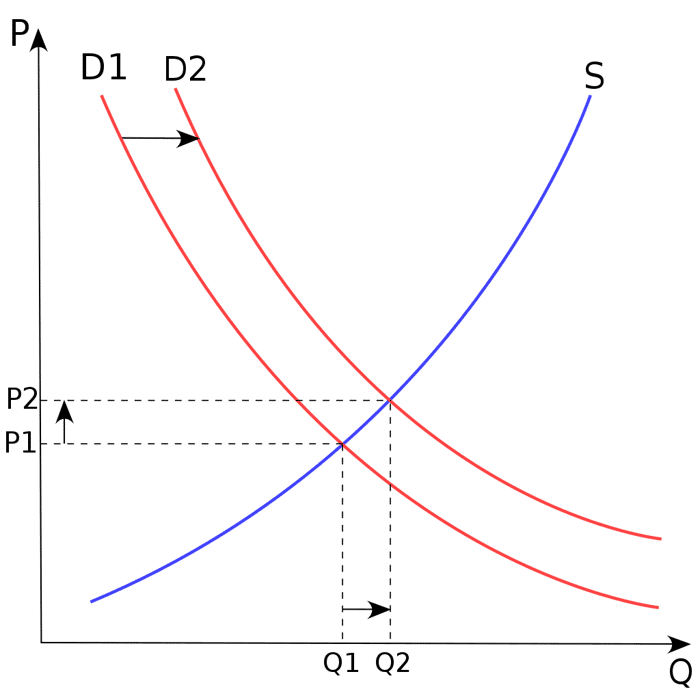
It's a foundational idea from economics.
the unit price... will vary until it settles at a point where the quantity demanded will equal the quantity supplied
Supply is how much of the thing there is. Demand is how much people want it.
When there is more supply than demand, the price goes down. When there is more demand than supply, the price goes up.
For Indie Hackers, supply is product. That's the thing we make and sell. Here's a typical process followed by new founders:
- Come up with a great idea.
- Start building it furiously.
- Try to sell it to people once you're done.
This is all supply and no demand.
Your skill is probably in making things, so naturally that's the thing you want to do straight away. But it's completely backwards. The first thing you should do is find demand. Only once you've found demand should you apply your unique skills to bringing supply (making product) to meet it.
How do you find demand?
- Talk to real humans about their problems.
- Hang out on forums and write down what people need and want.
- Look at search volume.
- See what people are already buying.
- Look at what the businesses you interact with need and pay for.
- Show them an example and ask if it's what they want.
Throw all your supply driven ideas out the window. Go find some demand and then meet it.
PS I wrote this because I keep making the same mistake. I keep building supply without finding demand first. I'm trying to change this behaviour.

That's a really nice mental model. Basically, every time you "get out of the house" and talk to customers, you're testing demand in one way or another.
One fundamental flaw in supply and demand is that there needs to be a market. If it doesn't exist yet... then no way to know if the supply or the demand exists.
I think we indiehackers tend to see like this:
If the supply doesn't exist, the demand doesn't exist as well.
If the supply is not competitive, the price does not fluctuate.
So you really have to go far in betting on the future. What can I build that will create supply and thus demand?
Akio Morita tells the story of the Sony Walkman. There was no demand. Market research showed people weren't interested. Early prototypes tested in the market showed people did not understand it. The company employees didn't like it. But Akio believed in the products potential. He personally put his neck on the line and pushed the development through and the product went on to huge success.
"The public does not know what is possible, but we do. So instead of doing a lot of market research, we refine our thinking on a product and its use and try and create a market for it by educating and communicating with the public."
"Everybody gave me a hard time. It seemed as though nobody liked the idea. At one of our product planning meetings, one of the engineers said, "It sounds like a good idea, but will people buy it if it doesn't have a recording capability? I don't think so.""
"The accountants protested but I persisted. I told them I was confident we would be making our new product in very large numbers and our costs would come down as volume climbed."
"I thought we had produced a terrific item, and I was full of enthusiasm for it, but our marketing people were unenthusiastic. They said it wouldn't sell, and it embarrassed me to be so excited about a product most others thought would be a dud."
"My point in digressing to tell this story is simple: I do not believe that any amount of market research could have told us that the Sony Walkman would be successful, not to say a sensational hit that would spawn many imitators. And yet this small item has literally changed the music listening habits of millions of people around the world."
"It was this kind of innovation that Ibuka had in mind when we wrote a kind of prospectus and philosophical statement for our company in the very beginning: "If it were possible to establish conditions where persons could become united with a firm spirit of teamwork and exercise to their hearts' desire their technical capacity," he wrote, "then such an organization could bring untold pleasure and untold benefits.""
-- Akio Morita.
Excerpts from "Made in Japan", pages 79-82
Survivorship bias.
Good luck doing this as a solo founder. Sony had thousands of employees dedicated to marketing, sales, product development, and a huge amount of human and financial capital.
If you want to stack the odds in your favour as a bootstrapper the Walkman model is not a good one to follow.
Pebble?
That's a very nice story.
Yep, for sure, but creating a new market is a huge undertaking. The iPhone created a new market, but it was not Steve Jobs' first product, and he also had the leverage of massive capital and talent.
IH'ers would do better to find demand in an existing market.
I actually think the iPhone is an example of "a better mousetrap", not a brand new market. Mobile phones already existed and were selling in huge numbers. Those phones already had internet and web on them. They were just complete rubbish. Jobs didn't need to discover a new market, it was already there. He just had to build a better mobile phone. And Apple didn't just build a better mobile phone, it built a way better mobile phone.
This comment was deleted 6 years ago
the iPhone entered into a busy market. I'd say it was the supply to already created demand for a smartphone.
This comment was deleted 5 years ago
Interesting!